
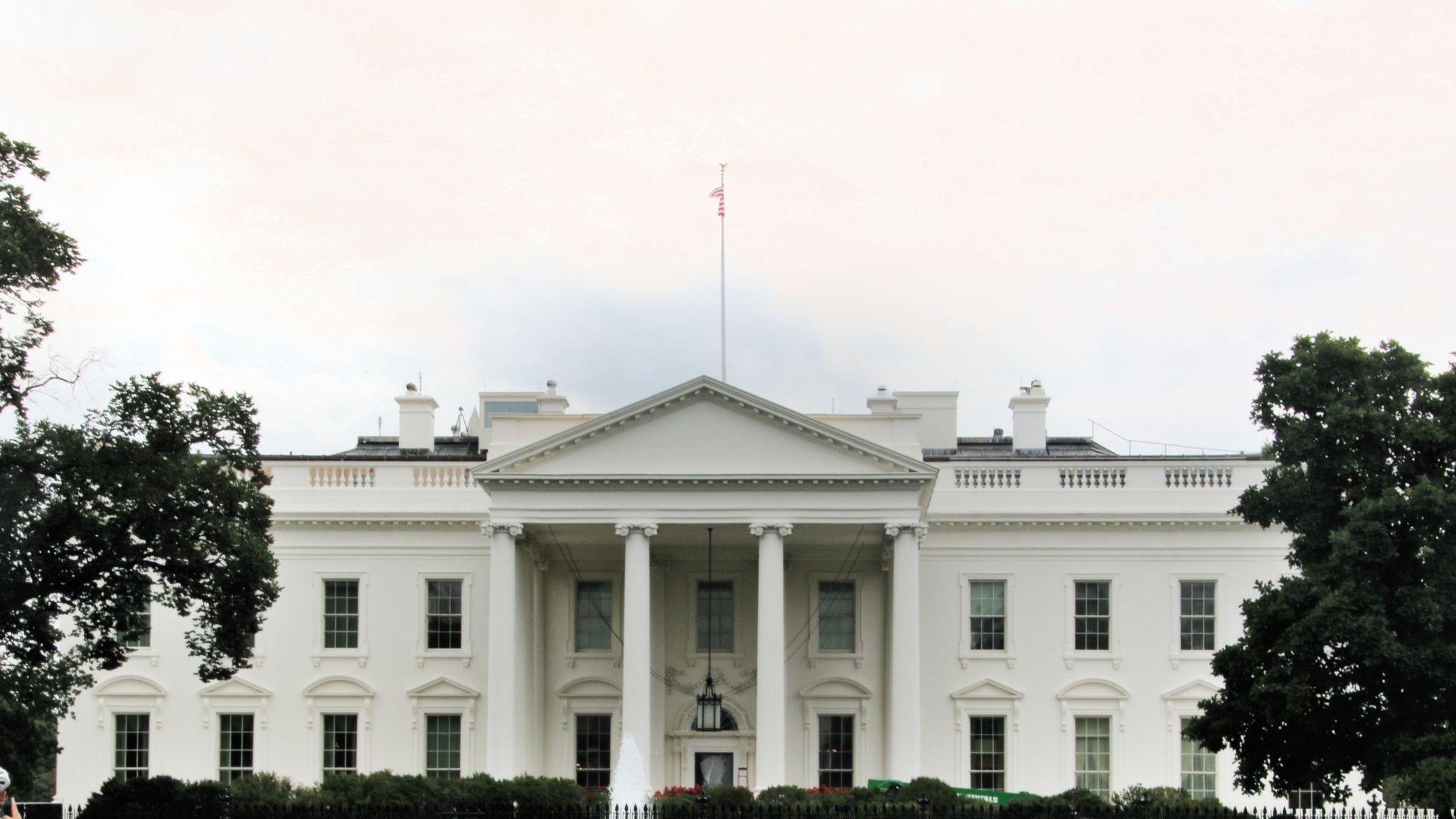
The U.S. Court of Appeals for the District of Columbia Circuit issued an order on April 11, 2026, in National Trust for Historic Preservation in the United States v. National Park Service, et al., addressing an emergency motion for a stay pending appeal concerning construction at the White House.
The dispute arises from the demolition of the East Wing and plans to build a privately funded ballroom.
Rather than resolving the merits, the appellate court remanded the case to the district court for further proceedings and clarification of a preliminary injunction.
The D.C. Circuit also extended the district court’s stay of its injunction until April 17, 2026, to allow the defendants, if they wish, to seek Supreme Court review.
The Dispute in Brief
The dispute arose after plans were announced on July 31, 2025, to construct a 90,000-square-foot ballroom at the site of the White House’s East Wing, funded by private donors.
On October 20, 2025, the President publicly announced that ground had been broken, and within three days the East Wing was completely demolished.
The National Trust for Historic Preservation filed suit in the U.S. District Court for the District of Columbia, seeking to halt the project.
On March 31, 2026, the district court granted a preliminary injunction.
It concluded that, to the extent the Executive Office of the President or the Office of the Executive Residence ordered the construction, the action was likely ultra vires.
The court reasoned that Congress holds exclusive constitutional authority over federal property such as the White House, and no statute authorized the demolition of an entire wing and its replacement with a privately funded ballroom.
The court further determined that, to the extent the National Park Service participated in directing or funding the project, its actions were likely contrary to law under the Administrative Procedure Act.
The D.C. Circuit’s Decision
The U.S. Court of Appeals for the District of Columbia Circuit did not resolve the underlying legal dispute.
Instead, it issued a procedural ruling focused on the government’s emergency request for a stay pending appeal—similar to a federal injunction challenge to executive action.
The court remanded the case to the district court for further proceedings, extended the district court’s stay of the preliminary injunction until April 17, 2026, and dismissed the government’s motion for a stay as moot.
The remand directs the district court to clarify how the injunction’s safety-and-security exception operates during ongoing litigation.
In explaining its decision, the D.C. Circuit emphasized that a stay pending appeal is an “extraordinary” remedy requiring a clear showing of irreparable harm.
Citing established precedent, the panel reiterated that demonstrating irreparable injury is a necessary prerequisite for such relief.
Central to the court’s ruling were unresolved factual and legal questions concerning the scope of the district court’s injunction and its exception for actions necessary to ensure safety and security at the White House.
The appellate court observed that:
- The injunction applies only to the “physical development of the proposed ballroom.”
- The government previously represented that below-ground work could proceed independently from above-ground construction.
- Subsequent arguments suggested that security upgrades were inseparable from the broader project, creating unresolved factual questions.
These inconsistencies prevented the court from determining, on the record before it, whether the injunction would cause irreparable harm. As a result, the panel concluded that remand was necessary for further factual development and clarification.
Security Concerns and the Dissent
The government argued that halting construction posed national security risks, echoing debates seen in federal injunctions involving national security concerns.
However, the court noted that the district court’s injunction expressly permits actions strictly necessary to ensure the safety and security of the White House and its occupants.
The panel also observed that the proposed ballroom was not expected to be completed until approximately summer 2028.
This timeline raised questions about whether a delay caused by the injunction would result in additional harm beyond the inherent risks of a multi-year construction project.
Given these uncertainties, the D.C. Circuit concluded that remand was necessary for further factual development and clarification.
Circuit Judge Rao dissented, arguing that the government had demonstrated a strong likelihood of success on the merits and that delaying construction could prolong security vulnerabilities. She would have stayed the preliminary injunction pending appeal.
Key Takeaways for Business
- Emergency relief requires a robust factual record. Courts are reluctant to grant stays pending appeal when material factual questions remain unresolved.
- Litigation representations carry significant weight. Inconsistencies between prior and current positions can undermine arguments for emergency relief.
- Ambiguity in injunction language creates legal risk. Exceptions—particularly those tied to safety and security—may require judicial clarification.
- Ultra vires and APA claims present substantial exposure. Entities involved in federally connected projects must ensure clear statutory authority.
- Remands can delay resolution in high-stakes disputes. Appellate courts may defer decisions when district courts have not yet addressed critical issues.
Next Steps in the Litigation
The case now returns to the U.S. District Court for the District of Columbia, where the court has been directed to clarify how its preliminary injunction and its safety-and-security exception will operate as the litigation proceeds.
The preliminary injunction remains stayed through April 17, 2026. During this period, the defendants may seek review from the Supreme Court.
Case Details
Court: United States Court of Appeals for the District of Columbia Circuit
Date: April 11, 2026
Case Name: National Trust for Historic Preservation in the United States v. National Park Service, et al.
Docket Number: 26-5101 & 26-5108
Area of Law: Not specified in the opinion
Result: Case remanded to the district court; stay extended; motion for stay dismissed as moot.
People Also Ask
What did the D.C. Circuit decide in National Trust v. NPS?
The court remanded the case to the district court for clarification and extended the stay of the preliminary injunction. It also dismissed the government’s stay motion as moot.
Why was the case remanded?
The appellate court found unresolved factual and legal questions regarding the injunction’s safety-and-security exception and directed the district court to clarify its scope.
What is a stay pending appeal?
In this case, the D.C. Circuit described a stay pending appeal as an “extraordinary” remedy. The applicant must demonstrate irreparable harm to obtain such relief.
What role did the Administrative Procedure Act play in the case?
The district court determined that actions by the National Park Service were likely contrary to law under the Administrative Procedure Act due to a lack of statutory authority.
What happens after the remand?
The district court will clarify the scope of the injunction and address outstanding factual issues while the litigation continues.