
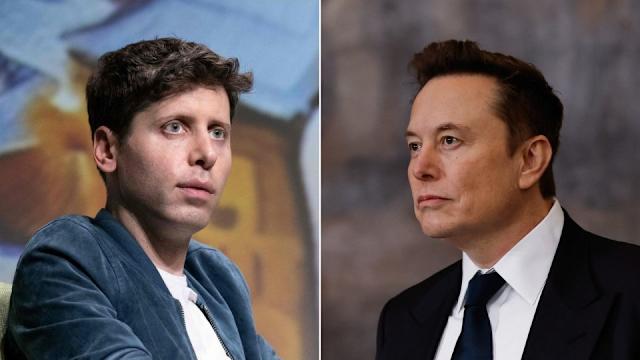
When Elon Musk accused Sam Altman of effectively “stealing a charity,” the claim cut through the noise surrounding artificial intelligence for a simple reason: it raises a legal question most people do not understand but immediately recognise as serious.
At the centre of the dispute is OpenAI, an organisation that began as a nonprofit with a public-interest mission and has since evolved into a complex structure tied to billions in commercial investment. The legal tension is not just about personalities or power struggles; it is about whether a nonprofit can be redirected, reshaped, or effectively controlled in ways that appear to conflict with its original purpose.
Nonprofits are fundamentally different from traditional companies because they do not have owners in the conventional sense. There are no shareholders to buy control, no equity stakes that can be acquired, and no straightforward takeover mechanism.
Instead, authority rests with a board of directors whose legal duty is to act in the best interests of the organisation’s stated mission rather than to maximise profit. That duty, known as fiduciary responsibility, is central to understanding the dispute.
If a nonprofit begins operating in ways that prioritise commercial outcomes or external investment returns, the legal question becomes whether those decisions still align with the organisation’s original purpose or whether they represent a shift that could expose the leadership to challenge.
The complexity in this case comes from OpenAI’s hybrid structure, which blends nonprofit oversight with a capped-profit entity designed to attract investment while maintaining a formal commitment to its founding mission. On paper, this structure allows the organisation to scale while preserving its public-interest focus.
In practice, however, it introduces competing pressures that the law has not fully caught up with, particularly when significant capital is involved. Investors expect returns, leadership teams pursue growth, and strategic decisions increasingly resemble those of a commercial enterprise.
Musk’s argument appears to centre on whether that evolution crosses a legal line, suggesting that the organisation’s trajectory may no longer reflect what it was originally established to do.
Courts are typically cautious when it comes to intervening in nonprofit governance. Change in direction is not inherently unlawful, especially in industries that evolve as rapidly as artificial intelligence. To succeed in a legal challenge, it is not enough to show that an organisation has changed; there must be evidence that those in control have breached their duties, misrepresented the organisation’s purpose, or allowed private interests to override the public mission.
This is a high threshold, and it is one reason disputes like this are difficult to resolve definitively. Boards are generally given wide discretion in how they interpret and pursue their objectives, and unless there is clear evidence of bad faith or misconduct, courts tend to avoid substituting their judgment for that of those in charge.
What makes this dispute particularly significant is that it highlights a growing legal grey area that extends far beyond a single organisation. Hybrid models that combine nonprofit structures with commercial arms are becoming more common, especially in sectors where funding requirements are substantial and innovation depends on scale.
This creates a structural tension between mission and money that the law is only beginning to address. Questions around who truly controls decision-making, how influence is exercised behind the scenes, and how public benefit is measured in a commercially driven environment are becoming increasingly relevant.
The outcome of this dispute may not provide a simple answer, but it will shape how similar organisations are scrutinised in the future and how far a nonprofit can evolve before its legal identity is called into question.