
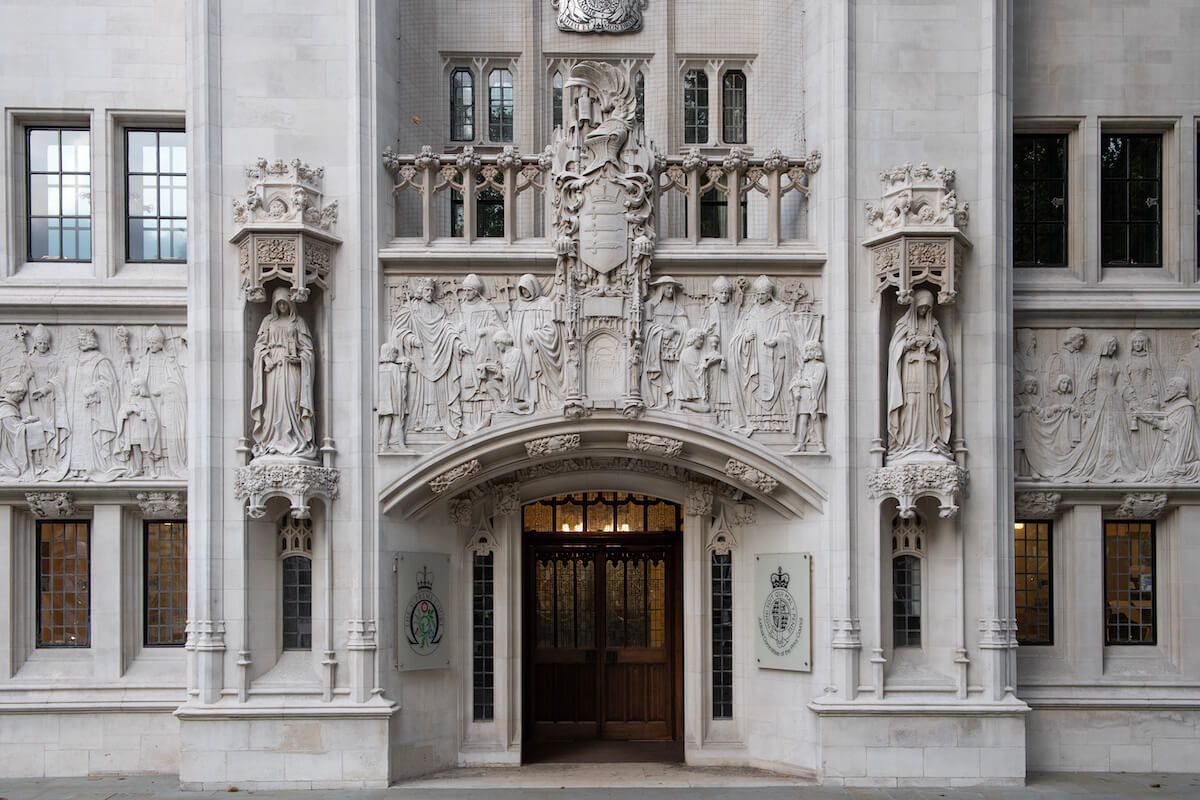
Can insurers deduct furlough payments from business interruption insurance claims? The UK Supreme Court has now given a definitive answer in Gatwick Investment Ltd v Liberty Mutual Insurance Europe SE ([2026] UKSC 14).
The Court unanimously dismissed the appeal, confirming that payments made under the Coronavirus Job Retention Scheme (CJRS) can reduce insurance recoveries where the policy’s savings clauses require it.
The key legal point is straightforward but significant: there is no general rule governing the treatment of furlough payments. Everything turns on the proper construction of the insurance contract. The question is whether, read in its commercial context, the policy treats those payments as reducing the insured’s loss for the purposes of indemnity.
In reaching that conclusion, the Court focused on the economic effect of the payments rather than their legal form. Where government support reduces the financial burden on the business, it may fall within the scope of contractual deductions designed to prevent over-indemnification.
For insurers, this clarification directly affects claims valuation, reserving, and litigation risk. For policyholders, it determines whether external financial support reduces recoverable losses under business interruption cover.
More broadly, the decision establishes a clear framework for how state support interacts with private insurance, an issue likely to arise whenever governments intervene during systemic disruption.
How the Supreme Court Approached Furlough Payments and Insurance Claims
The case arose from business interruption claims brought by hotel and leisure operators whose businesses were disrupted by Covid-19 restrictions. Insurers accepted that the policies were triggered but disputed how losses should be calculated.
The dispute centred on “savings clauses”—standard provisions allowing insurers to deduct amounts where business expenses “cease or reduce” due to the insured event. Lower courts had held that CJRS payments should be deducted. The Supreme Court was asked to determine whether that interpretation was correct.
The Court confirmed that insurance policies must be interpreted objectively, asking what a reasonable person would understand the wording to mean in its commercial context.
A key point in the Court’s reasoning is that the analysis focuses on economic reality rather than legal form. It rejected the argument that costs are not “reduced” simply because employers first pay wages and are later reimbursed. Instead, what matters is that, in substance, the employer does not bear the full cost.
The Court emphasised that the purpose of savings clauses is to prevent over-indemnification. If a policyholder receives external financial support that reduces the financial impact of the loss, that saving can fall within the clause.
On causation, the Court found a direct and predictable link between the insured peril (Covid-19 disruption) and the receipt of CJRS payments. The payments reduced employment costs in consequence of that disruption, meaning they could be taken into account under the policy.
How This Decision Changes Insurance Claims
The decision in Gatwick Investment Ltd v Liberty Mutual Insurance Europe SE reinforces a core principle of insurance law: financial outcomes are determined by the wording of the policy, not by general notions of fairness. The concept of indemnity remains central, but it is applied through the specific terms agreed between insurer and policyholder.
For insurers, liability depends on whether the policy permits deduction of payments made under the Coronavirus Job Retention Scheme (CJRS). Where savings clauses apply, claim values may be reduced.
Where they do not, insurers remain liable for the full loss. Misinterpretation or inconsistent application of those provisions increases exposure to disputes, underpayment claims, and litigation.
For policyholders, the ruling highlights that external financial support may reduce recoverable losses under business interruption insurance. This has a direct impact on how effectively insurance operates as a risk transfer mechanism and may significantly affect the financial outcome of claims.
At a structural level, the case exposes a recurring tension between public support and private insurance. Government schemes are intended to stabilise businesses, but their interaction with insurance recoveries depends entirely on contractual drafting. In the absence of clear wording, that interaction becomes a source of uncertainty and dispute.
The Court’s emphasis on economic effect over legal form is particularly significant. It indicates that future disputes will focus on the real financial impact of payments, rather than how they are structured or delivered. This approach is likely to shape how similar issues are analysed in future claims involving government intervention.
What This Ruling Means Going Forward
The UK Supreme Court has now set binding precedent on how savings clauses operate where external financial support is received in connection with business interruption losses.
For organisations, the immediate priority is to review policy wording at the point of claim and at renewal. Clauses dealing with expense reductions and third-party payments must be understood in detail, as they will determine whether government support—such as CJRS payments—reduces recoverable losses.
For insurers, the decision reinforces the need for consistent claims handling aligned with policy terms. Deductions must be applied only where supported by the wording, and the ruling is likely to influence future drafting, with more explicit provisions addressing the treatment of external financial support.
The significance of the decision extends beyond the Covid-19 context. It establishes a framework for how insurance contracts respond when government intervention reduces the financial impact of an insured event.
In such cases, the interaction between public support and private indemnity will continue to be governed by contractual interpretation.
As government support becomes a recurring feature in periods of economic disruption, disputes over its effect on insurance claims are likely to arise. In each instance, the outcome will turn on the wording of the policy, rather than any general rule governing public financial assistance.
Key Legal Questions
Who this applies to: insurers, policyholders, legal teams, and risk managers.
Can insurers deduct furlough payments from business interruption claims?
Yes—where the policy wording allows those payments to be treated as a reduction in insured loss.
What are “savings clauses”?
Contractual provisions allowing insurers to reduce payouts where business expenses decrease as a result of the insured event.
Do government support schemes automatically reduce insurance payouts?
No. Their effect depends entirely on how the policy is drafted.
What legal test did the Court apply?
Objective contractual interpretation, focusing on wording, commercial context, and the economic effect of payments.
Why does this ruling matter for future claims?
Because it establishes how external financial support interacts with insurance indemnity—an issue likely to recur in future crises.