
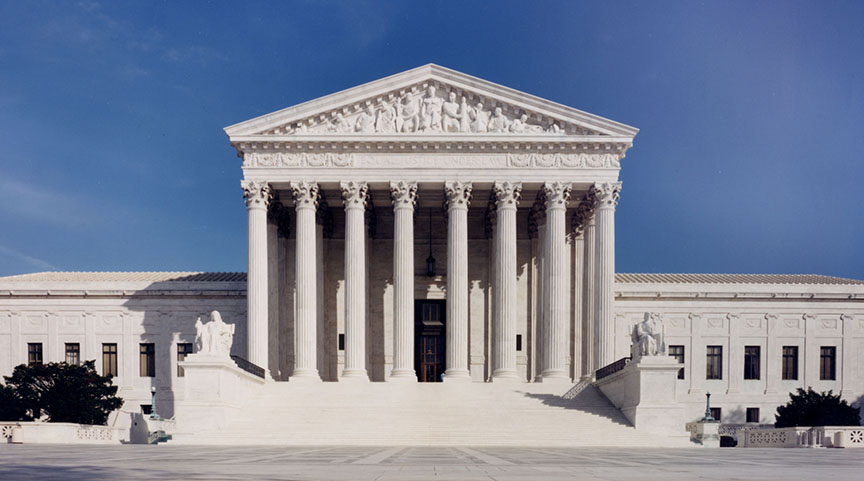
When can the government demand your donor list, and can you challenge it before complying? The Supreme Court of the United States has clarified in First Choice Women’s Resource Centers, Inc. v. Davenport that a subpoena seeking donor identities may itself create a present First Amendment injury, allowing a legal challenge before any court compels disclosure.
For organisations, this establishes a critical compliance threshold. Legal risk arises at the moment a disclosure demand is issued, not when information is ultimately produced. Any subpoena or regulatory request involving donor, membership, or stakeholder identity data must therefore be assessed immediately for its potential to deter association and engage constitutional protections.
In practice, this means legal and compliance teams should treat such demands as legally significant events requiring early escalation, structured review, and, where appropriate, consideration of pre-enforcement challenge. Routine handling of subpoenas without constitutional assessment may expose organisations to avoidable legal and reputational risk.
Legal Issue and Constitutional Framework
The case arose after the New Jersey Attorney General issued a subpoena to a nonprofit organisation requiring disclosure of donor identities, including names, addresses, and employment details.
The organisation challenged the subpoena under federal law, arguing that the demand discouraged donors from associating with it and therefore infringed its First Amendment rights. Lower courts dismissed the claim on the basis that no injury had occurred because the subpoena had not yet been enforced.
The Supreme Court of the United States reversed that position in First Choice Women’s Resource Centers, Inc. v. Davenport, holding that the existence of the subpoena itself can create an ongoing constitutional injury.
The decision turns on the interaction between Article III standing requirements and First Amendment associational rights, and clarifies that constitutional challenges may proceed at the investigative stage where protected freedoms are implicated.
To bring a constitutional claim in federal court, a claimant must demonstrate a concrete and actual or imminent injury. The Court confirmed that this requirement can be satisfied prior to enforcement where government action imposes a real and present burden on protected rights. In this context, the burden arises from the effect of the demand itself, rather than any subsequent legal compulsion.
The Court reaffirmed that the First Amendment protects not only freedom of speech but also the right to associate privately. Compelled disclosure of donor or membership information can deter participation, alter behaviour, and weaken the ability of organisations to operate effectively. As a result, such disclosure demands engage constitutional protections even in the absence of public dissemination.
Crucially, the Court made clear that injury arises at the point the demand is made, not only when it is enforced, and that assurances of confidentiality do not remove the constitutional concern.
The deterrent effect on association is itself sufficient to constitute legally recognisable harm. For organisations and regulators, this establishes that investigative requests for sensitive association data must be assessed not only for procedural validity, but also for their potential to engage constitutional risk at the outset.
Compliance, Liability, and Organisational Risk
This ruling applies to any organisation that maintains or relies on confidential association data, including nonprofits, membership bodies, advocacy groups, and corporate entities managing stakeholder or donor networks. It is directly relevant to legal, compliance, and governance functions responsible for responding to regulatory or investigatory requests.
A critical shift established by the decision is that legal risk arises at the point a subpoena or disclosure demand is issued, not at the stage of enforcement. Organisations must therefore treat any request for donor, member, or stakeholder identity data as a legally material event requiring immediate assessment.
This includes determining whether the request is capable of deterring participation or interfering with associational rights, evaluating the sensitivity and scope of the data sought, and assessing whether a pre-enforcement legal challenge may be justified. Internal commitments, including privacy policies, donor assurances, and contractual confidentiality obligations, must be reviewed to ensure that any response is consistent with both legal duties and organisational representations.
Effective compliance requires structured and documented processes. Requests involving sensitive association data should be escalated without delay to legal counsel and formally assessed in terms of constitutional exposure, regulatory authority, and overall risk impact.
Where appropriate, organisations should engage with the requesting authority to clarify purpose, narrow scope, or seek judicial direction before disclosure occurs. In higher-risk scenarios, particularly where constitutional rights or material stakeholder interests are engaged, escalation to senior management or board level is necessary to ensure appropriate oversight and accountability.
The decision materially expands exposure to constitutional challenge by recognising that regulatory subpoenas can create constitutional exposure at the investigative stage. Legal risk arises where organisations fail to assess or respond appropriately to disclosure demands that engage protected rights.
Operational risks may follow where disclosure undermines participation, reduces funding, or disrupts stakeholder relationships. Regulators may also face legal challenge where requests are disproportionate, insufficiently justified, or inconsistent with constitutional protections. Reputational risk remains a significant consideration, as any perceived erosion of confidentiality may weaken trust among donors, members, and partners.
Importantly, these risks arise even where no disclosure ultimately takes place. The existence of the demand alone may create sufficient pressure to deter association. Early-stage legal and compliance assessment is therefore essential. Organisations must move beyond treating subpoenas as routine administrative processes and instead integrate constitutional risk analysis into their compliance and governance frameworks.
For organisations operating across jurisdictions, this requires additional consideration of how disclosure obligations interact with broader privacy, data protection, and fundamental rights regimes.
Cross-border data flows, differing legal standards, and overlapping regulatory requirements may increase exposure where sensitive association data is involved. As a result, organisations should ensure that their data governance, compliance protocols, and legal response strategies are capable of addressing both domestic constitutional obligations and international regulatory expectations.
What This Means for Regulators and Legal Challenges
For regulators and public authorities, the ruling establishes clear constraints on the exercise of investigative powers. Requests for donor or membership data must be justified by a legitimate regulatory objective, proportionate to that objective, and narrowly tailored to avoid unnecessary interference with protected rights.
Investigatory authority must be exercised in a manner that is constitutionally defensible at the point of issuance, not merely at the stage of enforcement. As a result, regulators must anticipate pre-enforcement legal challenges and ensure that disclosure demands are supported by a clearly defined purpose, limited in scope, and capable of withstanding judicial scrutiny from the outset.
The Court’s reasoning confirms a significant development in standing doctrine by recognising that constitutional injury can arise from deterrence alone. Government demands may burden protected rights even in the absence of enforcement action, and courts are therefore entitled to treat “chilling effects” on association as legally sufficient harm.
This approach expands access to federal courts and broadens the circumstances in which constitutional challenges may proceed, particularly where government action affects participation in protected forms of association.
While the ruling does not determine whether the subpoena itself is lawful, it establishes that such claims may proceed and be assessed on their merits at an earlier stage. Its impact is primarily procedural, but the consequences are substantial.
Organisations are now able to challenge investigative actions before compliance is compelled, courts will evaluate constitutional risks at the outset of proceedings, and regulators must operate on the basis that the act of issuing a demand may itself trigger judicial review.
In practical terms, this is likely to increase litigation involving subpoenas that seek sensitive association data and to influence how regulatory strategies are designed, documented, and implemented.
Authorities must ensure that investigative practices are not only legally authorised but also demonstrably proportionate and necessary, while organisations must be prepared to respond to such requests with early-stage legal analysis and, where appropriate, constitutional challenge.
What This Means Globally
Although grounded in U.S. constitutional law, the principle that disclosure demands can deter participation has broader international relevance. Organisations operating across jurisdictions must assess how requirements to disclose donor or membership data interact with privacy, data protection, and fundamental rights frameworks in other legal systems.
Where association data is involved, conflicts may arise between regulatory disclosure obligations and protections designed to preserve confidentiality and freedom of association. As a result, organisations must ensure that their data governance frameworks are capable of withstanding scrutiny under multiple, and potentially competing, legal standards.
In practical terms, the ruling establishes that a subpoena requesting donor information may create immediate constitutional exposure, allowing organisations to challenge the demand before enforcement. Legal risk therefore arises at the point of request rather than at the stage of compliance, and assurances of confidentiality do not remove the underlying constitutional concern.
Organisations must incorporate early-stage constitutional risk assessment into their compliance processes, including evaluating the scope and purpose of disclosure requests, identifying the sensitivity of the data involved, and determining whether legal challenge or limitation of scope is appropriate.
For organisations with cross-border operations, this requires coordinated legal and compliance oversight. Disclosure obligations in one jurisdiction may trigger legal risk in another, particularly where sensitive association data is transferred or accessed across borders.
Effective compliance therefore depends on integrating constitutional analysis with data protection, regulatory, and governance frameworks to ensure that responses to disclosure demands are both legally defensible and operationally sustainable.
Frequently Asked Legal Questions
What is First Amendment donor disclosure standing?
First Amendment donor disclosure standing refers to the ability of organisations to challenge government demands for donor or membership data before enforcement where the request itself deters association and participation.
When must organisations act on a subpoena involving donor data?
Organisations must act immediately upon receipt of a subpoena where it seeks sensitive association data, as the Supreme Court has confirmed that legal risk arises at the point of demand rather than at enforcement.
Does confidentiality remove legal risk in donor disclosure cases?
No. The Court confirmed that even where information is disclosed only to government authorities and not the public, the demand itself may still deter association and create a constitutional issue.
Who is affected by the Supreme Court’s ruling in First Choice Women’s Resource Centers v. Davenport?
The ruling affects nonprofits, membership organisations, advocacy groups, and any entity that manages confidential association or donor data, as well as legal and compliance teams responsible for handling regulatory requests.
Can companies challenge subpoenas before enforcement?
Yes. The Supreme Court confirmed that organisations may bring pre-enforcement constitutional challenges where a subpoena creates a credible burden on First Amendment rights.
Next Stage in the Litigation
The case has been remanded for further proceedings to determine whether the subpoena itself violates the First Amendment. The lower courts will now assess the substance of the disclosure demand, including whether it satisfies constitutional scrutiny and whether it is sufficiently justified and proportionate in light of the rights at issue.
Future litigation is likely to focus on how courts evaluate subpoenas that seek sensitive association data, particularly the extent to which such demands can be tailored to legitimate regulatory objectives without creating an impermissible deterrent effect. The outcome will help define the practical limits of regulatory authority when requesting donor or membership information and clarify how constitutional protections apply at the investigative stage.
For organisations, regulators, and legal practitioners, the case should be monitored closely. It will shape how disclosure requests are drafted, challenged, and assessed in practice, and may influence both compliance frameworks and enforcement strategies. As courts continue to address these issues, the decision is likely to play a central role in defining the balance between investigatory powers and the protection of associational rights.