
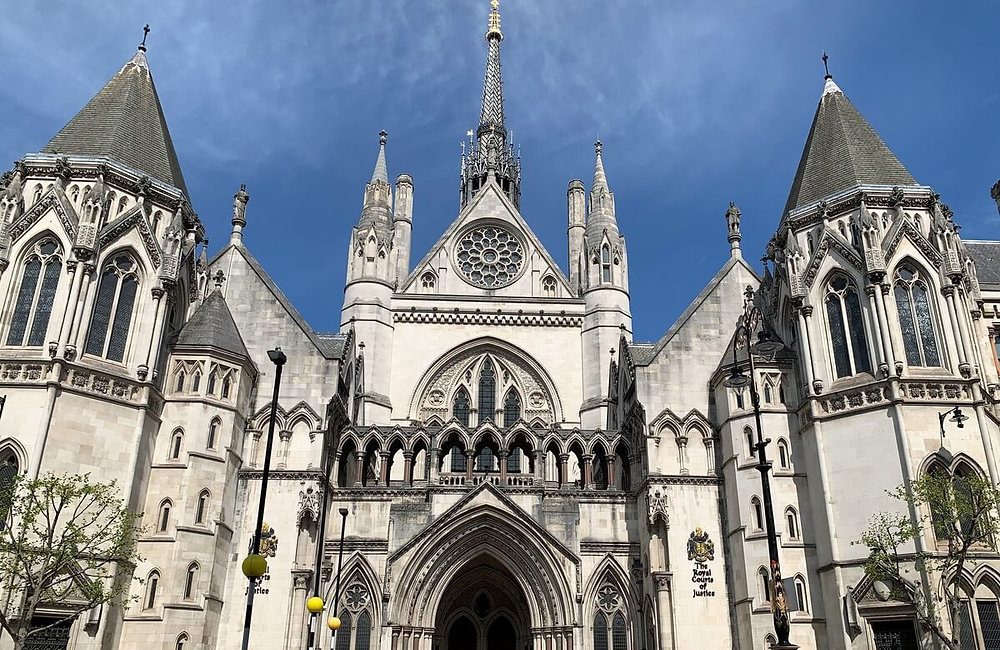
The High Court has refused a jury trial and imposed strict limits on evidence in the defamation dispute between Laurence Fox and Simon Blake, Colin Seymour and Nicola Thorp.
In judgments dated 18 May and 26 May 2022, Mr Justice Nicklin ruled that the case will proceed before a judge alone, ordered the defendant to pay the claimants’ costs of the application, and confirmed that reader-specific context and audience-based evidence are not admissible when determining meaning.
The decisions underline the modern approach to UK defamation litigation, where courts prioritise early legal determinations, controlled evidence, and efficient case management over broader factual disputes.
The Dispute in Brief
The claim arises from a series of tweets published on 4 October 2020 following statements by Sainsbury’s during Black History Month.
Laurence Fox criticised the supermarket’s messaging. Each claimant then responded on Twitter, describing him as “racist.” In reply, the defendant posted tweets referring to the claimants as “paedophiles.”
The claimants contend that these statements meant they had committed serious criminal offences involving children and caused serious harm to their reputations. They seek damages and injunctive relief.
The defendant accepts publication but disputes the meaning, arguing the tweets were no more than “tit-for-tat vulgar abuse” and not intended to be taken literally.
He also brings a counterclaim, alleging that the claimants’ accusations of racism were defamatory and caused reputational harm.
The proceedings therefore involve a claim and counterclaim in libel, raising issues including the natural and ordinary meaning of the statements, whether they are fact or opinion, and whether serious harm has been established under the Defamation Act 2013.
The High Court’s Decision and Reasoning
The High Court refused the defendant’s application for a jury trial, confirming that the case will proceed before a judge alone.
It also ordered the defendant to pay the claimants’ costs of that application, treating it as a self-contained procedural step that had failed and had delayed the progress of the litigation.
In a related ruling, the Court refused requests for disclosure, third-party material, and expert evidence aimed at establishing how different readers may have understood the tweets.
It confirmed that the case will proceed to the determination of preliminary issues, including the natural and ordinary meaning of the statements and whether they are defamatory.
In reaching its decision on the mode of trial, the Court rejected the defendant’s argument that a jury was required due to a risk of apparent or “involuntary bias.”
Applying the established legal test, it held that a fair-minded and informed observer would not conclude that a judge would be biased.
The Court emphasised that meaning in defamation law is determined objectively, based on how the ordinary reasonable reader would understand the words, and not by reference to external definitions or guidance.
The Court also relied on the practical realities of modern defamation litigation. Judge-alone trials allow for early determination of key issues such as meaning, reduce costs, and support effective case management.
By contrast, jury trials limit the court’s ability to control proceedings and can lead to unnecessary complexity.
The importance of a reasoned judgment was also central: in a case involving multiple potential meanings and defences, a judicial decision provides clarity that a general jury verdict cannot.
On costs, the Court applied the usual rule that the unsuccessful party pays. It described the application as “ambitious” in light of the modern legal position and noted that it had disrupted the progress of the case.
Finally, the Court clarified the limits of admissible evidence when determining meaning.
It reaffirmed the single meaning rule, under which a publication is assigned one objective meaning assessed by reference to the hypothetical ordinary reasonable reader.
Evidence of how different readers actually encountered or understood the tweets is not admissible at this stage.
The defendant’s attempt to analyse how tweets appeared to different categories of readers—such as followers, non-followers, or those encountering retweets—was rejected.
The Court held that such an approach would improperly introduce reader-specific context into what must remain an objective exercise.
Context remains relevant, but only in a limited sense. The Court confirmed that admissible context must be material available to all readers.
Personalised timelines, algorithm-driven feeds, and variations in how content is encountered fall outside that scope.
Such matters may become relevant later, particularly when assessing serious harm, but not when determining the natural and ordinary meaning.
Key Takeaways for Business
For legal teams managing reputational risk, the rulings confirm that modern defamation litigation is tightly structured and judge-led.
Jury trials are now exceptional, and courts will expect disputes to be resolved through staged legal analysis rather than broad factual exploration.
The decision also draws a clear boundary on evidence. Arguments based on how different audiences interpret online content will not assist at the meaning stage.
The court will focus on a single, objective interpretation, with audience impact considered later when assessing serious harm.
The costs ruling is a practical warning on litigation strategy. Procedural applications that depart from established practice may be pursued, but if unsuccessful are likely to result in adverse costs orders and delay to the proceedings.
What Happens Next
The Court indicated that it will give directions for the determination of preliminary issues, including the natural and ordinary meaning of the tweets, whether those meanings are defamatory, and whether the statements are fact or opinion.
Issues such as serious harm, actual audience impact, and any remedies will be addressed later in the proceedings if required.
The dispute has since progressed, with a permission to appeal application lodged before the UK Supreme Court (UKSC/2026/0041).
Case Details
- Court: High Court of Justice (Queen’s Bench Division, Media & Communications List)
- Dates: 18 May 2022; 26 May 2022
- Case name: Blake & Others v Fox
- Docket number: QB-2021-001248
- Area of law: Defamation / litigation procedure
- Result: Jury trial refused; defendant ordered to pay costs; evidential limits imposed on meaning
People Also Ask
Why are jury trials rare in UK defamation cases?
There is no longer a presumption in favour of jury trial. Courts generally prefer judge-alone trials for efficiency, cost control, and clear reasoning.
What is the single meaning rule in defamation law?
It requires the court to assign one objective meaning to the words complained of, based on how an ordinary reasonable reader would understand them.
Can courts consider how different readers saw a tweet?
No. Reader-specific interpretations are not considered when determining meaning. The test is objective and uniform.
Is social media context relevant in defamation cases?
Only limited context available to all readers is considered when determining meaning. Broader context may be relevant later, such as for serious harm.
Who pays costs for failed applications in litigation?
Typically, the unsuccessful party pays. In this case, the defendant was ordered to pay the claimants’ costs of the jury trial application.