
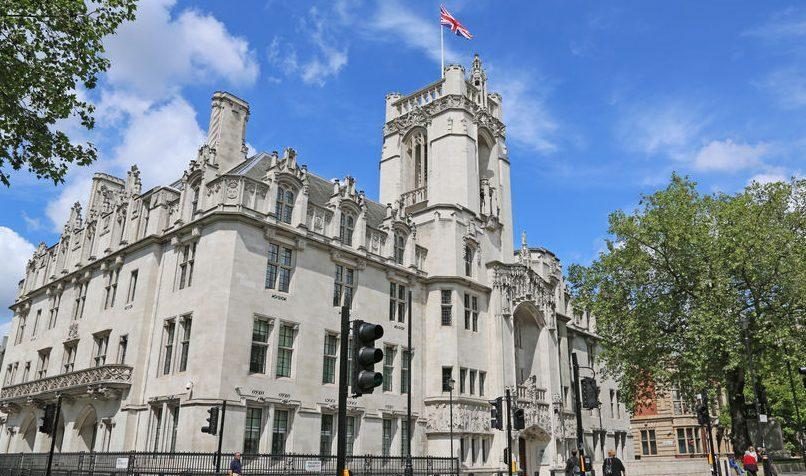
What constitutes a “right exercised by the public at large” is the central issue before the UK Supreme Court in a pending appeal concerning the scope of the statutory public nuisance offence.
Under UK criminal law, liability in this context depends not only on whether obstruction occurs, but on whether the activity interferes with a right that belongs to the public as a whole rather than to a defined or permission-based group.
The case turns on a critical evidential threshold within the statutory framework. A prosecution can only proceed if the right said to be obstructed is one capable of being exercised by the public at large.
Where access arises through licence, permission, or conditional entry onto private premises, that requirement may not be satisfied. In such circumstances, the absence of a qualifying public right is capable of bringing proceedings to an end before they are considered by a jury.
The Court is therefore examining whether obstruction at the boundary of private commercial premises—specifically access to and from a business site can meet that legal standard.
The outcome will determine how far the criminal law extends into privately controlled environments that are routinely used by employees, customers, and suppliers, and will shape future enforcement, litigation strategy, and risk assessment in cases involving disruption to commercial operations.
Implications, Legal Significance, and Anticipated Impact
Although the case arises from protest activity, its implications extend across a wide range of commercial and regulated environments.
Many organisations operate from premises that are privately owned but routinely accessed by employees, customers, contractors, and suppliers, including industrial estates, logistics centres, and large-scale commercial facilities.
The central legal issue is whether disruption at such locations can engage criminal liability under public nuisance law, or whether it falls outside the statutory framework because the underlying rights are not exercised by the public at large.
This question has direct consequences for legal risk and enforcement exposure. The statutory test does not turn on the existence of disruption alone, but on whether that disruption interferes with a qualifying public right.
A broader interpretation of “public at large” would extend criminal liability into areas of commercial activity where access is conditional or controlled, increasing the scope for prosecution in cases involving interference with business operations.
A narrower interpretation would reinforce the boundary between criminal law and disputes more appropriately addressed through private law remedies or regulatory controls, limiting the circumstances in which operational disruption escalates into criminal liability.
At a structural level, the case tests the reach of criminal law into environments that are privately controlled yet functionally open to defined categories of the public.
It raises a fundamental question about how statutory offences designed to protect collective public rights should operate in contexts governed by permission, licence, and conditional access.
The resolution of that question will shape how courts distinguish between public and private rights, influencing not only protest-related prosecutions but also the broader legal framework governing access, obstruction, and liability.
Although judgment is pending, the issues before the Court indicate that its reasoning will focus on the interpretation of “public at large” within the statutory scheme, including whether the concept is confined to legally enforceable rights or extends to broader freedoms of movement and access.
The decision is also likely to clarify the role of trial judges in assessing whether the evidential threshold is met at an early stage, particularly where the character of the right in question is contested.
The outcome will therefore have practical implications beyond the immediate case.
It will inform how prosecutors frame charges, how courts evaluate evidential sufficiency, and how organisations assess and manage legal risk in situations involving disruption to access at privately owned but publicly used sites.
What the Supreme Court Will Decide Next
The UK Supreme Court has heard argument and is now awaiting judgment. Its decision will determine whether the trial judge was correct to halt proceedings at the “no case to answer” stage, or whether the Court of Appeal was right to conclude that the evidential threshold had been met and the case should proceed to a jury.
More significantly, the judgment will clarify how courts should interpret the requirement that a right be “exercised by the public at large” under the statutory public nuisance framework.
That clarification will define the boundary between qualifying public rights and activities that depend on permission, licence, or controlled access, and will determine how rigorously this threshold is applied at an early stage of criminal proceedings.
The outcome is likely to influence how prosecutors assess charge viability, how trial judges evaluate evidential sufficiency, and how organisations understand legal exposure in situations involving disruption to access at privately owned but publicly used sites.
In that sense, the decision will not only resolve the present appeal but will also establish a practical framework for the application of modern public nuisance law in future cases.
Case Details
- Case: R v McCafferty and others
- Court: UK Supreme Court
- Respondent: Crown Prosecution Service
- Legislation: Police, Crime, Sentencing and Courts Act 2022
- Issue: Scope of “public rights” under public nuisance law
- Status: Awaiting judgment
People Also Ask (PAA)
1. What is a “right exercised by the public at large” in UK law?
It is a right shared by the general public as a whole, rather than one limited to specific individuals or groups who have permission or contractual access.
2. What does “no case to answer” mean in UK criminal law?
It means the prosecution has failed to present sufficient evidence on an essential element of the offence, so the case should not proceed to the jury.
3. Can blocking access to private property be a criminal offence in the UK?
Yes, but only if the obstruction interferes with a right exercised by the public at large. If access depends on permission, it may fall outside public nuisance law.
4. What is public nuisance under UK law?
Public nuisance is a criminal offence under the Police, Crime, Sentencing and Courts Act 2022 involving conduct that causes serious harm or obstructs the public in exercising shared rights.
5. Why is the Supreme Court case on public nuisance important?
It will clarify whether access to private premises can count as a public right, shaping how courts apply criminal liability in cases involving disruption to business operations.