
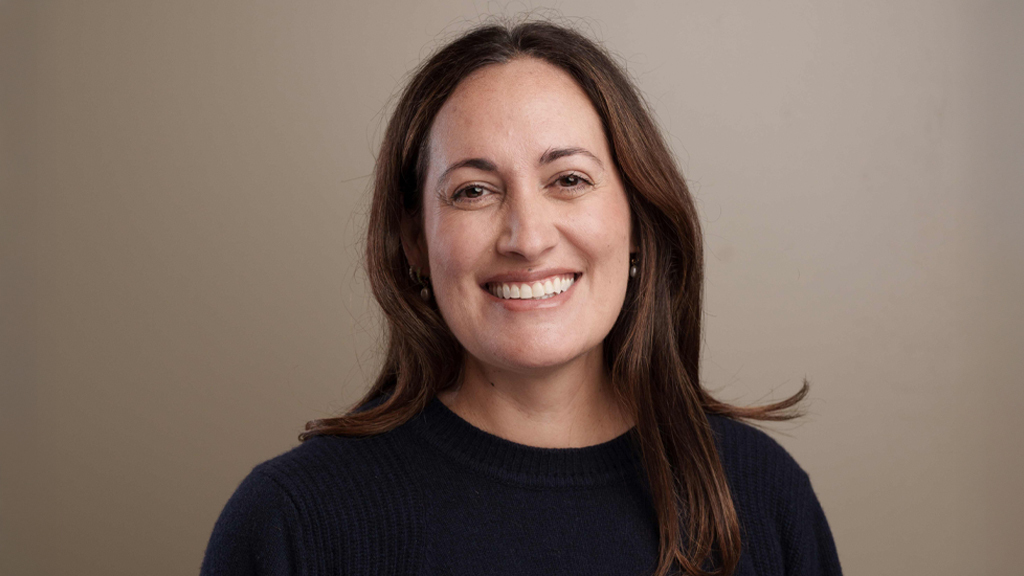
Open banking has sharpened the fight over control, data and competition in payments, and Trustly sits right in the middle of it. As Group Chief Legal Officer, Chantelle Zemba is dealing with the legal and regulatory strain that comes with building a business in a market still shaped by rules written for older models of banking and payments.
In this interview, she reflects on the challenges facing fintech legal teams, what her years at Deliveroo taught her about growth and risk, and why in-house lawyers need to be involved long before difficult decisions land on the board’s desk.
Trustly operates in a heavily regulated part of the market. From your perspective, what are the main legal challenges facing the business right now?
The specific legal challenges differ depending on the region, but generally (regardless of the region) the biggest challenge we have is navigating the business through constantly evolving regulation.
Open Banking is “open” because it states that the consumer is in charge of their banking data, not the bank. Trustly operates smack bang in this space and with that comes legal challenges. We operate in a highly regulated environment, but the regulations are in many places designed for a world of traditional banking and payment services, not for a world in which consumers own their data and where Pay by Bank is a genuine (and, we think, better) alternative to card payments.
We want to increase competition in the payments market and give consumers more control and more choice when they transact. But because what we do is new, there are a number of legal challenges we need to address. Is what we are doing safe? YES – and we welcome the opportunity to demonstrate that. Are banks right to challenge or want to restrict what we can do? NO – but it’s understandable that they do, given their responsibilities towards their customers. So we need to demonstrate and reassure the banks and regulators that our systems and consumer protection measures are robust.
You spent many years at Deliveroo during a period of rapid growth and major scrutiny. What experience from that time has been most useful since moving to Trustly?
I arrived at Deliveroo on secondment when the company was still relatively small, and the legal team’s job was very much defined as managing the risk the company was carrying based on its current operations. I joined the company full time, and later became General Counsel, and we redefined that scope completely.
The single best thing about working in house for the right business, is the ability to get to shape not just the legal strategy, but the overall strategy of the company. Your job is not just to manage risk, your job as someone sitting on the executive team is the same as any other leader – to deliver on the company goals: delivering growth, profitability, differentiation etc.
You have to combine that with the obvious responsibilities of a chief legal officer. So your job is not just to manage risk, rather it is to have an overview of the priorities of the company and to decide where the company can afford to and should take risks and, based on that, to get lawyers involved in the strategic direction and product details of new initiatives, while deciding where to derisk in other lower priority areas.
Instead of being handed a finished product and being asked to derisk, you are involved from concept to design to roll out. And that is what makes the job so interesting because you are first and foremost a lawyer, but you are also intricately involved in the business’ strategy. That approach is one I will apply to Trustly for sure.
How different is the legal job in payments from the one you had in a consumer technology business like Deliveroo?
There are different challenges for sure. The world of fin tech is much more regulated than that of Deliveroo. But the approach I take to both is the same: get involved right from the beginning of the process, not once all the commercial and tech decisions have been made. Take a broader approach than pure interpretation of the laws surrounding the company.
Both Deliveroo and Trustly operate in what are often grey areas of the law – because the laws in place were not written for the businesses of today. Therefore the job is not just about interpreting the current law, it’s about helping to shape the legislation and regulation of the future. And that means taking a broader view of the landscape in which we are operating: what is the political environment as well as the regulatory and legal landscape.
And to do the job well you have to be across every part of the company: its fundraising plans, its core operations, its staff policies and security, its consumer data and how that is stored and used. This is what makes these companies so exciting and the legal job so interesting and challenging.
Trustly works across multiple countries and regulatory systems. How do you keep the legal approach consistent while still dealing properly with local rules?
If your company’s mission is clear, your legal approach too will be clear. At Deliveroo, we were clear that the gig economy was a genuinely new way of working which people wanted. The legal framework for determining self employment was out of date. But at the same time there absolutely needed to be a framework in place that protected those employed in the gig economy.
At Trustly, we firmly believe that a customer’s banking data belongs to that customer, not the bank they happen to have opened an account with. But at the same time, if multiple third parties including Trustly are to access that data with the consumer’s consent, there needs to be strong consumer protections in place to ensure that data is safe.
We firmly believe that consumers and merchants want choice in how they make and receive payments. Ultimately, if you have a clear mission as a company, you can make your overall legal argument in different jurisdictions and in countries at different stages of their open banking journey, while ensuring you are complying with local rules and engaging with local policy makers.
In a business like Trustly, speed matters commercially, but so does getting the risk right. How do you approach that balance?
If you are clear about the company’s priorities, and, just as important, invested in those priorities, then balancing legal risk with speed of execution is no longer a challenge because you can make sure lawyers are at the table from the get go and they can help shape the roll out of new products in a way that makes them legally viable as well as commercially appealing.
What legal or governance issues do you think boards and senior leadership teams still underestimate in payments and financial technology?
There are three dynamics that need to be at the forefront of the minds of Boards and Senior Leadership in this space:
- Fundamentally financial tech and payments access a hugely personal and critical part of a consumer’s life – their finances. Therefore having the right safeguards in place in terms of data privacy and security is imperative.
- The regulatory landscape is constantly evolving in multiple markets and are at various stages of maturity. The political landscape can sometimes also be relevant.
- The competitive landscape is highly dynamic.
It’s essential to closely monitor the interaction of these 3 dynamics, because it can cause unique and sometimes unexpected issues to arise. My job is to spot patterns emerging from this interaction, look around corners and anticipate potential risks and issues and then to put it on the radar of the Board and senior leadership.
You have worked in businesses growing at pace. What have you learned about building a legal team that can support growth without losing control of risk?
I think you absolutely have to prioritise the company’s growth and ambitions, but a legally dubious new product or service is not going to lead to growth.
It leads to endless problems which are time consuming to resolve and can ultimately inhibit growth. So my ambition is always to build a powerhouse within the business, with oversight of all the risks across every department and product line, and then advocate for the areas where risk is worthwhile and other areas where we need to derisk.
I look for expert lawyers who know their subject matter, but also people who want to learn about business, enjoy the highly competitive environment in which our business operates, know how to make trade offs, have strong judgement and can make decisions based on imperfect information and regulatory uncertainty.
Looking ahead, what do you think will define the strongest in-house legal teams in fintech over the next few years?
I don’t think legal fin tech teams are going to be any different to other legal teams. AI is transforming the legal function as it is so many areas in life and work, and the winning legal teams are going to be those who have a real seat at the table, the ones who are involved in decisions from the beginning and the ones who combine deep legal expertise with broader sound and strong judgement and pattern recognition to anticipate issues long before they arise and crucially a desire to win.
More from Lawyer Monthly:
Ron Klain on Airbnb’s Legal Strategy, Regulation and Housing Policy