
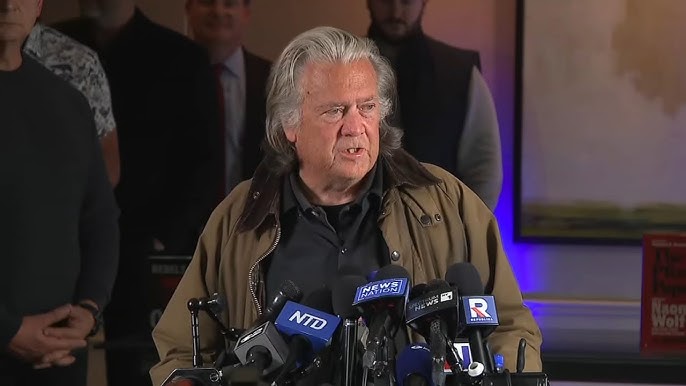
The U.S. Supreme Court has cleared the way for Steve Bannon, former White House adviser and political strategist for Donald Trump, to have his 2022 contempt of Congress conviction dismissed.
Bannon was originally convicted for failing to comply with congressional subpoenas related to the January 6, 2021, Capitol riot.
The Supreme Court’s brief unsigned order, issued on April 6, 2026, sends the case back to a lower federal court in Washington, D.C., which will now review the Justice Department’s motion to dismiss the indictment.
Bannon faced charges under 2 U.S.C. § 192, which criminalizes the willful refusal to comply with a congressional subpoena.
Conviction under this statute requires proof that the defendant received a lawful subpoena, acted willfully in refusing to comply, and had no valid legal justification.
Contempt of Congress is considered a misdemeanor, punishable by fines and up to one year in prison per count. Bannon served a four-month sentence at a low-security federal facility in Danbury, Connecticut, fulfilling the custodial requirement of his sentence.
In addition to the contempt case, Bannon pleaded guilty in February 2025 in New York state court to a fraud charge tied to a private fundraising effort for Trump’s border wall but avoided jail time.
He had previously been pardoned by Trump in 2021 for federal charges related to the same fundraising effort.
Legal Process and Broader Context
The Supreme Court’s order directs the lower federal court to consider the pending motion to dismiss the indictment. If the court grants the motion, Bannon will have no further criminal exposure in this matter, and no new trial is expected.
The case raises broader legal questions about the scope of congressional oversight and the limits of executive privilege.
It highlights the tension between Congress’s authority to compel testimony and documents and the legal protections afforded to former executive branch officials.
While largely symbolic, given that Bannon has already served his sentence, the anticipated dismissal underscores the role of prosecutorial discretion and judicial oversight in politically sensitive cases involving high-profile figures.
Court Review and Legal Implications
The lower federal court is now tasked with reviewing the Justice Department’s motion to dismiss the indictment in Steve Bannon’s contempt of Congress case. If the motion is granted, the matter will be fully resolved, with no additional trial or appeals expected.
While this concludes Bannon’s individual criminal liability, the ruling may have broader implications for congressional oversight and the enforcement of subpoenas.
In particular, it could shape how future subpoenas are enforced against former executive branch officials, especially in cases where executive privilege is invoked or political considerations are involved, reinforcing the balance between legal authority and institutional protections in high-profile, politically sensitive matters.
People Also Ask (PAA)
What is Steve Bannon’s contempt of Congress case about?
Bannon was convicted in 2022 for refusing to comply with congressional subpoenas related to the January 6, 2021, Capitol riot. The case centers on whether he willfully ignored lawful requests for testimony and documents.
What did the Supreme Court do in Steve Bannon’s case?
The Supreme Court issued a brief unsigned order sending the case back to the lower federal court for review of the Justice Department’s motion to dismiss the indictment.
What happens if the lower court dismisses the case?
If the motion is granted, Bannon will have no further criminal liability, and no new trial or appeals are expected. The ruling may also influence how future congressional subpoenas are enforced against former executive officials.