
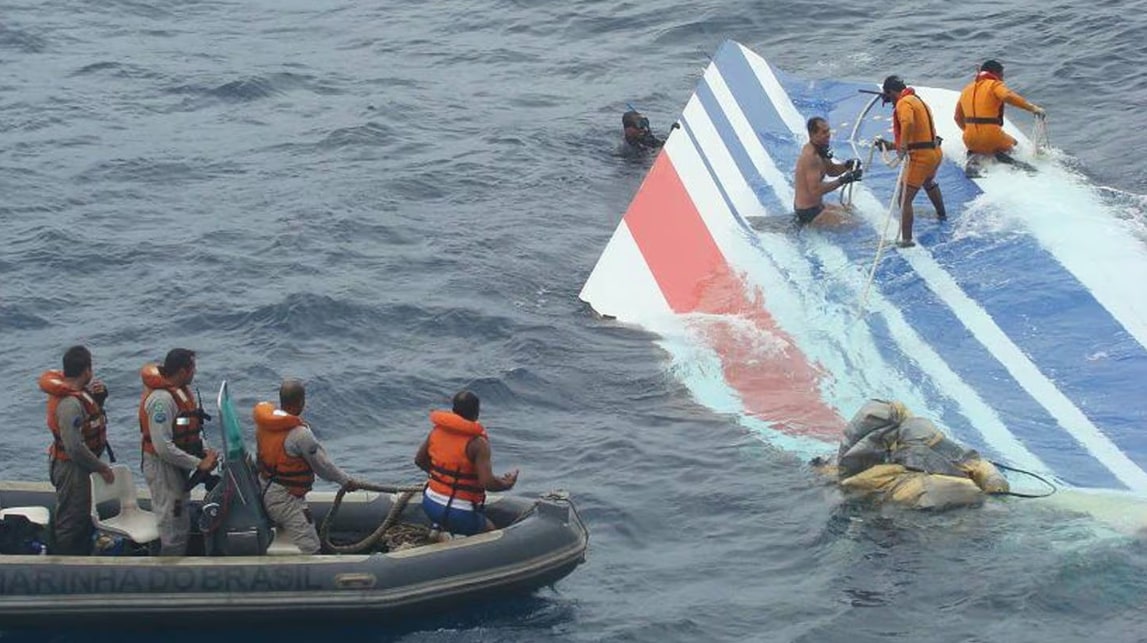
A Paris appeals court has found Airbus and Air France guilty of corporate manslaughter over the 2009 crash of Flight AF447, reopening difficult questions about safety oversight inside two of Europe’s biggest aviation companies.
The decision overturned 2023 acquittals and concluded that failures linked to training, technical oversight and safety management contributed to the disaster that killed 228 passengers and crew travelling from Rio de Janeiro to Paris. Both companies were ordered to pay the maximum €225,000 fine.
For companies the size of Airbus and Air France, the fines are manageable. The criminal liability finding is far more serious.
The ruling leaves both companies facing renewed legal fallout and reinforces how major aviation disasters can evolve into years of litigation, regulatory scrutiny and reputational damage long after a crash itself.
Why the AF447 Decision Matters
The AF447 prosecution drew attention across the aviation industry because prosecutors were required to prove more than pilot error alone. They had to convince the court that failures inside both the airline and aircraft manufacturer played a meaningful role in the chain of events leading to the crash.
French investigators previously concluded the aircraft’s pilots lost control after iced-up speed sensors triggered confusion in the cockpit and caused the Airbus A330 to stall over the Atlantic Ocean. Prosecutors argued the problems started long before the aircraft entered the storm, pointing to wider issues involving pilot training and the handling of earlier technical incidents linked to the aircraft systems.
The appeals court ultimately agreed those failures crossed the threshold for criminal liability.
The case moves scrutiny away from split-second pilot decisions and toward the corporate systems behind aviation safety. That changes the legal picture considerably.
Growing Pressure on Airlines and Manufacturers
The decision is likely to force aviation companies to document safety concerns, technical warnings and training decisions more aggressively.
That could become particularly important in future cases where prosecutors examine whether known operational risks were identified before a major incident occurred.
For airlines and aircraft manufacturers, criminal findings can lead to years of litigation, tougher regulatory oversight and lasting reputational damage. When public trust in airline safety weakens, the financial damage can last for years.
The ruling comes as airlines and manufacturers face renewed scrutiny over how maintenance issues and known technical risks are handled across the aviation industry.
Victims’ families spent nearly two decades pursuing accountability through the French courts. For many relatives, Thursday’s verdict represented official recognition that the crash involved failures inside the companies rather than pilot actions alone.
Airbus Plans Further Appeal
Airbus has confirmed it will appeal to France’s highest court, meaning the legal process could continue for several more years. Victims’ groups have urged both companies not to prolong proceedings further after almost two decades of investigations, hearings and appeals.
For the aviation industry, the ruling reinforces how courts are becoming more willing to examine internal corporate decision-making after fatal transport disasters, particularly in cases where companies were warned about technical or training problems before a crash occurred.