
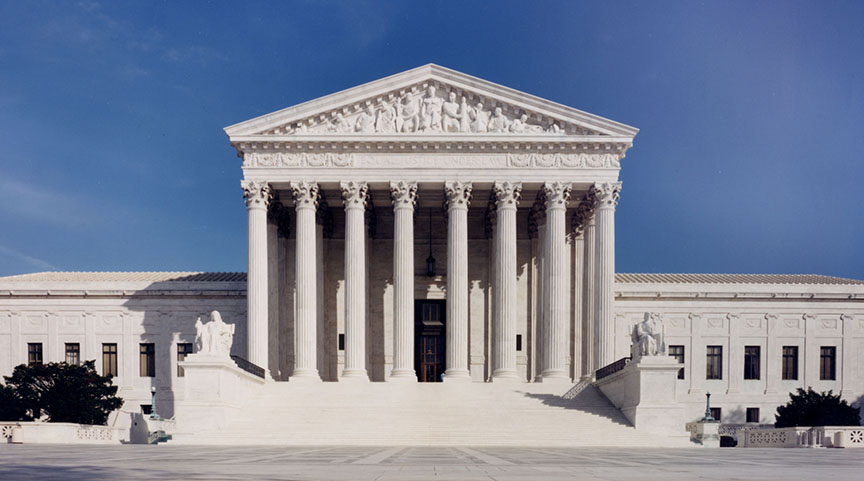
The Supreme Court has restored access to the abortion pill mifepristone by mail, but the key legal question is whether courts can restrict FDA-approved drug distribution while litigation continues.
At the centre of the dispute is a wider legal risk: who ultimately controls access to FDA-approved drugs — the courts, the states, or the FDA?
Justice Samuel Alito issued a temporary order on May 4, 2026 allowing patients to continue receiving mifepristone through telehealth and the mail while the Court considers emergency appeals.
The order pauses a ruling from the U.S. Court of Appeals for the Fifth Circuit, which had reinstated a requirement that the drug be collected in person following a lawsuit brought by Louisiana against the FDA.
The immediate effect is limited, but the legal signal is not, because it shows that access to a long-approved drug can face rapid disruption through emergency litigation before the courts have reached a final decision.
Mifepristone has been approved by the FDA since 2000 and is commonly used with misoprostol. Its distribution model has evolved over time to include telehealth prescribing and mail delivery, a system that has become more significant after the Supreme Court’s 2022 decision to overturn Roe v. Wade.
Louisiana’s challenge argues that federal rules allowing mail access conflict with its abortion laws, while other states have supported the FDA, warning that restricting distribution interferes with their own regulatory approaches. This creates a direct tension between federal authority over drug approval and distribution, state control over abortion policy, and the role of courts in intervening while disputes are still being litigated.
The deeper legal risk is not confined to abortion. If courts are willing to intervene in how an FDA-approved drug is accessed at an interim stage, it introduces uncertainty into the wider pharmaceutical system.
Drugmakers rely on regulatory stability when bringing products to market, and healthcare providers depend on consistent rules to deliver treatment. A sudden shift in distribution requirements, even temporarily, can force immediate operational changes and expose gaps between regulatory approval and practical access.
The Fifth Circuit’s ruling, and the need for emergency intervention from the Supreme Court to pause it, illustrates how quickly that stability can be challenged.
For companies such as Danco Laboratories and GenBioPro, the case is not only about maintaining access to one drug but about protecting the integrity of a regulatory framework that has been relied upon for years. Their filings describe the lower court’s order as unprecedented, reflecting concern about whether courts may be stepping into areas traditionally governed by regulatory and scientific judgment.
While no final precedent has been set, the situation creates a practical warning that litigation can be used to challenge established drug distribution systems before a full legal resolution is reached.
What happens next will determine whether the Supreme Court extends its pause or allows the Fifth Circuit’s restrictions to take effect while the case continues.
Either outcome will carry implications beyond this dispute, because it will signal how far courts are willing to go in intervening in regulatory frameworks at an interim stage. For now, access to mifepristone remains in place, but that access is now dependent on ongoing legal decisions rather than settled regulatory rules.