
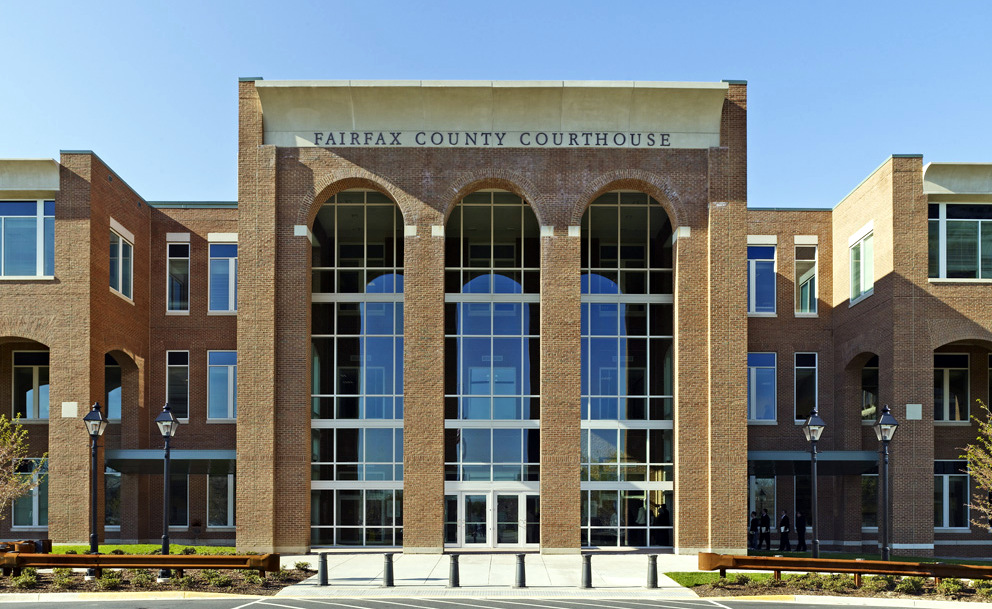
The U.S. Department of Justice has opened a civil rights investigation into Fairfax County Commonwealth’s Attorney Steve Descano over allegations that his office may have offered preferential plea agreements and sentencing outcomes to undocumented immigrant defendants while treating U.S. citizens differently in comparable criminal matters.
The investigation extends beyond local Virginia politics because it places prosecutorial discretion, immigration-related charging practices, and federal civil rights enforcement authority under direct legal scrutiny.
At issue is whether prosecutorial policies or decision-making practices may have produced unequal treatment between similarly situated defendants, potentially engaging federal anti-discrimination statutes tied to publicly funded criminal justice institutions.
In its initial statement, the Justice Department framed the matter as a civil rights and equal-protection inquiry connected to criminal justice administration rather than a traditional immigration enforcement action.
That distinction is significant because it suggests federal investigators are examining whether broader institutional policies, discretionary frameworks, or operational practices within the prosecutor’s office created discriminatory outcomes, rather than focusing solely on isolated case-level decisions.
The inquiry may also become an important test of how federal authorities apply civil rights enforcement powers to locally elected prosecutors, particularly where prosecutorial discretion intersects with politically sensitive issues involving immigration, sentencing policy, and criminal justice reform.
What the Investigation Involves
On May 6, 2026, the Justice Department announced that its Civil Rights Division had notified the Fairfax County Commonwealth’s Attorney’s Office of a formal federal investigation into its plea bargaining, charging, and sentencing policies.
According to the department, investigators will examine whether the office discriminated against U.S. citizens by allegedly offering more favourable treatment to undocumented immigrant defendants in criminal proceedings.
Assistant Attorney General Harmeet K. Dhillon said the investigation would assess whether prosecutorial decisions created unequal treatment based on immigration status, although the department also stressed that no conclusions have yet been reached.
The Justice Department has not publicly identified specific cases, defendants, or charging decisions forming the basis of the inquiry, nor has it alleged criminal wrongdoing by Descano or his office.
Instead, the investigation appears focused on whether immigration status may have influenced plea negotiations, charging discretion, sentencing recommendations, or diversion decisions within the office.
Investigators may review internal guidance, statistical charging patterns, prosecutorial communications, and historical case outcomes to determine whether any broader institutional practice existed that resulted in unequal treatment between similarly situated defendants.
The investigation is being handled by the Civil Rights Division rather than federal criminal prosecutors, which is legally significant because it frames the matter primarily as a potential civil rights and institutional misconduct inquiry rather than a criminal prosecution.
The department said it is examining possible violations under Title VI of the Civil Rights Act of 1964, the Omnibus Crime Control and Safe Streets Act, and 34 U.S.C. § 12601, the federal statute authorising investigations into patterns or practices of law enforcement misconduct.
Although § 12601 is most commonly associated with police misconduct investigations, the statute has historically been used to examine systemic practices within criminal justice institutions that receive federal funding. The federal government now appears to be testing whether prosecutorial discretion itself can become actionable if exercised in a manner viewed as discriminatory toward particular groups of citizens.
Legal and Constitutional Framework
The investigation raises sensitive constitutional and legal questions involving equal protection, prosecutorial independence, and the limits of federal oversight authority over locally elected prosecutors.
Local prosecutors traditionally possess broad discretion over charging decisions, plea agreements, sentencing recommendations, and diversion programmes. Courts have historically granted prosecutors substantial deference because criminal justice systems rely heavily on discretionary judgment and case-specific decision-making. That discretion, however, is not unlimited, particularly where federal civil rights laws may apply to institutions receiving federal funding.
The central legal issue may ultimately become whether immigration status was improperly used as a factor that produced materially different outcomes between similarly situated defendants. If federal investigators conclude that policies or practices effectively created preferential treatment based on immigration status, the case could become a significant test of how anti-discrimination statutes apply to prosecutorial discretion.
The matter also touches on a longstanding constitutional tension between federal oversight powers and local prosecutorial independence. Commonwealth’s attorneys and district attorneys are generally elected officials accountable to local voters rather than federal authorities, and direct federal intervention into prosecutorial policy decisions remains comparatively rare and politically sensitive.
If the Justice Department ultimately seeks reforms, monitoring agreements, consent decrees, or compliance obligations, the investigation could become a broader test of how aggressively federal civil rights authorities can scrutinise local charging and sentencing practices.
The outcome may also shape future debates surrounding progressive prosecution models, sanctuary-style policies, and the extent to which immigration-related considerations can legally influence criminal justice decision-making.
The department has emphasised that the matter remains in the investigative phase and that no lawsuit, settlement, consent decree, or enforcement action has been announced.
In similar civil rights investigations, federal authorities typically review internal policies, training materials, prosecutorial data, statistical disparities, witness interviews, and federal funding compliance obligations to determine whether institutional practices created discriminatory outcomes.
Should investigators identify violations, possible outcomes could include negotiated reforms, compliance agreements, federal monitoring arrangements, policy revisions, or civil litigation. The department specifically noted that prior investigations under these authorities have resulted in institutional reforms and settlement agreements intended to address broader operational practices rather than isolated incidents.
Compliance and Governance
Although the investigation currently focuses on institutional practices rather than individual criminal liability, the potential legal and operational exposure for the Fairfax County Commonwealth’s Attorney’s Office could still be significant if federal authorities determine that discriminatory patterns or systemic inconsistencies exist in prosecutorial decision-making.
Possible outcomes of a civil rights investigation of this nature may include mandatory policy revisions, structured reporting obligations, federal oversight arrangements, compliance monitoring mechanisms, restrictions linked to federal funding, and potential civil litigation arising from alleged violations of anti-discrimination statutes.
The inquiry may also result in sustained regulatory attention on how prosecutorial discretion is applied in practice, particularly in relation to immigration status and its potential influence on plea negotiations, charging decisions, and sentencing recommendations.
Even in the absence of formal findings, the investigative phase alone can generate material administrative burden, operational disruption, and reputational exposure for local government institutions operating in politically sensitive enforcement environments.
While the matter concerns a public prosecutorial office rather than a corporate entity, it reflects broader compliance and governance principles that are increasingly relevant across regulated sectors.
The approach adopted by the U.S. Department of Justice illustrates a continuing shift toward data-driven evaluation of discretionary decision-making systems, particularly where enforcement outcomes may vary across comparable cases.
Across sectors such as criminal justice, employment, financial services, education, and regulatory enforcement, institutions are facing heightened scrutiny where internal policies may produce inconsistent outcomes among similarly situated individuals.
This trend reinforces the importance of robust governance frameworks, including clearly documented decision-making standards, effective internal oversight controls, consistent policy application, and continuous monitoring for potential disparate impact risks.
The investigation also highlights how operational policy decisions in public institutions can rapidly escalate into federal civil rights matters once allegations of unequal treatment enter the enforcement domain and trigger regulatory review. Even before any determination of wrongdoing, such inquiries can materially affect institutional risk profiles, stakeholder confidence, and policy governance expectations.
Finally, the matter underscores that civil rights enforcement actions involving prosecutorial discretion can carry broader systemic implications beyond the immediate jurisdiction. For senior legal and compliance professionals, the case reinforces that discretionary authority must be supported by transparent governance structures capable of withstanding external regulatory scrutiny.
Federal Oversight of Prosecutorial Discretion
The investigation reflects a broader national trend in which federal authorities increasingly examine institutional practices through the lens of systemic discrimination rather than isolated misconduct. In recent years, federal civil rights enforcement has expanded beyond individual allegations to include pattern-or-practice investigations, institutional compliance failures, data-driven enforcement reviews, and accountability mechanisms tied to federally funded public institutions.
By framing prosecutorial discretion as a potential civil rights issue, the U.S. Department of Justice appears to be testing the extent to which federal anti-discrimination statutes can be applied to local prosecutorial decision-making.
That approach may carry implications well beyond Fairfax County, particularly if investigators conclude that plea bargaining, charging decisions, or sentencing recommendations produced materially different outcomes between similarly situated defendants.
If federal authorities ultimately argue that certain prosecutorial practices violated civil rights protections, prosecutors nationwide could face increased pressure to reassess internal guidance, discretionary frameworks, documentation standards, and compliance safeguards surrounding charging and sentencing decisions. The matter could also influence future litigation involving claims of selective prosecution, discriminatory charging practices, or unequal sentencing recommendations.
For elected prosecutors and public-sector legal institutions more broadly, the investigation signals that prosecutorial policy itself may become subject to heightened federal civil rights oversight where institutional practices are alleged to have created unequal treatment between groups of defendants.
The Justice Department is expected to begin evidence collection and policy review procedures in the coming months. Investigators will likely focus on whether specific discriminatory practices can be identified, whether statistical evidence supports broader pattern-or-practice allegations, and whether institutional reforms or compliance measures may ultimately be pursued. At present, no findings have been issued and the investigation remains ongoing.
People Also Ask
Why is the DOJ investigating Fairfax County prosecutor Steve Descano?
The Justice Department is reviewing whether the Fairfax County Commonwealth’s Attorney’s Office engaged in plea bargaining or sentencing practices that may have resulted in unequal treatment based on immigration status, potentially implicating federal civil rights laws.
What laws are being considered in the Fairfax prosecutor investigation?
The investigation references federal civil rights and law enforcement oversight statutes, including Title VI of the Civil Rights Act, the Safe Streets Act, and 34 U.S.C. § 12601 governing pattern-or-practice investigations.
Can prosecutorial decisions be subject to federal civil rights review?
Yes. While prosecutors generally have broad discretion, that discretion may be reviewed under federal civil rights law where there are allegations of discriminatory practices or systemic unequal treatment in charging or sentencing decisions.
Has the Justice Department made any findings against Steve Descano?
No. The Department of Justice has stated that the investigation is ongoing and that no findings, conclusions, or enforcement actions have been made at this stage.
What are the potential outcomes of a DOJ civil rights investigation?
If violations are identified, outcomes may include negotiated reforms, compliance agreements, federal monitoring arrangements, policy changes, or civil enforcement proceedings aimed at addressing systemic practices.