
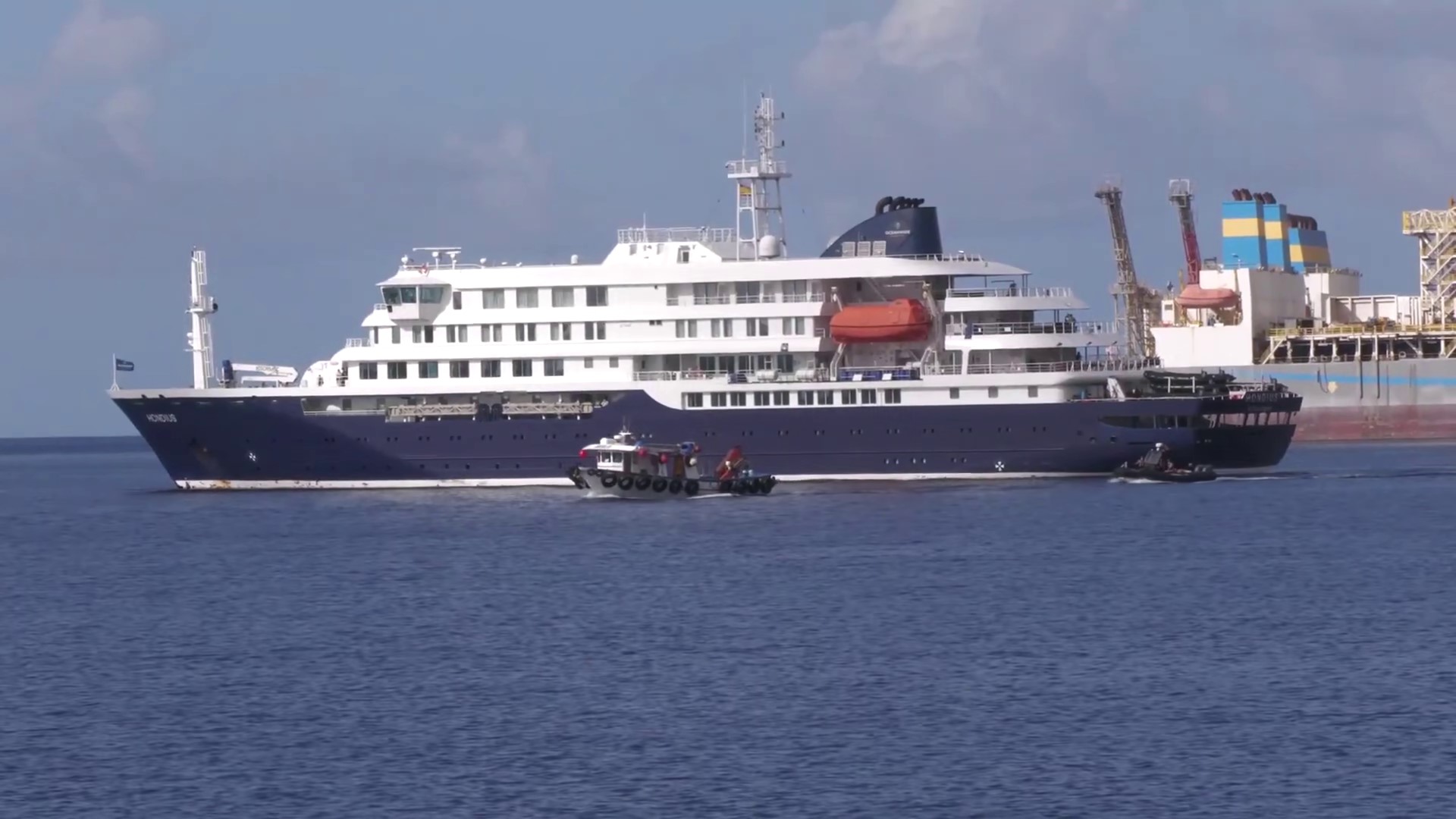
The return of British passengers from the hantavirus-hit MV Hondius has brought back a question most people assumed had already been settled after Covid: what happens when health officials ask people to isolate, but cannot clearly force them to do it.
That problem now sits at the centre of the row surrounding Arrowe Park Hospital on the Wirral. Most of the attention has focused on the virus outbreak aboard the cruise ship, the deaths linked to the infection and the fears of families staying near the isolation block. But the bigger issue is what happens when the government wants co-operation during a health scare while relying mainly on people agreeing voluntarily.
Things become legally messy once passengers leave hospital.
The 22 passengers repatriated from the MV Hondius are reportedly being asked to isolate for 42 days after spending 72 hours at Arrowe Park Hospital. Officials have indicated the passengers cannot automatically be compelled to remain isolated unless the level of public risk becomes serious enough to justify further legal action.
That difference matters because it exposes the gap between government advice and rules that can actually be enforced. During Covid, emergency laws gave authorities unusually broad control over movement, gatherings and isolation. Outside emergency conditions, the threshold for restricting somebody’s liberty becomes much higher and far easier to challenge.
That leaves health officials in a difficult position. If they act too aggressively, they risk accusations of disproportionate restrictions or unlawful interference with personal liberty. If they appear too relaxed and infections spread further, attention quickly turns toward failures in decision-making, public safety concerns and possible negligence claims.
In practice, the system often depends more on whether people choose to follow advice than on direct enforcement.
The concerns raised by families staying near Arrowe Park show how quickly liability questions can spread beyond the original outbreak itself. The issue is no longer limited to passengers returning from the ship. It now potentially affects hospital accommodation decisions, infection-control measures, communication failures and safeguarding concerns involving vulnerable patients nearby.
Kim Childs, whose premature baby is reportedly being treated near the isolation accommodation, described fears about exposure and claimed families had not been properly informed or provided with protective equipment. Whether those fears ultimately prove medically justified is only part of the problem. Once concerns like this emerge publicly, organisations immediately face questions about known risks, communication standards and whether reasonable precautions were taken.
That is where health scares often become legally dangerous. Liability rarely comes only from the original outbreak. It often grows from the decisions made afterwards — where people were housed, what warnings were given, how risks were explained and whether safety procedures were applied properly.
Hospitals and public bodies are especially exposed because once a possible infection risk becomes known, scrutiny usually shifts quickly toward duty of care and how decisions were made. Even where legal claims never succeed, investigations, complaints and reputational damage can become major problems on their own.
The reaction online also revealed another issue that has remained unresolved since Covid. Many people no longer clearly separate government guidance from enforceable law. During the pandemic, emergency legislation blurred that distinction repeatedly. As a result, some now assume authorities can legally compel isolation whenever an infectious disease appears.
In reality, the legal position outside emergency legislation is far narrower than many people think.
That confusion creates problems in both directions. Some individuals may wrongly believe official requests are optional even during serious outbreaks. Others may wrongly assume the government still holds sweeping quarantine powers that no longer exist under normal conditions.
Both assumptions become dangerous during fast-moving health incidents.
The criticism over why passengers were not simply left aboard the ship also highlights another difficult area involving cruise outbreaks and international responsibility. Politically, keeping passengers isolated at sea may sound simple. Legally, it becomes far more complicated once medical care, deteriorating conditions, repatriation duties and international jurisdiction enter the picture.
Cruise outbreaks regularly create legal confusion because responsibility becomes spread across operators, insurers, foreign governments, port authorities and national health systems at the same time. Once passengers move across borders, different legal systems start colliding.
That fragmentation is partly why outbreaks involving ships so often create public anger and confusion. People expect one clear point of responsibility, but accountability is usually divided between several organisations operating under different legal duties.
The Arrowe Park situation also exposes another problem governments may increasingly face during future outbreaks: public exhaustion with restrictions. Authorities may still possess emergency powers under certain legislation, but politically and practically those powers have become much harder to use after years of lockdowns, travel restrictions and isolation rules.
That changes how officials can realistically respond. Health systems work best when most people comply voluntarily. Once governments rely too heavily on coercive powers, public trust often weakens further. But if voluntary co-operation falls sharply during future outbreaks, pressure may quickly return for stronger legal controls.
That is why the hantavirus situation matters beyond the passengers currently staying at Arrowe Park.
The larger issue is whether Britain still has a clear legal and political agreement around how far authorities should be able to go during future infectious-disease scares. Covid temporarily expanded state powers on an extraordinary scale. The difficult question now is where the line sits once those emergency conditions no longer exist.
That debate never fully disappeared after the pandemic. Situations like this simply expose it again.
Arrowe Park itself also carries weight because it remains strongly associated with Britain’s early Covid quarantine operations in 2020. The moment another group of potentially exposed passengers arrived there under isolation arrangements, comparisons with the pandemic became unavoidable.
For hospitals and public authorities, the bigger warning may be how quickly operational decisions now become public anxiety issues. Families temporarily living inside hospital accommodation blocks are not thinking in technical legal language. They are deciding whether they feel informed, protected and safe.
Once that confidence begins breaking down publicly, scrutiny rarely stays limited to the virus alone.
The most important issue exposed by the MV Hondius outbreak may therefore have less to do with hantavirus itself and more to do with the difference between what people think the government can legally do during health scares and what the law actually allows.