
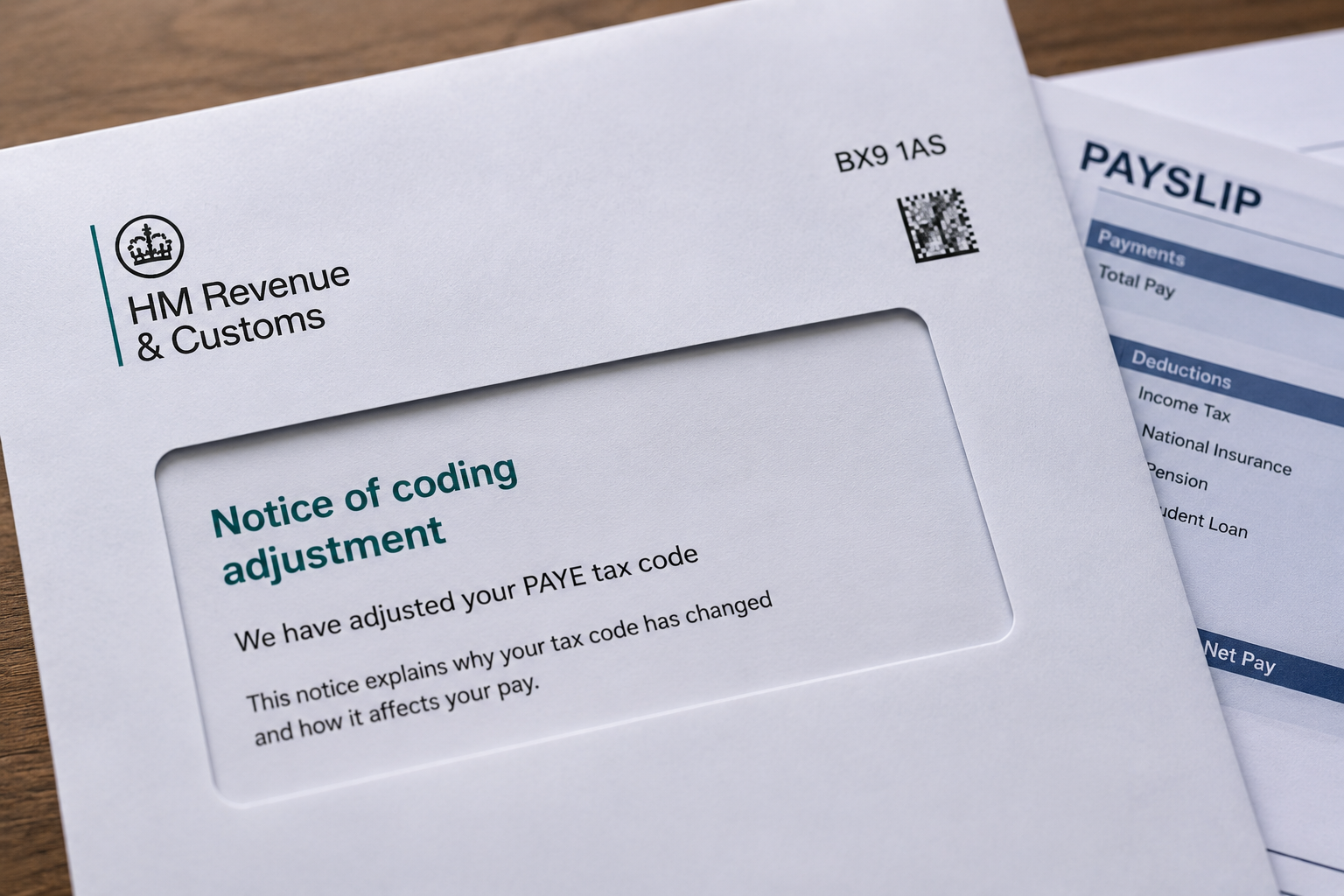
UK savers are being urged to check their PAYE tax codes after incorrect savings-interest data was linked to surprise tax bills and reduced monthly pay.
HMRC increasingly uses savings information supplied by banks and building societies to adjust PAYE tax codes automatically rather than waiting for many taxpayers to file self-assessment returns. When the figures are wrong, the impact can show up directly in salaries or pension payments.
Recent cases have involved duplicated savings interest, incorrect estimates and even cash ISA interest being treated as taxable despite ISAs being tax-free.
Zopa said a reporting error may have affected customers after incorrect cash ISA figures were sent to HMRC. Although the issue was later corrected, some customers reportedly still received revised tax codes and unexpected tax demands.
One taxpayer was reportedly told they had earned £3,847 in untaxed savings interest when the actual figure was said to be £94. The mistake allegedly resulted in a projected tax overpayment of £1,476 for the 2025–26 tax year and temporarily reduced monthly pay by around £200 before the code was corrected. HMRC has not publicly confirmed the individual cases.
More PAYE Savers Are Now Being Drawn In
Higher interest rates over the past two years mean more savers are now earning enough interest to cross the personal savings allowance threshold, particularly basic and higher-rate taxpayers holding larger cash balances.
Banks and building societies provide HMRC with annual savings-interest information which can then be used to estimate future savings income and adjust PAYE tax codes automatically. As more savings tax is collected through PAYE adjustments, a growing number of ordinary workers are being pulled into systems many previously never noticed.
Problems usually emerge when estimated figures, duplicate entries or misclassified accounts feed directly into payroll deductions before taxpayers notice anything has changed.
The Low Incomes Tax Reform Group has warned that HMRC savings-interest data should not always be treated as final because joint accounts, outdated estimates and reporting discrepancies can all affect calculations.
Tax advisers have also warned that some taxpayers are receiving PAYE coding changes without a clear explanation showing how the savings figures were calculated.
The issue may attract greater attention over the next two years as savings tax rates are due to rise from April 2027 to 22%, 42% and 47% depending on the taxpayer’s band, while the personal savings allowance remains frozen.
HMRC is also expanding the amount of financial information it receives directly from banks and other institutions as reporting requirements increase.
In some cases, taxpayers may only realise there is a problem after noticing an unexpected PAYE coding change or a drop in monthly pay.
HMRC Has Faced Similar PAYE Errors Before
Problems involving incorrect PAYE calculations and estimated savings figures have appeared repeatedly in HMRC’s systems over the past decade.
In 2023, the Institute of Chartered Accountants in England and Wales warned that errors were being found in HMRC’s annual PAYE reconciliations, including duplicate calculations, outdated estimated figures and PAYE records failing to link properly with self-assessment accounts.
ICAEW also warned that some taxpayers were receiving overlapping calculations from different HMRC systems, while estimates based on older tax returns were still being used where updated figures were unavailable.