
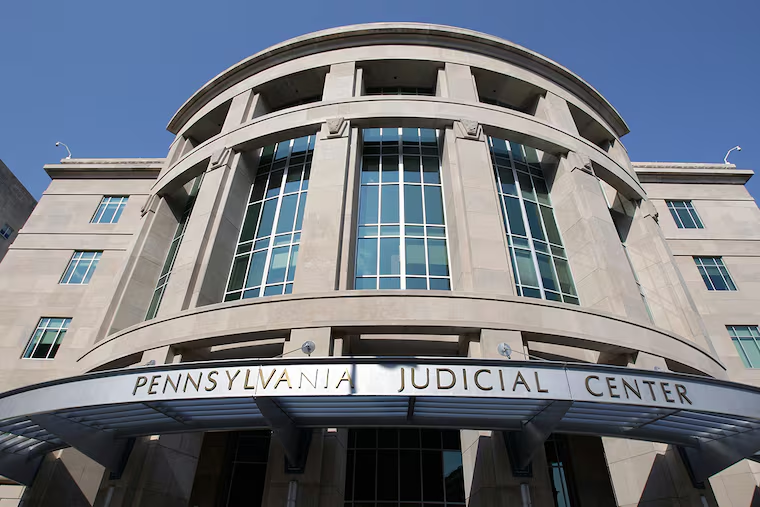
AT&T and Prime Communications have had their bid to enforce click-through arbitration agreements revived by the Superior Court of Pennsylvania, which on 9 June 2026 vacated a Philadelphia trial court ruling and established that timestamped HRIS records and HR officer declarations constitute admissible evidence of electronic signature formation under Pennsylvania’s Uniform Electronic Transactions Act.
The case concerned a former Prime Communications employee, David Levin, who had sued Prime and AT&T over his employment agreement. Prime sought to compel arbitration under two Mutual Agreements to Arbitrate — a 2019 agreement issued when Prime acquired Levin’s prior employer Spring Communications, and a 2022 agreement presented through Prime’s HR information system. Neither document carried Levin’s handwritten signature. The 2022 agreement had a blank signature line and the 2019 agreement had no signature page.
To establish formation, Prime’s associate director of human resources Shanesta Jacobs submitted a sworn declaration explaining how the HRIS operated. Employees logged in with unique credentials, were shown the arbitration agreement and a screen prompt stating that clicking I Agree or Acknowledge Policy would constitute their signature and bind them to the contract.
The Policy Acknowledgment History showed Levin’s name, an e-signature entry and a timestamp of 4:01:01pm on 13 February 2019. A separate record confirmed a January 2022 acknowledgment. The Philadelphia trial court refused to consider Jacobs’s declaration as extrinsic evidence and held that contract validity had to be determined from the document itself.
The Superior Court disagreed on both grounds. Pennsylvania civil procedure permits courts to consider affidavits and outside evidence when determining whether an arbitration agreement was formed — the four-corners rule applies to interpreting contract terms, not to the threshold question of formation.
On electronic signatures, the panel applied the Pennsylvania Uniform Electronic Transactions Act, which treats any electronic symbol executed with intent to sign as a valid signature. The screen prompts Jacobs described — each stating that the click would constitute a binding signature — were sufficient for a reasonable person to understand the click as legally binding. Levin filed no affidavit and attached no exhibits contesting Jacobs’s account, resting on his pleading alone.
The panel did not order arbitration. Because Jacobs’s declaration came from the party seeking to enforce the agreement it could not resolve the factual question unilaterally — the case returns to the Philadelphia trial court to determine whether Levin actually performed the click-throughs and whether his claims fall within the agreements’ scope.
For employment lawyers and in-house HR legal teams advising on arbitration programme design, the ruling identifies three documentation requirements that determined the outcome — screen prompts stating explicitly that the click constitutes a legally binding signature, audit trails linking the user account to the specific document version and timestamp, and an HR officer capable of explaining the system to a court.
Law firms advising employers on arbitration agreements in the US and UK should be stress-testing existing HRIS records against this standard before the next dispute reaches the enforcement stage.