
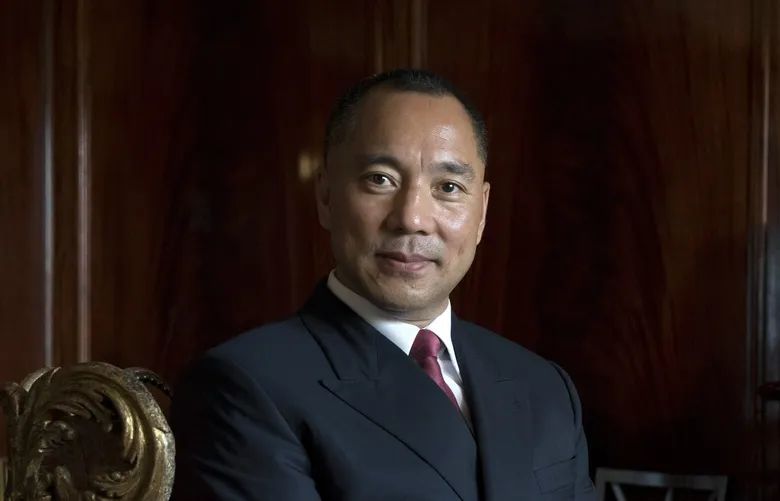
Guo Wengui, the self-exiled Chinese businessman also known as Miles Guo and Ho Wan Kwok, was sentenced on Monday to 30 years in prison by US District Judge Analisa Torres in a Manhattan federal court, following his conviction on charges of racketeering, fraud and money laundering tied to a scheme prosecutors valued at more than $1 billion.
Torres told the courtroom that Guo had preyed on those seeking to bring democracy to China, using their money to fund a lavish lifestyle. The judge also ordered Guo to forfeit $889 million in restitution, one of the largest such orders secured by the Department of Justice in a recent fraud prosecution.
For practitioners advising on fraud, asset tracing and sentencing mitigation, the case offers a clear illustration of how courts weigh personal narrative against victim harm. Guo, who fled China in 2017 and built a following as a Communist Party critic, raised funds from supporters through investment and cryptocurrency schemes run between 2018 and 2023.
Prosecutors said the proceeds financed a 50,000 square foot mansion, a Lamborghini worth roughly $1 million, and a $37 million yacht. That level of detail in the prosecution’s presentation is instructive for counsel handling restitution and forfeiture claims, where the gap between a defendant’s apparent wealth and recoverable assets often determines what victims actually recover, particularly once the FBI’s asset identification work at arrest is weighed against what survives years of litigation.
The case has a further dimension for litigators tracking parallel proceedings involving political strategist Steve Bannon, who appeared frequently alongside Guo in online campaigns including the New Federal State of China, a 2020 initiative aimed at the Chinese Communist Party.
Bannon was arrested aboard Guo’s yacht that year in a separate matter concerning a fundraising campaign for a US-Mexico border wall, and later pleaded guilty in a Manhattan court to a first-degree scheme to defraud charge, receiving a conditional discharge. Related federal charges against Bannon were halted after a pardon from President Donald Trump at the end of his first term.
Guo and Bannon emerged from the same set of facts with starkly different fates, a reminder to firms handling overlapping civil and criminal exposure that timing a plea, the charges a prosecutor chooses to bring, and a presidential pardon can pull two co-defendants in entirely opposite directions.
Compliance teams at asset managers and crypto platforms should take note: Guo’s activist credentials bought him years of investor trust, but none of it changed how prosecutors or the court treated the underlying conduct. Money raised on the strength of a cause is still measured against the same fraud statutes as any other investment pitch.
With Guo’s representatives yet to respond publicly and forfeiture proceedings likely to continue before the same Manhattan court, firms tracking US white collar enforcement should expect further filings addressing recovery of the $889 million ordered at sentencing.