
A planned UFC event at the White House on the date of President Donald Trump’s 80th birthday is facing a federal lawsuit that seeks to block it, with the plaintiffs alleging that government agencies unlawfully authorised a private, for-profit sporting event on protected federal land.
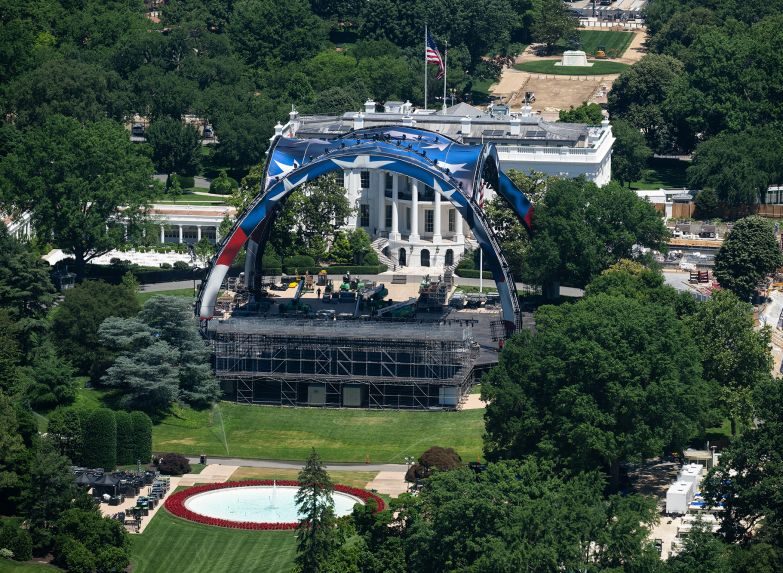
Susan Douglas and Paul Romano have asked the U.S. District Court for the District of Columbia to halt UFC Freedom 250 before it takes place on 14 June, naming the National Park Service, the Department of the Interior and several federal officials as defendants. According to the complaint, the event would feature live UFC bouts on the White House South Lawn, ceremonial weigh-ins at the Lincoln Memorial and the use of a large temporary structure known as “the Claw” adjacent to the Executive Residence.
Court papers describe the arrangement as unprecedented, arguing that federal property traditionally reserved for public and commemorative purposes is being used to host a privately organised commercial venture. Douglas and Romano contend that UFC Freedom 250 is being planned, organised and executed by the UFC and its commercial partners rather than by the federal government, despite reportedly being authorised under a temporary National Park Service rule created for events marking the 250th anniversary of American independence.
Much of the dispute turns on that temporary America250 exemption. According to the lawsuit, the rule applies only to semiquincentennial events that are planned, organised and executed by executive departments, federal agencies or the Semiquincentennial Commission. The plaintiffs maintain that UFC Freedom 250 falls outside those boundaries because it is being financed, promoted and operated by private commercial entities rather than the government itself.
The complaint points to reporting that the UFC controls key aspects of the event, including fighter selection, production, facilities and promotion, while broadcast partners, sponsors and other commercial participants are expected to benefit from the event’s association with the White House and other national landmarks. In the plaintiffs’ view, that level of private commercial involvement is difficult to reconcile with an exemption intended for government-organised commemorative events.
A significant part of the lawsuit focuses on “the Claw,” a steel structure that the complaint says stands 92 feet tall, weighs approximately 600 tons and is being erected on the South Lawn to house the Octagon and associated production equipment. Douglas and Romano argue that federal law generally prohibits structures from being erected on public grounds in Washington, D.C., without congressional authorisation, and they contend that no such approval has been granted. They further allege that the National Park Service approved the project without undertaking environmental review required under the National Environmental Policy Act, creating a separate challenge alongside their claims under the Administrative Procedure Act.
Central to the case is the Administrative Procedure Act and the court’s authority under 5 U.S.C. § 706 to set aside agency actions that are arbitrary, capricious, contrary to law or in excess of statutory authority. The lawsuit argues that permitting UFC Freedom 250 to take place on the South Lawn and at the Lincoln Memorial falls into those categories because the event allegedly does not satisfy the requirements of the America250 exemption. The plaintiffs are seeking not only to invalidate the authorisation but also to temporarily restrain and ultimately enjoin the event, the associated construction work and the use of federal property for planned UFC activities.
Securing that relief will require meeting a demanding legal standard. Under the Supreme Court’s decision in Winter v. Natural Resources Defense Council, a party seeking a preliminary injunction must show a likelihood of success on the merits, likely irreparable harm in the absence of relief, that the balance of equities tips in its favour and that an injunction would serve the public interest. Those factors are expected to play a central role in any hearing, particularly given the event’s proximity and the disruption that could result from a late-stage court order.
The complaint also references reports that President Donald Trump purchased up to $50,000 worth of stock in TKO Group Holdings, the UFC’s parent company, earlier this year. The plaintiffs argue that the investment underscores the commercial nature of UFC Freedom 250, which they contend is being promoted as a private sporting event rather than a government-organised America250 celebration. No court has made findings on those allegations..
According to source reporting, a White House official has rejected the lawsuit and defended the event as part of the broader celebrations marking America’s 250th anniversary. The administration maintains that the event is properly authorised, while the plaintiffs insist it falls outside the limits of the temporary exemption relied upon by federal officials.
With 14 June fast approaching, the court may soon have to decide whether UFC Freedom 250 goes ahead or whether preparations on White House grounds must be paused while the case is heard.