
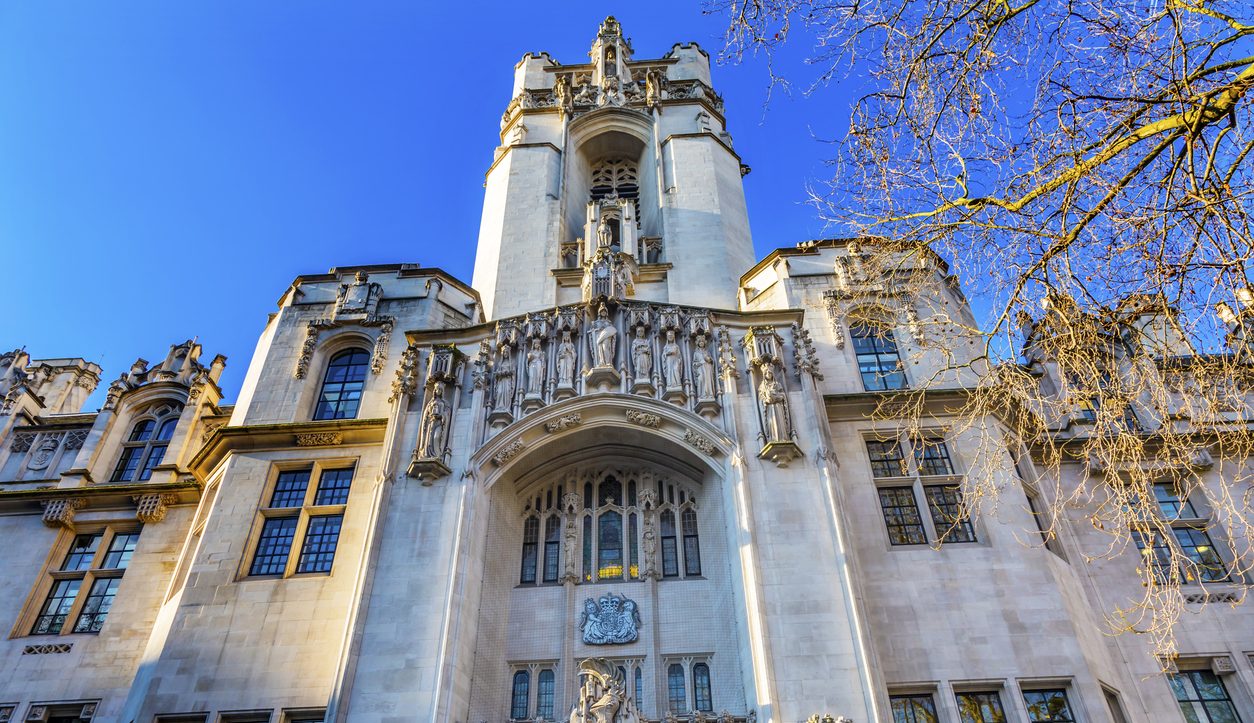
The UK Supreme Court has unanimously upheld a Northern Ireland law creating safe access zones around abortion clinics, ruling that the legislation does not unlawfully interfere with the rights of anti-abortion protesters.
The case centred on whether the Northern Ireland Assembly had gone too far by criminalising conduct intended to influence people attending abortion services within designated buffer zones. The Attorney General for Northern Ireland argued that the provision restricted rights protected by the European Convention on Human Rights and contained no defence of reasonable excuse.
Rejecting that challenge, the Supreme Court held that the restriction was proportionate and compatible with Convention rights. The ruling also clarifies an important question in protest law: when courts must assess proportionality on a case-by-case basis and when a legislature may build that balance directly into the legislation itself.
That aspect of the judgment may prove significant beyond abortion services, particularly in future disputes involving protest restrictions, public-order measures and competing Convention rights.
The Dispute
The dispute reached the Supreme Court through a special procedure in the Northern Ireland Act 1998 that allows the Attorney General for Northern Ireland to ask the Court whether a proposed law falls within the Assembly’s legislative powers before it takes effect.
The challenge centred on clause 5(2)(a) of the Abortion Services (Safe Access Zones) (Northern Ireland) Bill. The provision makes it an offence to engage in conduct within a safe access zone that influences a person attending an abortion clinic or other protected premises for protected purposes.
Safe access zones were introduced to protect access to abortion and related reproductive healthcare services by restricting certain forms of protest activity around clinics. The Attorney General argued that the legislation went too far because it limited rights protected by the European Convention on Human Rights, including freedom of expression, freedom of assembly, and freedom of thought, conscience and religion.
A particular point of contention was the absence of a reasonable-excuse defence. According to the challenge, that omission meant the law risked criminalising conduct that would otherwise attract protection under Articles 9, 10 and 11 of the Convention. The Supreme Court was therefore asked to decide whether the provision remained within the Assembly’s legislative competence.
Legal Risk Emergence
Legal risk first arises when legislators seek to restrict conduct that engages Convention rights. Any attempt to regulate speech, protest, religious expression or assembly through criminal sanctions requires decision-makers to justify why the restriction is necessary and proportionate. The legal question is rarely whether rights are affected; it is whether the interference can be justified by competing rights and legitimate public interests.
The Argument Over Ziegler
The Supreme Court unanimously rejected the challenge and held that clause 5(2)(a) was compatible with Convention rights, meaning it fell within the legislative competence of the Northern Ireland Assembly.
Lord Reed accepted that the provision restricts certain forms of expression and protest activity. Even so, the justices concluded that the restriction pursued legitimate aims and struck a proportionate balance between competing rights. Particular weight was given to the rights of women seeking lawful abortion services, including privacy, dignity and autonomy. The judgment also recognised the interests of clinic staff in carrying out their work without harassment, intimidation or interference. Taken together, those considerations were capable of justifying targeted restrictions on protest activity within carefully defined areas surrounding healthcare facilities.
Much of the argument before the Court centred on Director of Public Prosecutions v Ziegler. That case involved protesters who deliberately obstructed a highway while demonstrating against an arms fair. The Supreme Court held that peaceful protest activity engaging Articles 10 and 11 of the European Convention on Human Rights may require a fact-specific proportionality assessment before criminal liability can be imposed.
According to the Attorney General, the same approach should apply here. Because clause 5(2)(a) contains no reasonable-excuse defence, it was argued that courts would have no opportunity to assess whether individual prosecutions represented a proportionate interference with Convention rights.
The justices were not persuaded. They stressed that Ziegler concerned a general criminal offence where proportionality formed part of the assessment of liability. The Safe Access Zones legislation was different because the balancing exercise had already been undertaken within the statutory scheme itself.
Support for that approach could also be found in earlier authorities recognising that some offences are drafted in a way that makes proportionality inherent in the legislative framework. In those circumstances, a separate proportionality assessment will not necessarily be required in every prosecution. The ruling makes clear that Ziegler was not intended to require a fresh proportionality analysis every time Convention rights arise in a protest case.
Proportionality Framework
The Supreme Court confirmed that criminal legislation affecting protest rights can, in some circumstances, be Convention-compliant without requiring a separate proportionality assessment in every prosecution. Where lawmakers have already balanced competing rights through carefully drafted legislation, proportionality may be reflected within the statutory framework itself.
The Human Rights Challenge
The dispute ultimately turned on whether the Northern Ireland Assembly could lawfully restrict protest activity around abortion clinics without breaching rights protected by the European Convention on Human Rights.
Under the Northern Ireland Act 1998, the Assembly cannot enact legislation that is incompatible with Convention rights. That left the Supreme Court with a relatively narrow but important question: did clause 5(2)(a) go too far by restricting conduct protected by Articles 9, 10 and 11, which cover freedom of thought, conscience and religion, freedom of expression, and freedom of assembly?
No one disputed that anti-abortion protest activity can attract Convention protection. The real issue was where the balance should be struck when those rights come into conflict with the rights of others.
Protecting access to lawful healthcare services sat at the centre of the Court’s reasoning. The judgment highlights the privacy, dignity and autonomy of women attending abortion clinics, while also recognising the interests of staff working at those facilities without harassment, intimidation or disruption.
The Court also placed weight on Article 8 rights. Accessing healthcare in conditions that respect personal privacy and dignity was treated as more than a policy objective; it formed part of the wider Convention framework that lawmakers were entitled to protect through legislation.
Escalation Threshold
Exposure escalates when multiple Convention rights collide and lawmakers are required to choose how those competing interests should be reconciled. At that stage, courts look beyond the wording of the legislation and examine whether the restriction serves a legitimate objective, whether it is proportionate and whether a less intrusive alternative could realistically achieve the same result.
What the Judgment Means in Practice
The significance of the ruling extends beyond abortion clinic protests. Although the dispute arose from Northern Ireland’s Safe Access Zones legislation, the Court’s reasoning is likely to be relevant whenever lawmakers seek to restrict protest activity in settings where different Convention rights come into conflict.
Much of the debate surrounding protest law focuses on freedom of expression. This judgment serves as a reminder that expression is only one part of the Convention framework. Privacy, dignity, autonomy and access to lawful services can carry equal weight when courts are asked to assess whether a restriction is justified.
The ruling is also notable for what it says about legislative drafting. Rather than requiring judges to revisit proportionality every time a prosecution reaches court, the Supreme Court accepted that a carefully constructed statutory scheme may itself contain the necessary balance between competing rights.
That approach may have implications well beyond healthcare settings. Legislators considering restrictions around schools, courts or other sensitive locations are likely to look closely at the Court’s reasoning when assessing how competing rights should be accommodated.
Perhaps the most important practical lesson is that evidence matters. Restrictions on protected activity cannot be justified by broad appeals to the public interest alone. Lawmakers must be able to explain why intervention is necessary and why a narrower alternative would not adequately address the problem.
Regulatory Balance
Legal exposure becomes most acute when lawmakers seek to restrict conduct protected by Convention rights. At that stage, the strength of the evidence, the precision of the legislative response and the balance struck between competing rights are all likely to come under close judicial scrutiny.
A Significant Protest Rights Ruling
The Supreme Court unanimously held that clause 5(2)(a) of the Abortion Services (Safe Access Zones) (Northern Ireland) Bill is compatible with Convention rights and therefore falls within the legislative competence of the Northern Ireland Assembly. In reaching that conclusion, the Court found that protecting access to lawful healthcare services, privacy and dignity constituted legitimate objectives capable of justifying restrictions on protest activity.
The judgment reaches beyond abortion services. The dispute raised a broader question about how competing Convention rights should be balanced when lawmakers seek to regulate protest activity in sensitive settings. In answering that question, the Court provided guidance on proportionality, legislative competence and the relationship between criminal law and Convention rights.
Much of the wider significance lies in the Court’s treatment of Director of Public Prosecutions v Ziegler. The judgment makes clear that Ziegler does not create a universal requirement for case-by-case proportionality assessments whenever protest rights are engaged. In some circumstances, a carefully drafted statutory scheme may itself contain the balance between competing rights.
That clarification is likely to be relevant in future disputes involving buffer zones, protest restrictions and other situations where freedom of expression and assembly come into conflict with privacy, dignity or access to essential services. While the challenge itself has now been resolved, the Court’s reasoning is likely to remain part of wider debates about protest law and Convention rights for years to come.