
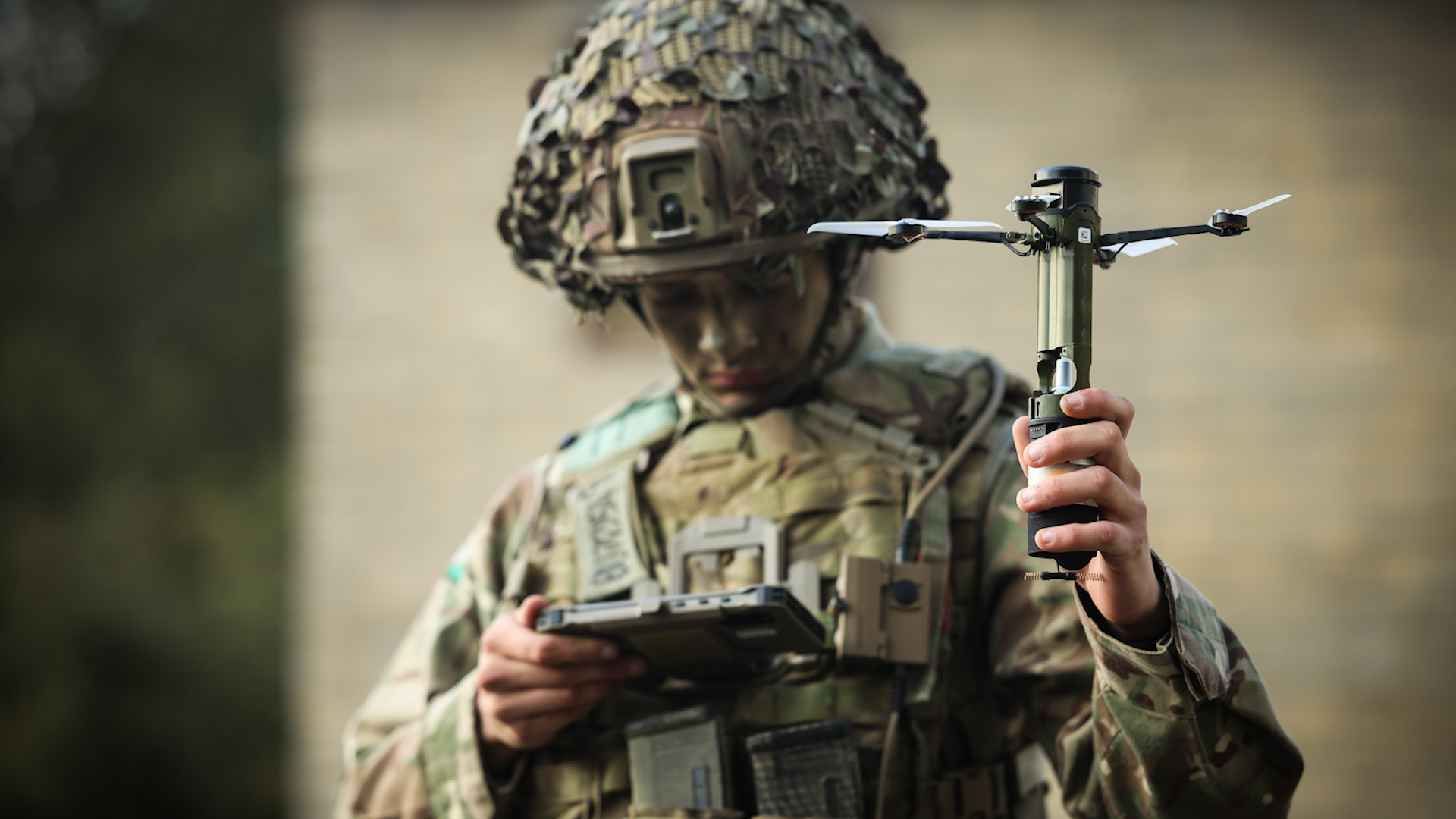
The UK military is considering whether some AI-powered weapons should be able to identify and strike targets without direct human approval. If one of those systems makes a mistake and innocent people are killed, deciding who should be held responsible becomes far more complicated.
Senior defence figures have suggested there may be circumstances in which military systems need the ability to operate without direct human involvement because potential adversaries may not follow the same restrictions.
As governments invest heavily in autonomous military technology, lawmakers, military planners and technology companies are increasingly confronting the same issue: when an AI system contributes to a fatal mistake, where does responsibility ultimately lie?
Governments, defence contractors and technology developers are increasingly confronting the same problem. Artificial intelligence is becoming more capable of analysing information, identifying threats and making recommendations that once depended entirely on human judgment. As those systems become more autonomous, assigning responsibility becomes harder.
When civilians are harmed or a target is wrongly identified, courts, governments and regulators are still likely to look for human or institutional accountability, even if software played a central role in the decision.
Establishing responsibility in military operations has traditionally been relatively straightforward. Decisions are made by commanders, informed by intelligence and carried out by operators. When mistakes occur, investigators can usually trace the chain of decision-making to determine where responsibility lies.
The growing use of artificial intelligence introduces a new layer of complexity. When software contributes to identifying, prioritising or selecting a target, determining who should be held accountable becomes less clear.
Current UK policy states there should be “context-appropriate human involvement” in weapons that identify, select and attack targets. Britain has also told the United Nations that it does not possess fully autonomous weapons operating outside human responsibility and accountability and has no intention of developing them. Yet advances in drone warfare, battlefield AI and autonomous targeting systems are making those distinctions increasingly difficult to maintain.
Military systems already exist that can identify objects, track threats and engage targets with varying degrees of autonomy. Conflicts in Ukraine and the Middle East have accelerated investment in these technologies because modern battlefields often move faster than humans can react.
Military planners increasingly worry that traditional approval processes may struggle to keep pace with future conflicts fought at machine speed. International law experts and human rights advocates fear the opposite outcome: removing human judgment weakens accountability when mistakes occur and civilians are harmed. Responsibility does not disappear simply because a machine participates in a decision.
Under existing legal principles, responsibility would likely remain attached to people, governments or institutions rather than software itself. Algorithms cannot be prosecuted, and courts cannot impose sanctions on a machine. The challenge for investigators is identifying which human actors should be held accountable when an autonomous system contributes to a fatal outcome.
Responsibility could potentially fall on military commanders who authorised deployment of the system, government agencies overseeing its use, defence contractors that developed the technology or procurement officials who approved its acquisition. Determining where responsibility begins and ends becomes harder once software participates in the targeting process.
Consider two different scenarios. In one, a commander receives inaccurate intelligence and approves a strike against what is believed to be a legitimate military target. In another, an autonomous system independently identifies a target based on patterns it has learned from large volumes of data and reaches a conclusion that no individual specifically instructed it to make. Both situations may lead to civilian casualties, but the legal analysis would likely differ significantly.
Many liability frameworks depend on foreseeability. Courts often examine whether a harmful outcome could reasonably have been anticipated and whether appropriate precautions were taken beforehand. Artificial intelligence creates difficulties because machine-learning systems can behave in ways that are not always predictable, even to their developers.
A system may identify patterns, prioritise threats or recommend actions using calculations that cannot always be reconstructed after the fact. If an unexpected outcome emerges from those processes, legal investigations may focus on whether the risks were adequately understood before deployment rather than whether a specific individual directly caused the harm.
Recent events have demonstrated why these concerns are no longer purely theoretical. According to reports discussed by Western officials, questions were raised after drones struck a Latvian oil facility rather than their intended target. One explanation considered by officials was that electronic interference may have confused the systems involved, leading them to lock onto the wrong objective. While the circumstances remain disputed, the incident illustrates how autonomous technologies can produce outcomes that were never intended by their operators.
Defence provides one of the clearest examples of the accountability challenges created by artificial intelligence, but similar questions are emerging across the wider economy. Banks use algorithms to assess risk, hospitals deploy AI-assisted diagnostic tools and businesses increasingly automate decisions that were once made by employees. In each case, regulators face a similar challenge when software sits between a decision and its consequences.
Many organisations focus heavily on what artificial intelligence can do. Far less attention is often given to who will answer difficult questions if those systems fail. Regulators in multiple jurisdictions have increasingly indicated that accountability remains a human and corporate obligation regardless of how advanced the technology becomes.
Autonomous weapons may introduce new layers of complexity, but they do not remove the need for accountability. When serious mistakes occur, investigators will still be expected to identify who made the decisions and who should answer for them.
Determining where that responsibility lies may become increasingly difficult as artificial intelligence plays a larger role in military decision-making. When serious harm occurs, however, investigators, regulators and courts will still be expected to identify who should answer for it.