
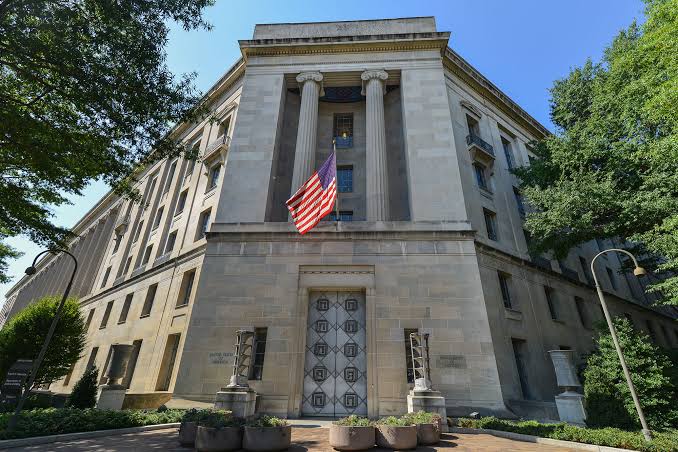
The US Department of Justice has sued the State of Maryland and Attorney General Anthony Brown, alleging that the state’s sanctuary policies unlawfully obstruct federal immigration enforcement.
The complaint was filed on 9 July 2026 in the US District Court for the District of Maryland. The United States is seeking declaratory and injunctive relief against provisions of Maryland’s Community Trust Act, enacted as Senate Bill 791, which restricts how state and local authorities may cooperate with federal immigration officials.
The Justice Department argues that the legislation conflicts with federal law and is pre-empted under the Supremacy Clause of the US Constitution. The complaint says the Act restricts when correctional facilities can notify federal authorities that someone is in custody, transfer them to immigration officials or hold them beyond their scheduled release.
The department says those measures interfere with the work of the Department of Homeland Security, US Immigration and Customs Enforcement and US Customs and Border Protection.
The Justice Department relies on federal laws governing the exchange of immigration information and cites Arizona v United States, in which the US Supreme Court confirmed the federal government’s broad authority over immigration.
Associate Attorney General Stanley Woodward said the action formed part of the department’s response to state and local measures that impede federal enforcement. Assistant Attorney General Brett A. Shumate, who leads the Civil Division, said the department was challenging Maryland’s attempt to limit federal immigration operations. Those claims remain allegations and have not yet been determined by the court.
The case will test whether Maryland can restrict cooperation by state and local officers without unlawfully obstructing federal authority over immigration detention and removal. Solicitors and in-house counsel advising public bodies will need to distinguish carefully between administrative immigration detainers, judicial warrants and binding court orders while the litigation proceeds.
The US District Court for the District of Maryland must now consider federal pre-emption, intergovernmental immunity and the anti-commandeering doctrine. Its ruling could influence how other states and cities frame or defend laws restricting local involvement in federal immigration enforcement.
The Civil Division says the Maryland case is the latest in a series of challenges to similar policies in Colorado, Connecticut, Illinois and New York. That wider litigation is likely to generate further constitutional, immigration and public-law work for firms advising state agencies, local authorities, correctional bodies and law enforcement departments.
Public bodies should now review detention, notification and transfer procedures, preserve records of decisions made under the Community Trust Act and ensure that internal guidance distinguishes clearly between duties arising under Maryland law, federal statute and binding court orders.