
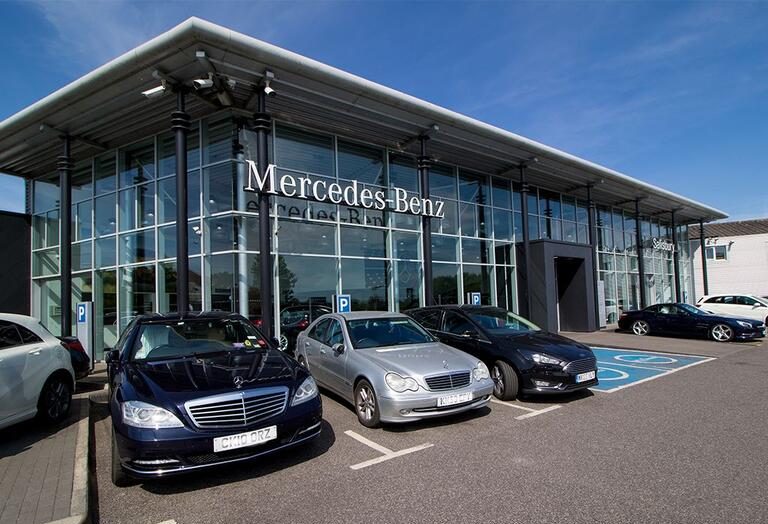
Mercedes-Benz, Leigh Day and Pogust Goodhead are considering appeals after the High Court largely rejected allegations that diesel vehicles made by five manufacturers contained prohibited emissions defeat devices.
Lady Justice Cockerill’s ruling in Various Claimants v Mercedes-Benz Group AG and Others [2026] EWHC 1753 (KB) was handed down after a 13-week trial examining 20 representative vehicles produced by Mercedes-Benz, Ford, Renault, Nissan, Peugeot and Citroën.
The wider Pan-NOx Group Litigation concerns claims brought by around 1.6 million owners of Euro 5 and Euro 6 diesel cars against 14 manufacturers.
The court rejected most of the principal allegations. It found prohibited defeat devices in one Mercedes vehicle and two Peugeot-Citroën vehicles, while dismissing the allegations examined against Ford, Renault and Nissan. Mercedes-Benz has said it disagrees with the adverse finding and is considering its options, including a possible appeal.
The central dispute concerns Article 3(10) of Regulation (EC) No 715/2007. Cockerill held that a defeat device must sense one or more parameters of the test and operate with the purpose of making the emissions-control system work more effectively during the test than in ordinary driving. The judgment records that determined attempts to appeal are close to certain and sets out fallback findings in case an appellate court adopts a broader interpretation.
Leigh Day and Pogust Goodhead have confirmed that they are examining an application for permission to appeal. Martyn Day, Leigh Day’s senior partner, questioned the court’s departure from later Court of Justice of the European Union decisions, while Pogust Goodhead partner Anna Varga said the narrower interpretation required careful review. Slater & Gordon, through Elizabeth Comley, has said it believes there are compelling grounds for an appeal.
Pogust Goodhead, Leigh Day, KP Law, formerly Keller Postman, Milberg, Hausfeld and Johnson Law Group were the six lead claimant firms, with further firms attached to the litigation. Herbert Smith Freehills Kramer represented Mercedes-Benz, Hogan Lovells acted for Ford and Nissan, Signature Litigation represented Renault and Kennedys represented Peugeot-Citroën.
The case tests how retained EU emissions law is applied in Great Britain after Brexit. An appeal could determine whether domestic courts continue to distinguish the British position from later CJEU authority and could affect the liability analysis across the remaining Dieselgate claims.
The next trial is scheduled for October 2026 to address the consequences of actionable breaches and issues concerning damages or other remedies. Managing an appeal across claims of this scale will require consistent advice, client updates and funding decisions, while barristers will need to distinguish the legal test for a prohibited device from the separate questions of causation, loss and remedy