
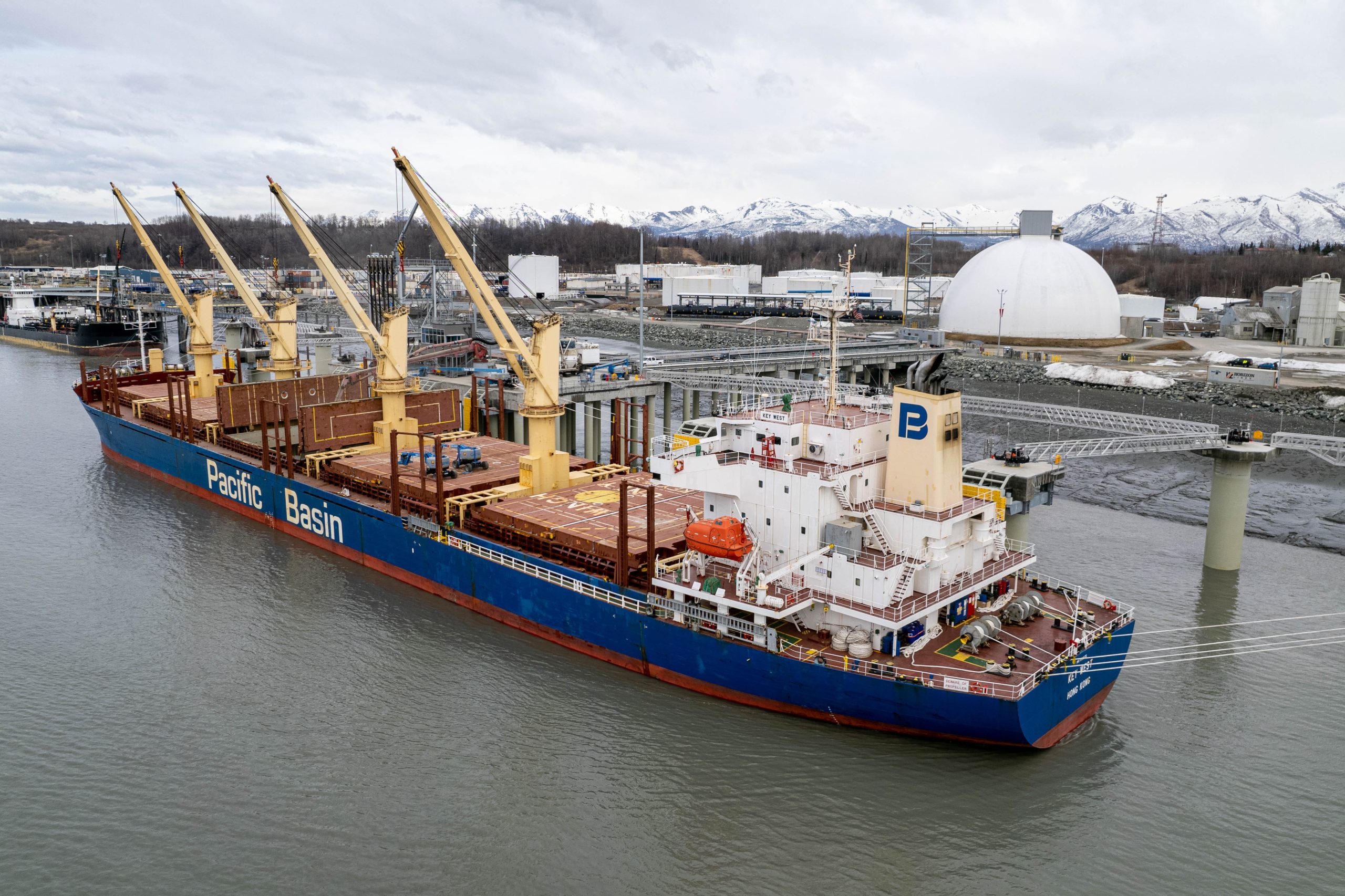
The Justice Department’s $180 million Anchorage port settlement ends a decade of federal claims litigation over an unfinished infrastructure project and moves the Port of Alaska dispute into a new phase centred on delivery, funding and public accountability.
The July 7 resolution closes Municipality of Anchorage v. United States, No. 14-166C, in the U.S. Court of Federal Claims after proceedings that began in 2014.
Under the settlement agreement, the United States will pay $180 million to the Municipality of Anchorage in exchange for concluding claims over the federal government’s alleged fault in the uncompleted Port of Alaska expansion project.
The Department of Justice announced the agreement through its Office of Public Affairs, with the release naming Acting Attorney General Todd Blanche and Associate Attorney General Stanley Woodward.
The Municipality of Anchorage receives certainty after years of litigation tied to one of Alaska’s most important public assets. The United States avoids further court time, expert costs and the risk of a longer damages contest over an infrastructure project with wider economic and strategic significance.
The Port of Alaska remains central to freight movement for Alaska residents, businesses and U.S. military installations, which gives the settlement a public-interest dimension beyond the ordinary close of a construction claim.
In-house counsel and outside litigators should read the settlement as a reminder that failed public infrastructure projects can create legal exposure long after the underlying work has stalled.
Claims involving ports, transport assets and publicly funded construction often turn on procurement files, design responsibility, engineering records, change orders, delay analysis and communications between government bodies and contractors.
Settlement value is rarely confined to pleaded damages; it also reflects the cost of technical evidence, public-sector time, reputational pressure and the operational effect of leaving a strategic asset tied to unresolved litigation.
Law firms advising municipalities, federal agencies, construction contractors and infrastructure investors should check design responsibility, change orders, funding approvals and settlement authority before public works disputes turn into long-running claims.
Design-risk allocation, preservation of engineering evidence, funding records and decision logs become decisive when courts, auditors and taxpayers ask how a public project failed and why litigation continued.
Municipality of Anchorage v. United States shows why infrastructure disputes are often settled on the strength of the project record, not just the headline damages figure.
Counsel acting for the Municipality of Anchorage, the United States or comparable public bodies should resolve responsibility, evidence and authority before Port of Alaska-style litigation consumes another decade of public resources.