
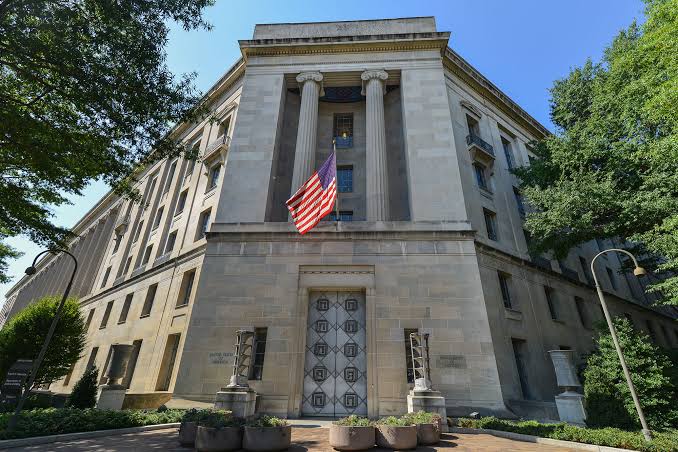
The Justice Department has sued Montgomery County, Maryland, alleging that Bill 23-26 imposes firearm restrictions incompatible with the US Supreme Court’s decision in Wolford v. Lopez.
The complaint, announced on 3 August 2026, challenges what the department describes as a wide-ranging local prohibition that prevents licensed individuals from carrying firearms across large parts of the county during ordinary daily activity.
The Justice Department says Bill 23-26 prohibits carrying firearms at thousands of locations and creates a 100-yard exclusion zone around each one. The department alleges that the restrictions apply even where an individual holds a valid carry licence and has the express consent of the property owner. Those allegations have not been determined by a court, and Montgomery County will have the opportunity to defend the ordinance.
The dispute now turns on whether Wolford applies beyond the private-property consent rule considered by the Supreme Court. The Court held that Hawaii could not require licensed concealed-carry permit holders to obtain express permission before entering private property open to the public because the restriction interfered with their ability to carry firearms for self-defence during ordinary daily activity.
Justice Samuel Alito delivered the opinion of the Court, joined by Chief Justice John Roberts and Justices Clarence Thomas, Neil Gorsuch, Brett Kavanaugh and Amy Coney Barrett. The Court reversed the US Court of Appeals for the Ninth Circuit and remanded the case. Justice Barrett filed a concurring opinion, Justice Elena Kagan dissented, and Justice Ketanji Brown Jackson filed a separate dissent joined by Justice Sonia Sotomayor.
The Montgomery County proceedings may now test whether Wolford also limits geographic buffers surrounding public locations. The Justice Department argues that the breadth of the county’s 100-yard zones makes it practically impossible for individuals to go about their daily business while lawfully carrying a firearm.
Montgomery County may seek to distinguish its ordinance by arguing that restrictions linked to specified public locations differ from Hawaii’s broad rule governing private premises open to the public.
Assistant Attorney General Harmeet K. Dhillon has presented the claim as part of the Civil Rights Division’s enforcement of Second Amendment rights. The case therefore raises a practical drafting issue for state and local authorities: restrictions may be vulnerable where their combined effect prevents licensed carry across ordinary routes and destinations, even if each prohibited location is defined separately.
Solicitors and counsel advising municipalities should examine how exclusion zones operate in practice, whether restrictions remain closely tied to recognised sensitive locations and whether local measures preserve a meaningful ability to carry lawfully.
Montgomery County’s response should clarify whether the case centres on the overall reach of the ordinance, the 100-yard exclusion zones or the types of location covered. The arguments may also help lawyers advising other local authorities assess similar restrictions.