
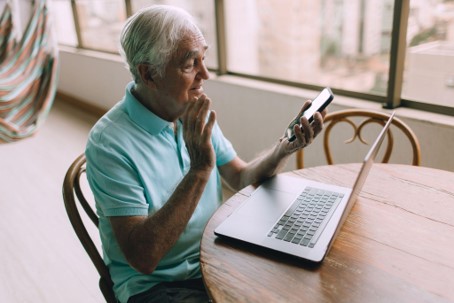
Staying informed about your loved one’s day-to-day wellbeing after admitting them into a nursing home can prove challenging. This especially affects relatives who live far and can’t visit regularly. While the primary responsibility of nursing care homes is to provide appropriate care, families also play a crucial role by staying connected and paying close attention to any changes in their loved ones’ condition.
Fortunately, advancing tech has made involvement easier. Modern smartphones allow families access to communication platforms, reminders, and records that make it easier to engage with your loved one under nursing home care. Nursing homes can use mobile applications to provide updates and coordinate communication between residents and families in the following ways:
1. Maintain Connection Through Video and Messaging Features
Regular communication is the least families can do to remain involved in their loved ones’ lives. Mobile applications with messaging and video calling features make this possible for members who can’t visit frequently. Audio and video calls are especially important because friends and relatives can see and interact with residents seamlessly. Authorized persons can easily identify if their relative appears confused, uncomfortable, withdrawn, or different from their normal self.
The standard messaging feature also makes communication efficient. Family members can quickly exchange updates with their relative and authorized staff from the nursing home. Regular communication helps you establish how your relative looks and behaves away from home. Constant interactions reduce the feeling of isolation, as they can reach their children, siblings, grandchildren, and friends conveniently.
2. Create a Digital Record of Important Changes
Digital documentation is another useful application of mobile technology in adult nursing care. Families can use secure care-management apps, calendars, and notes features to keep track of key observations and conversations about their admitted relative. A chronological record of the care provided makes it easier to identify isolated incidents from patterns that develop over time.
Digital records are particularly useful when there are key concerns surrounding the loved ones’ health. Remembering unique details about your loved ones’ care becomes difficult after weeks or months. Having a clear recollection is especially important if you have noticed negative changes with your loved one.
You can easily pick up serious concerns suggesting abuse that should be discussed with nursing home management. When concerns of possible abuse or neglect arise, families should understand their legal options by consulting a Nursing Home Abuse Lawyer. The lawyer can help families understand the steps available based on the presenting circumstances and applicable law.
Fortunately, these apps can capture dates, names, conversations, and recommendations in real time. However, storing such sensitive health information calls for extra caution. Mobile devices should have strong protection mechanisms for unique passwords and advanced security measures. Sensitive information should also only be shared with the trusted few authorized by the family to access it.
3. Real-Time Notifications Updates
Checking on your loved one every hour isn’t realistic. As such, alerts and notifications are a practical way of staying informed about noteworthy developments in the residents’ care. Most care-management applications allow families to receive notifications about their loved ones’ appointments, medications, and other important events.
These alerts and notifications are overly beneficial for family members working full-time and living in another city. They provide an additional level of awareness without constant communication. For instance, authorized family members can receive notifications about upcoming appointments that require follow-up or updates that prompt them to contact caregivers.
4. Simplify Appointment Management
Drug dosages and schedules can quickly become complicated, especially for aging persons with multiple health issues. Wrong timing or forgetting a due appointment brings forth unwanted complications to their already deteriorating condition. Care homes and families can use these apps to organize appointments and drug schedules seamlessly.
Advanced platforms come with several features and capabilities. Most platforms allow users to schedule reminders about medical appointments, follow-up consultations, and other crucial events. These features allow family members, including those living miles away, a greater visibility into their relatives’ healthcare situation.
Nursing home care providers can simultaneously benefit from digital scheduling systems. Instead of relying exclusively on paper-written reminders, care teams can leverage integrated applications to coordinate residents’ schedules. However, it’s worth noting that these apps cannot independently determine doses or professional judgement. Their primary benefit remains to organize, remind, and enable communication between care providers, residents, and their families.
5. Allow Residents Greater Participation in their Care
Nursing home residents can also actively participate in decisions about their daily care through mobile apps. Relocating from the community to care homes doesn’t mean residents lose their sense of independence. If they have good health and the ability, aging adults should continue actively participating in decisions about their health, preferences, and activities.
Mobile apps support this involvement in many ways. For starters, these apps provide a convenient way for aging persons to access information and voice their preferred care. They can view their activity schedule, request assistance, and provide real-time feedback about specific aspects of their stay.
Technology also allows residents to maintain social connections outside. Those admitted to care homes often feel isolated and lonely once they leave their previous homes. Access to calls and pictures makes it easier for them to maintain a healthy connection with those who matter.
These platforms are especially beneficial for aging persons with family members living in different cities or countries. Residents may not receive frequent physical visits, but can actively participate in family video calls to maintain connection. However, this requires mobile apps to be designed around the residents’ abilities, as most aging adults can’t adapt to complicated software. Simple user interface, voice functionality, and easy navigation can make mobile apps more useful.
6. Help Care Homes Respond Quickly to Residents’ Needs
Mobile apps also make it easier for care home providers to receive and respond to residents’ issues. Most nursing homes are busy environments with many residents spread out to different housing units. This means care providers have to manage several tasks simultaneously.
Having an online platform helps them organize requests and communicate promptly with their colleagues and residents. For instance, depending on the capabilities of the system in place, a resident can ask a provider for assistance remotely. This makes communication faster and more efficient compared to verbal messages.
Mobile apps also allow care home staff access to relevant information when they need it. A centralized system allows authorized relatives to review residents’ information without searching through piling paper records. This allows for more synchronized care, especially when multiple providers care for the same resident across different shifts.
Mobile app benefits also extend beyond faster response. Better organization can help care providers identify recurring residents’ needs, which guide better allocation of resources. For instance, it may occur that multiple residents have similar needs at the same time. These platforms can help nursing home administrators identify the pattern and adjust staffing accordingly.
7. Enhance Emergency Communication and Response
Mobile applications also significantly improve emergency communication during a crisis. Nursing care homes and providers need reliable ways of communicating with residents, fellow staff, and family members when circumstances change unexpectedly. This ranges from regular yet crucial communication about changes in visiting times and health-related precautions to urgent developments such as facility closures.
Most modern apps also incorporate emergency alerts and location-based features that can be used with residents’ consent. Timely notification can alleviate uncertainty among family members and relatives. Instead of waiting for phone calls or struggling to contact a facility, authorized family members can receive updates through the nursing homes’ communication platform.
Nonetheless, these apps shouldn’t be used as a substitute for already established emergency procedures. Nursing homes should retain appropriate emergency communication systems and evacuation plans. Apps can only be used as an additional layer that supports the already laid down procedures.
8. Gives Families Visibility into Overall Care Experience
One of the broader benefits of mobile technology in nursing homes is that it allows families to get a complete picture of their relatives’ experience in the residency. Without regular communication, relatives only hear about major events and occasional updates. Well-designed applications provide more than a continuous source of connection. It allows family members to monitor appropriate aspects of the residents’ lives.
Depending on the features, you and your family can easily become active participants rather than passive observers. You can monitor patterns and share any concerns that arise with caregivers. Greater visibility into their relatives’ lives in the nursing home encourages accountability. When information is documented and shared consistently with authorized relatives, it creates a clear record of the care being provided.
However, transparency shouldn’t mean invading the residents’ privacy. Not all details of the residents’ lives should be shared with all family members. Nursing homes should have clear limits and guidelines to ensure residents’ preferences and privacy requirements are respected.
Endnote
Care-management mobile applications have changed how families communicate and remain connected to their admitted loved ones. Video calls make it easy for families to identify when something deserves further attention. Alerts and Notifications also allow for real-time updates of your loved ones’ status. Patterns become clearer when information is constantly recorded.