
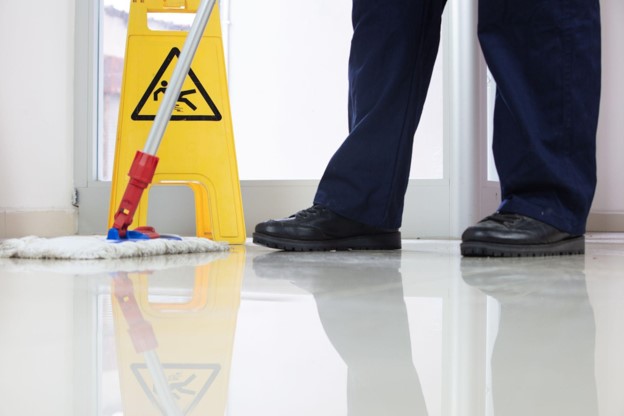
Here is the trap that catches injured Floridians every week. You fall on a wet floor, you notice there was no warning cone anywhere, and you assume that settles the question of blame. So you wait. You focus on healing, you figure the store will do the right thing, and you put off making calls. Then a denial letter shows up with two paragraphs of explanation that explain nothing. By that point, the store’s video has been recorded over, the employee who mopped that aisle has quit, and the proof you needed is gone. That gap between what people believe about missing signs and what Florida law actually requires costs good claims every year.
A missing sign carries real weight, but it does not decide your case on its own, and treating it like a sure thing is exactly how people run out of time. Knowing what the law asks you to prove changes what you do, so it helps to schedule a consultation with Meldon Law before more evidence slips away.
A Missing Sign Is Evidence, Not an Automatic Win
Florida uses a fault-based system for property injuries, not a rule that pays you simply because you got hurt somewhere. Under Florida Statute § 768.0755(1), when you slip on a substance in a business, you must prove the business had actual or constructive knowledge of the hazard and should have fixed it. Actual knowledge means someone there already knew. Constructive knowledge means they should have known.
That single requirement explains why the missing sign is not the whole story. If a customer dropped a jar of salsa 45 seconds before you walked by, nobody had time to grab a cone, and the store likely wins. If that spill sat there for an hour while three employees walked past it, the missing sign becomes strong proof of careless housekeeping. Section 768.0755(2) also keeps the older common-law duties in place, so a business still has to keep its floors reasonably safe, sign or no sign.
What You Actually Have to Prove
The statute gives you two paths to constructive knowledge, and both live in § 768.0755(1). The first path is time: the hazard sat there long enough that a careful business should have spotted it. The second path is pattern: the same problem happened often enough to be predictable, like a freezer that leaks every summer afternoon.
Neither path depends on a sign. They depend on records and physical clues that the store controls, which is why moving fast matters so much. Attorneys chase this proof in the first weeks:
- Store video
- Sweep logs
- Prior complaints
- Dried liquid edges
Why the Reason You Were There Matters
Your reason for being on the property can shape the legal procedure because Florida assigns different duties to property owners based on a visitor’s status. As a shopper, you are generally considered an invitee and receive the highest level of protection. The owner must keep the property reasonably safe and warn you about dangers they knew or should have known about when those dangers were not obvious. Social guests at a home may receive similar protection under Florida case law.
The rules change outside those categories. Section 768.075(3) states that an owner generally owes an undiscovered trespasser no duty to warn, only a duty to avoid intentional harm. A discovered trespasser, meaning someone whose presence the owner became aware of within the previous 24 hours, may be entitled to warnings about hidden dangers and protection from gross negligence. As a result, the same puddle in the same building may support a claim in one situation and defeat it in another, depending on why the person was there.
When the Danger Was Plain to See
Property owners raise one defense constantly, and you should know it before an adjuster tries it on you. If a hazard was open and obvious, Florida courts often say the owner had no duty to warn you about it, because you could see it yourself. A large dark puddle in a bright hallway can fall into that group. This is the flip side of the sign question: sometimes no sign is needed.
The defense has real limits, though. Even when a hazard is obvious, the owner still has to keep the property in a reasonably safe condition, so an obvious danger does not automatically end your case either. Under § 768.81, a jury assigns each side a share of the blame, and you recover nothing if your share passes 50 percent. Conditions that hid the hazard from you push that percentage back down:
- Poor lighting
- Blocked sightlines
- Crowded aisles
- Distracting displays
Get Your Facts Reviewed Before the Two-Year Window Closes
A missing warning sign is a good fact, not a finished case, and the difference comes down to proof you cannot gather later: how long the hazard sat there, whether it had happened before, what the video shows, what the sweep log says, and what the lighting looked like that day. Video gets recorded over in weeks, and Florida gives you only two years to file a negligence lawsuit under § 95.11(5)(a). Photograph the spot and your shoes today, ask for a copy of the incident report, and write down any employee who saw it. One conversation will tell you far more than guessing about that missing cone.