
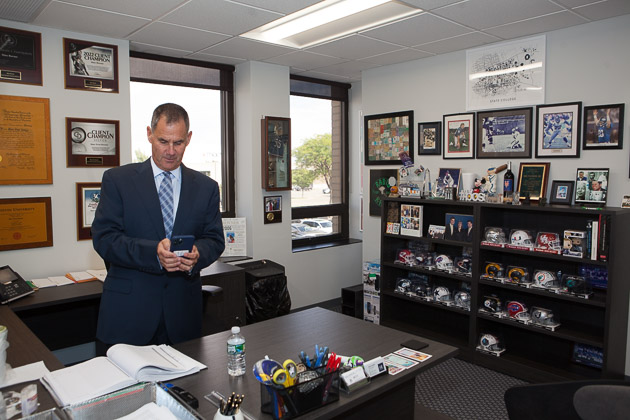
“Title is title,” says Marc Evan Rovner, the title insurance attorney and General Counsel at Beta Abstract, describing the baseline every closing shares: confirming a property is free of liens and encumbrances before a dollar moves. Commercial real estate, he’s quick to add, “it’s a different animal.”
Rovner has spent nearly two decades running closings across Beta Abstract’s four-state commercial real estate title insurance practice, and the split he describes between residential and commercial work isn’t abstract anymore. It’s showing up in the buyer pool itself. A wave of tax-driven relocation out of New York and other high-tax states toward Florida and Nevada has been reshaping who sits at his closing table, and 2026 data suggests that wave hasn’t crested yet.
Florida’s Tax Reset Adds Fuel
Florida repealed its commercial rent tax outright. The state had taxed rent or license fees on commercial leases since 1969, the only state in the country to do so, and had been phasing the rate down for years before House Bill 7031 was signed into law in June 2025. The repeal took full effect that October and continues to shape commercial leasing decisions through 2026, removing a 2 percent tax that once applied not just to base rent but to common-area fees, insurance, and other tenant charges layered on top of it.
Nevada offers a different version of the same pitch: no state corporate income tax at all, though businesses clearing more than $4 million in Nevada-sourced gross revenue pay a separate Commerce Tax. Together, the two states give commercial property tax migration a simple shape: keep more of what a company earns, skip the tax on the space it leases to operate, and land outside New York’s rates.
That’s the environment Marc Rovner is describing when he talks about the “commercial investor” leaving “places like New York and trying to go to Florida,” and Nevada, driven by “the state tax implications.” He’s not speculating from a distance. He’s watching the paperwork arrive.
Closings Still Require a Room
Marc Rovner’s firm still requires attendance in person across all four states where it operates, even as the buyer pool itself keeps moving. “We have to be in person in all four of our states, because. You know, the nature of, you know, of a closing is sitting around the closing table,” he says.
That holds even as remote work has reshaped commercial real estate demand in the same cities losing investors to Florida and Nevada. Rovner has watched that shift firsthand, working from his own home office on days when a client calls rather than driving into Beta Abstract’s office. But the closing table itself hasn’t followed the same path toward remote and hybrid formats. Simultaneous document execution, in-person identity verification, funds transfer: all three still depend on people occupying the same room at the same time. Remote work hasn’t touched that.
Twenty Years at the Closing Table
Marc Rovner draws a hard line between the residential buyer he sees, usually a first-time purchaser navigating an unfamiliar process, and the commercial investor on the other side of his practice: someone “usually a much more sophisticated real estate person, sometimes to their own detriment, where, you know, they think that they know best.” Sophistication doesn’t eliminate the underlying legal work. It just changes what the client expects from the person doing it.
A firm handling commercial title work in a state like Florida or Nevada for the first time, brought in by an out-of-state investor relocating capital rather than a familiar local client, runs the same search-and-clear process Rovner describes: confirm the title is free of liens and encumbrances before a dollar moves. What changes is the volume of capital behind that confirmation, and the buyer’s unfamiliarity with local title customs. Both raise the cost of getting it wrong.