
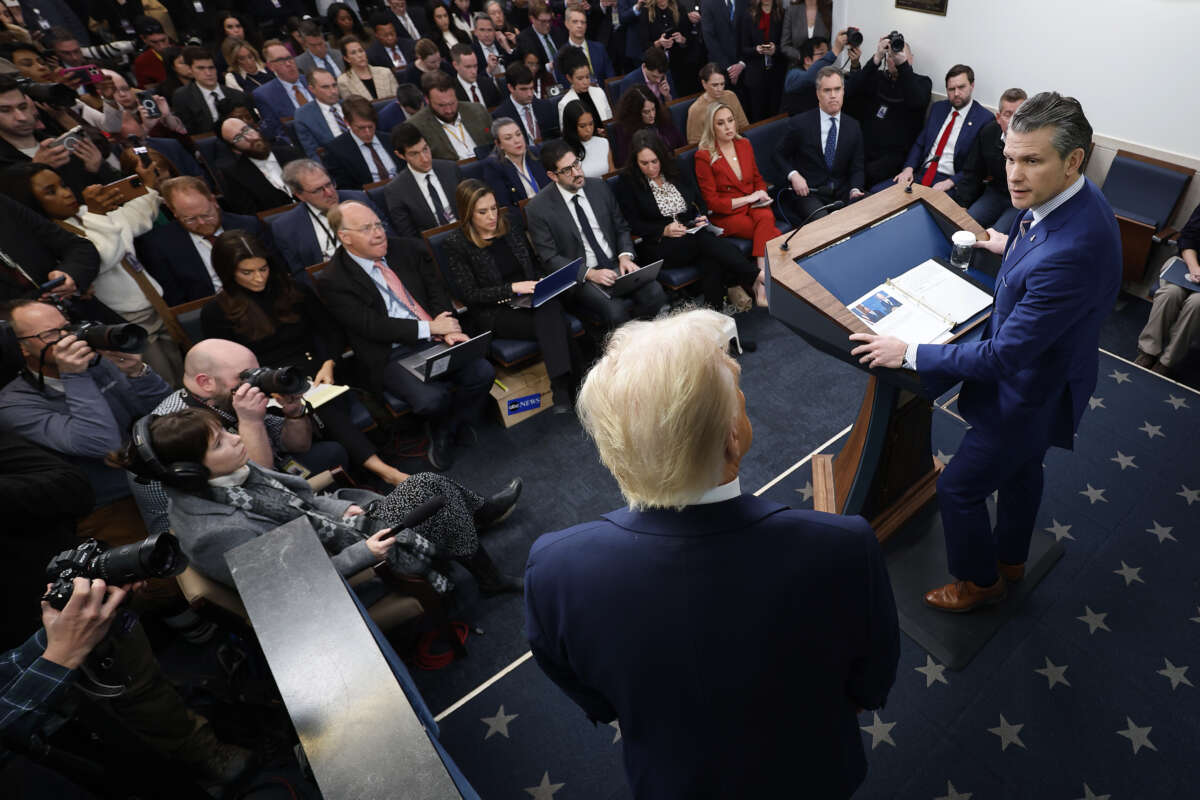
CNN, MS NOW and Politico are returning to federal court in Washington on Thursday, October 8, seeking a longer-term injunction against President Donald Trump’s decision to revoke their journalists’ access to the White House.
The three news organisations are asking US District Judge Timothy Kelly to extend an earlier court order that temporarily blocked the administration’s restrictions on September 24.
Their lawsuit alleges that the White House unlawfully retaliated against them over their reporting, violating constitutional protections for freedom of speech, freedom of the press and procedural due process.
The Trump administration maintains that the restrictions were justified by national security concerns and argues that access to the White House is a privilege rather than an unrestricted constitutional right.
The dispute presents a significant legal test of presidential authority over press accreditation and the constitutional protections available to journalists covering the federal government.
Why Did Trump Ban CNN, MS NOW and Politico?
President Trump announced the restrictions on September 18, accusing CNN, MS NOW and Politico of publishing misleading and inaccurate coverage of his administration.
The decision resulted in the withdrawal of White House press credentials, preventing journalists from the three organisations from accessing areas of the presidential complex ordinarily available to accredited reporters.
The news organisations filed a federal lawsuit on September 21, arguing that the decision amounted to unconstitutional retaliation based on their editorial viewpoints. The original legal challenge sought emergency relief after journalists from all three organisations were denied White House access.
They contend that the administration cannot selectively exclude journalists from established press facilities simply because officials object to their reporting.
Justice Department lawyers allege that the organisations published classified information, citing reporting concerning construction of Trump’s White House ballroom and attendance at a recent Republican convention. The allegation forms part of the administration’s justification for withdrawing their press credentials.
The administration argues that the president retains authority to determine which journalists receive access to sensitive government facilities.
However, the plaintiffs dispute the national security justification, maintaining that the restrictions were imposed because the president objected to their coverage.
The central legal question is whether the government can withdraw established press access on grounds connected to the content or viewpoint of published reporting.
Federal Judge Previously Blocked the Press Ban
On September 24, Judge Kelly issued a temporary restraining order requiring the administration to restore White House access to journalists from all three organisations.
The order prevented enforcement of the ban for 14 days, allowing the outlets to continue covering the administration while their constitutional challenge proceeded.
Kelly concluded that the plaintiffs had demonstrated a likelihood of success on their procedural due process claim under the Fifth Amendment.
The judge questioned whether the administration had provided sufficient justification and appropriate procedures before revoking the journalists’ credentials.
Kelly found that the evidence presented did not demonstrate that restoring the journalists’ credentials would endanger national security. He also noted that Trump’s public statements had focused on the outlets’ allegedly inaccurate and negative coverage rather than identifying specific security risks.
Importantly, the September ruling did not resolve the plaintiffs’ separate First Amendment claim.
The temporary order was intended to preserve the existing position while the court considered the wider constitutional issues. However, the organisations subsequently requested an emergency hearing after alleging that their journalists continued to be denied access despite the court’s order.
Its expiration on October 8 has made the latest hearing particularly important. Without further judicial protection, the administration could seek to reinstate the restrictions while the underlying litigation remains unresolved.
First Amendment and Due Process Rights at Centre of Case
The lawsuit raises two distinct constitutional questions.
The first concerns the First Amendment, which protects freedom of speech and freedom of the press.
CNN, MS NOW and Politico argue that the government cannot punish news organisations for publishing coverage that officials consider unfavourable.
Their lawyers contend that excluding journalists because of their editorial viewpoints constitutes unlawful discrimination against protected expression. Questions about government restrictions on protected speech have also featured in recent First Amendment litigation, including a federal appeals court ruling striking down provisions of Florida’s Stop WOKE Act.
The second issue concerns the Fifth Amendment’s Due Process Clause.
This requires the federal government to provide constitutionally adequate procedures before depriving individuals or organisations of certain protected interests.
In granting temporary relief, Kelly pointed to the absence of meaningful procedures before the credentials were revoked. The administration subsequently provided letters explaining its decision, but the judge questioned whether explanations supplied after the restrictions had already taken effect could satisfy constitutional requirements.
In disputes involving White House press credentials, courts have previously examined whether journalists received fair notice, a meaningful explanation and an appropriate opportunity to challenge the withdrawal of access.
The plaintiffs argue that the administration failed to provide adequate procedural protections before revoking their credentials.
The government disputes those claims and maintains that national security and presidential discretion justify the restrictions.
The distinction between the two constitutional arguments is significant. A court could conclude that the administration failed to follow appropriate procedures without deciding whether the underlying decision also violated the First Amendment.
That was the position reflected in Kelly’s September 24 temporary ruling.
Judge Kelly Previously Ruled in CNN’s Jim Acosta Case
The current proceedings have a notable connection to an earlier dispute involving the Trump administration and CNN.
In 2018, during Trump’s first presidency, Judge Kelly ordered the White House to restore press credentials belonging to CNN correspondent Jim Acosta.
Acosta’s access had been revoked following a contentious exchange with the president during a White House press conference.
Kelly found that the administration had failed to provide sufficient procedural protections before withdrawing the journalist’s credentials.
The ruling focused on due process rather than resolving the broader First Amendment questions raised by the dispute.
That earlier decision is relevant because the current lawsuit again concerns the government’s authority to revoke established White House press access.
However, the present proceedings involve three separate news organisations and additional arguments concerning national security and alleged viewpoint discrimination.
Associated Press Case Provides Another Press Access Precedent
The dispute also raises questions about the distinction between general White House accreditation and access to restricted presidential events, including travel aboard Air Force One.
White House press pools allow a limited number of journalists to cover presidential activities on behalf of the wider media. Participating organisations share reports, photographs and other material with news outlets that cannot attend.
Courts have previously considered whether the administration has greater discretion over access to restricted presidential spaces than over general White House press facilities.
In June 2025, a divided panel of the US Court of Appeals for the DC Circuit paused a lower-court injunction that had required the Trump administration to restore Associated Press access to certain presidential events.
The dispute concerned restrictions imposed after the agency declined to adopt Trump’s preferred name for the Gulf of Mexico.
The appeals court’s decision allowed restrictions affecting locations including the Oval Office and Air Force One to remain in place while litigation continued.
The distinction between access to general White House press facilities and participation in restricted presidential events is relevant to the current proceedings, although the two cases involve different facts and legal claims.
What Must the Court Decide?
The October 8 hearing concerns the plaintiffs’ request for a preliminary injunction.
Unlike a temporary restraining order, which generally provides short-term emergency protection, a preliminary injunction can remain in effect while the underlying lawsuit proceeds.
To obtain that relief, the news organisations must satisfy the applicable legal requirements, including demonstrating a likelihood of success on the merits and the prospect of irreparable harm without an injunction.
The court must also consider the balance of competing interests and whether the requested order serves the public interest.
The plaintiffs argue that continued uncertainty over White House access interferes with their ability to report on the presidency and risks further restrictions based on editorial content.
The administration maintains that the president must retain discretion to protect sensitive government operations and control access to official facilities.
A preliminary injunction would not constitute a final judgment that the administration violated the Constitution. Instead, it would establish the conditions governing press access while the litigation continues.
Why the White House Press Ban Case Matters
The dispute could have implications beyond the three organisations directly involved.
Federal courts have recognised that the government retains authority to establish reasonable security and administrative rules governing access to official facilities. However, that authority must operate within constitutional limits.
The current litigation examines how those principles apply when a president seeks to exclude established news organisations from reporting inside the White House.
It also raises questions about whether national security concerns can justify restrictions where the affected organisations allege that the actual motivation was disagreement with their reporting.
For constitutional lawyers, media organisations and government officials, the case offers another examination of the relationship between executive authority, procedural fairness and press freedom.
The immediate question is whether CNN, MS NOW and Politico will retain their White House access while their lawsuit proceeds. The wider issue is the extent to which the federal government may restrict journalists’ access to official proceedings without violating constitutional protections.