
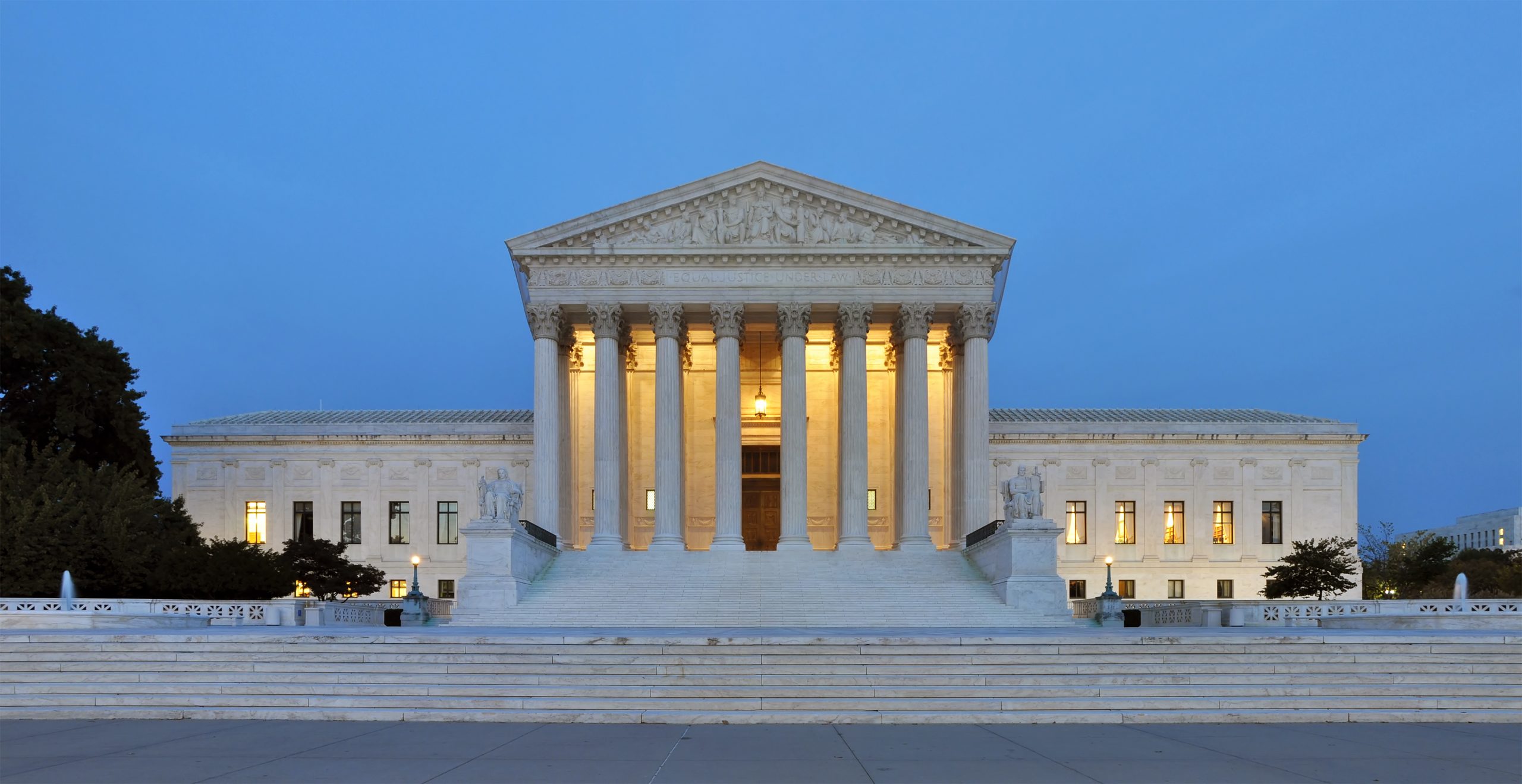
The US Supreme Court has rejected Nexstar Media Group’s attempt to halt DirecTV’s antitrust lawsuit over allegedly inflated television retransmission fees, leaving a Second Circuit ruling in place and allowing the dispute to continue in federal court.
The justices denied the petition for certiorari on October 5 in Nexstar Media Group, Inc., et al. v. DirecTV, LLC, No. 25-1243. Nexstar, Mission Broadcasting and White Knight Broadcasting had asked the Court to review a December 2025 decision of the US Court of Appeals for the Second Circuit concerning DirecTV’s standing to pursue its antitrust claims.
DirecTV filed the underlying action in March 2023 against Nexstar, Mission and White Knight. It alleges that the broadcasters engaged in a horizontal Sandoz $450M Antitrust Settlement — Lawyer Monthly intended to force DirecTV either to accept higher retransmission consent fees or lose access to programming carried by Mission and White Knight stations. The complaint includes claims under Section 1 of the Sherman Act alongside state-law claims.
According to the allegations considered by the Second Circuit, DirecTV refused the rates demanded during negotiations and Mission and White Knight withdrew their signals in October 2022. The resulting blackouts affected nearly one million DirecTV subscribers, with DirecTV alleging that subsequent customer losses caused it to lose revenue and profits.
The Southern District of New York initially dismissed DirecTV’s federal antitrust claims in March 2024. The court concluded that DirecTV lacked Michigan Climate Antitrust Case Against Oil Majors Dismissed | Lawyer Monthly because it had not paid the allegedly supracompetitive prices and therefore had not suffered the type of antitrust injury required to pursue its federal claims.
The Second Circuit reversed that decision on December 16, 2025. It held that lost profits resulting from reduced output can constitute a cognisable antitrust injury and that DirecTV had plausibly alleged a direct connection between the claimed price-fixing conspiracy, the resulting blackouts and its loss of subscribers. The case was remanded for further proceedings.
Nexstar’s Supreme Court petition challenged that reasoning. It asked whether a plaintiff that refuses to purchase a product at an allegedly fixed price can establish antitrust standing through losses that arise after declining to buy. The petition argued that the Second Circuit’s approach conflicted with decisions from other federal appellate courts.
The Supreme Court’s refusal to hear the case does not endorse the Second Circuit’s reasoning or create a new nationwide precedent. It does, however, leave the appellate ruling intact and removes the defendants’ immediate route for challenging the antitrust-standing decision before the country’s highest court.
The litigation also involves major US firms. Covington & Burling partner Lauren Zehmer is counsel of record for Nexstar and the other petitioners at the Supreme Court. Paul Mezzina of King & Spalding is counsel of record for DirecTV.
Proceedings have continued in the Southern District of New York following remand. On July 13, 2026, US District Judge P. Kevin Castel denied the defendants’ latest motion to dismiss, allowing DirecTV’s litigation to proceed while the Supreme Court petition remained pending.
For competition litigators and in-house legal teams, the case is significant because it tests how far antitrust injury can extend beyond buyers that actually pay an allegedly unlawful price. The Second Circuit’s ruling permits a plaintiff to rely on lost profits caused by reduced output where those losses are sufficiently connected to the alleged OpenAI Seeks Summary Judgment in xAI Case | Lawyer Monthly
With Supreme Court review now denied, the dispute returns to the district court as DirecTV pursues its claims against Nexstar, Mission and White Knight. The litigation may therefore provide further guidance on both antitrust standing and the evidential burden involved in linking alleged price fixing to subscriber losses and downstream commercial damage.