
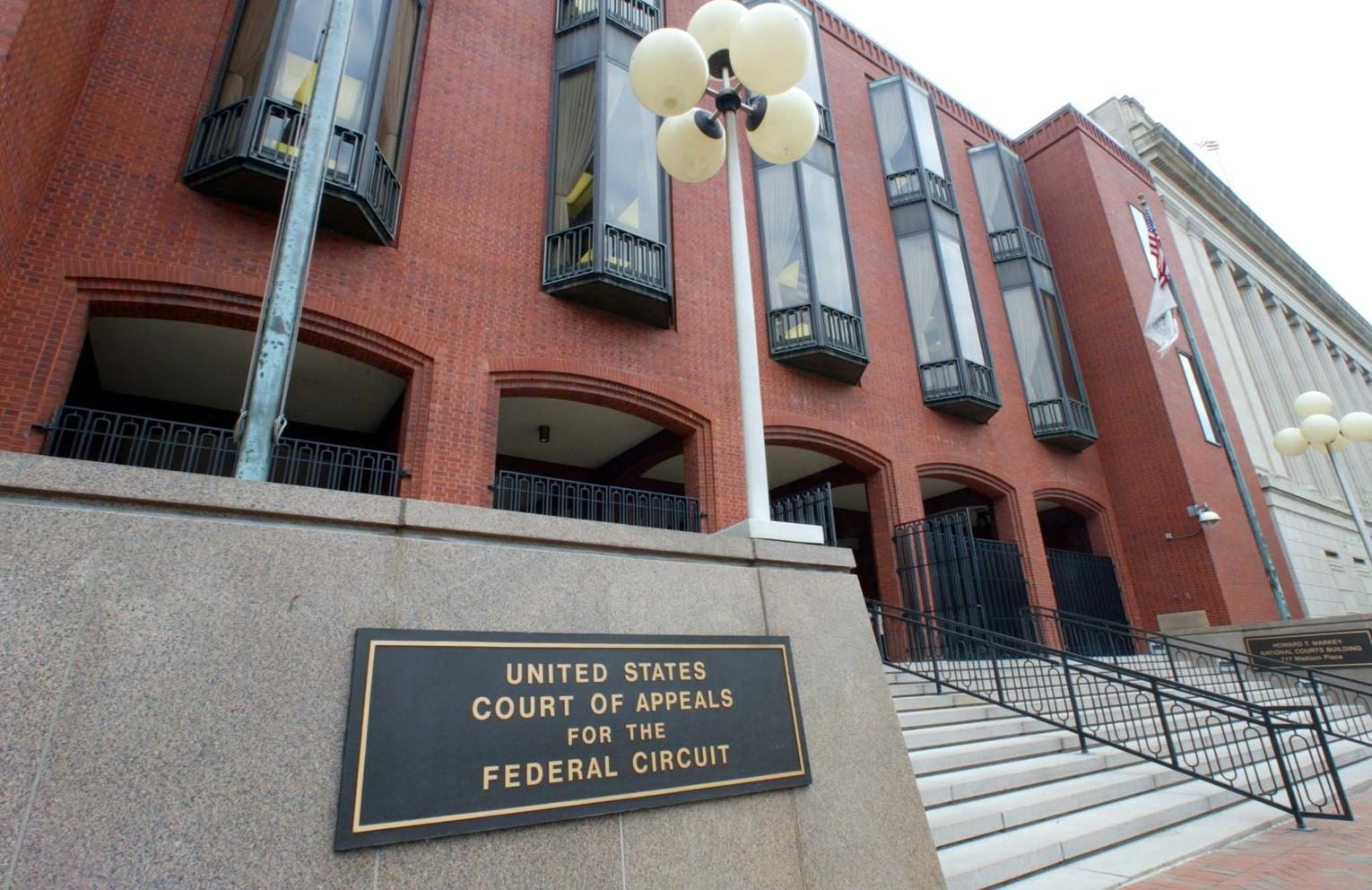
The U.S. Court of Appeals for the Federal Circuit has ruled that a patent owner cannot rely on a late inventorship correction to revive arguments that were not raised during proceedings before the Patent Trial and Appeal Board.
In a decision issued on March 9, 2026, the court affirmed a PTAB ruling rejecting Implicit, LLC’s attempt to revisit the outcome of two inter partes review proceedings involving patents challenged by Sonos, Inc.
The dispute focused on whether certificates of correction adding a new inventor after the PTAB’s final written decisions could support a renewed argument that the inventions predated the prior-art reference relied upon by Sonos.
The Dispute in Brief
The dispute arose from two inter partes review (IPR) proceedings filed by Sonos challenging patents owned by Implicit: U.S. Patent No. 7,391,791 and U.S. Patent No. 8,942,252.
During the IPR trials, Sonos argued that the patents were invalid in light of prior art, including a reference known as Janevski. Implicit attempted to “antedate” that reference, arguing that the inventions had been conceived earlier by the named inventors and implemented through engineering work involving Guy Carpenter.
Implicit maintained that the inventors conceived the inventions and communicated them to Carpenter, who then reduced the inventions to practice before the relevant prior-art date.
The PTAB rejected that argument in its 2019 final written decisions, finding that the evidence was insufficient to establish earlier conception or communication of the invention that would allow the inventors to rely on Carpenter’s work.
Because Implicit failed to establish an earlier invention date, the Board treated the Janevski reference as prior art and held the challenged patent claims unpatentable.
What the Court Decided
The Federal Circuit affirmed the PTAB.
The court held that although corrections of inventorship under 35 U.S.C. §256 can have retroactive effect, they do not eliminate procedural rules governing when arguments must be raised during patent litigation.
The court agreed with the Board that Implicit had forfeited its ability to raise a new antedating argument based on a later inventorship correction.
Because forfeiture provided a sufficient basis for affirmance, the appellate court said it did not need to address Implicit’s additional arguments concerning judicial estoppel or waiver.
The decision leaves the PTAB’s earlier rulings invalidating the challenged patent claims in place.
How the Court Got There
The Federal Circuit’s analysis focused on whether a patent owner may introduce a new theory based on corrected inventorship after the conclusion of PTAB proceedings.
Implicit argued that corrections of inventorship under 35 U.S.C. §256 should retroactively affect the prior-art analysis because the newly named inventor’s work could support an earlier invention date.
The court rejected that argument.
Although §256 allows inventorship corrections to apply retroactively in some circumstances, the Federal Circuit explained that procedural doctrines still govern when arguments must be raised during litigation. A party may forfeit an argument if it fails to present it in a timely manner before the PTAB.
The Board found that Implicit never advanced the revised inventorship theory during the original IPR trials. Instead, it waited until after the final written decisions had issued before seeking certificates of correction and introducing a new antedating argument.
The Federal Circuit agreed that this delay was significant. Because Implicit possessed the relevant inventorship evidence from the beginning of the proceedings, it could have raised the argument earlier.
By failing to do so during the trial phase of the IPR, the Board was entitled to treat the argument as forfeited.
The court also distinguished earlier cases where mid-litigation inventorship corrections were allowed. In those situations, new claim constructions adopted by courts altered the scope of the patent claims, creating a legitimate reason to reassess inventorship.
No comparable change occurred here, and the Federal Circuit concluded that the Board reasonably determined that Implicit had waited too long to introduce the new argument.
Key Takeaways
• Address inventorship issues early in PTAB proceedings. Attempts to correct inventorship after a final written decision may face significant procedural barriers.
• Inventorship corrections under 35 U.S.C. §256 do not automatically reopen patent disputes. Courts may still apply doctrines such as forfeiture, waiver, or estoppel when arguments are raised too late.
• Maintain a consistent litigation strategy. Advancing a different inventorship theory after trial can weaken a party’s procedural position.
• Evidence of conception and reduction to practice must be well documented and corroborated. The PTAB concluded that Implicit’s evidence did not establish earlier conception or communication of the invention.
• Procedure often determines the outcome in PTAB appeals. How arguments are presented during trial frequently shapes what issues remain available on appeal.
What Happens Next
The Federal Circuit affirmed the PTAB’s remand decision and the underlying final written decisions invalidating the challenged claims.
The ruling leaves the PTAB’s invalidity findings in place. The opinion does not indicate any further procedural steps following the appellate affirmance.
Case details
Court:
United States Court of Appeals for the Federal Circuit
Date:
March 9, 2026
Case:
Implicit, LLC v. Sonos, Inc.
Docket numbers:
2020-1173, 2020-1174
Area of law:
Patent litigation / inter partes review
Outcome:
PTAB decision affirmed
People Also Ask
What was the dispute in Implicit v Sonos about?
The case involved two patents challenged through inter partes review proceedings before the Patent Trial and Appeal Board. Sonos argued that the claims were invalid based on prior art, and the PTAB ultimately agreed.
What is an inter partes review in patent law?
An inter partes review is a procedure before the PTAB that allows parties to challenge the validity of issued patents using prior-art references. It is commonly used in technology disputes to reassess whether patent claims should have been granted.
Why did Implicit attempt to correct inventorship?
Implicit sought certificates of correction adding an additional inventor while the appeal was pending. It argued that the correction supported a new argument that the invention predated the prior-art reference relied upon by Sonos.
Why did the Federal Circuit reject the argument?
The court concluded that the argument had been raised too late in the proceedings. It agreed with the PTAB that the patent owner had forfeited the argument by not presenting it during the original IPR trial.
Can inventorship corrections change the outcome of patent litigation?
They can in some circumstances, but this case shows they do not automatically reopen earlier rulings. Courts may still apply procedural doctrines if the correction is used to introduce arguments that could have been raised earlier.