
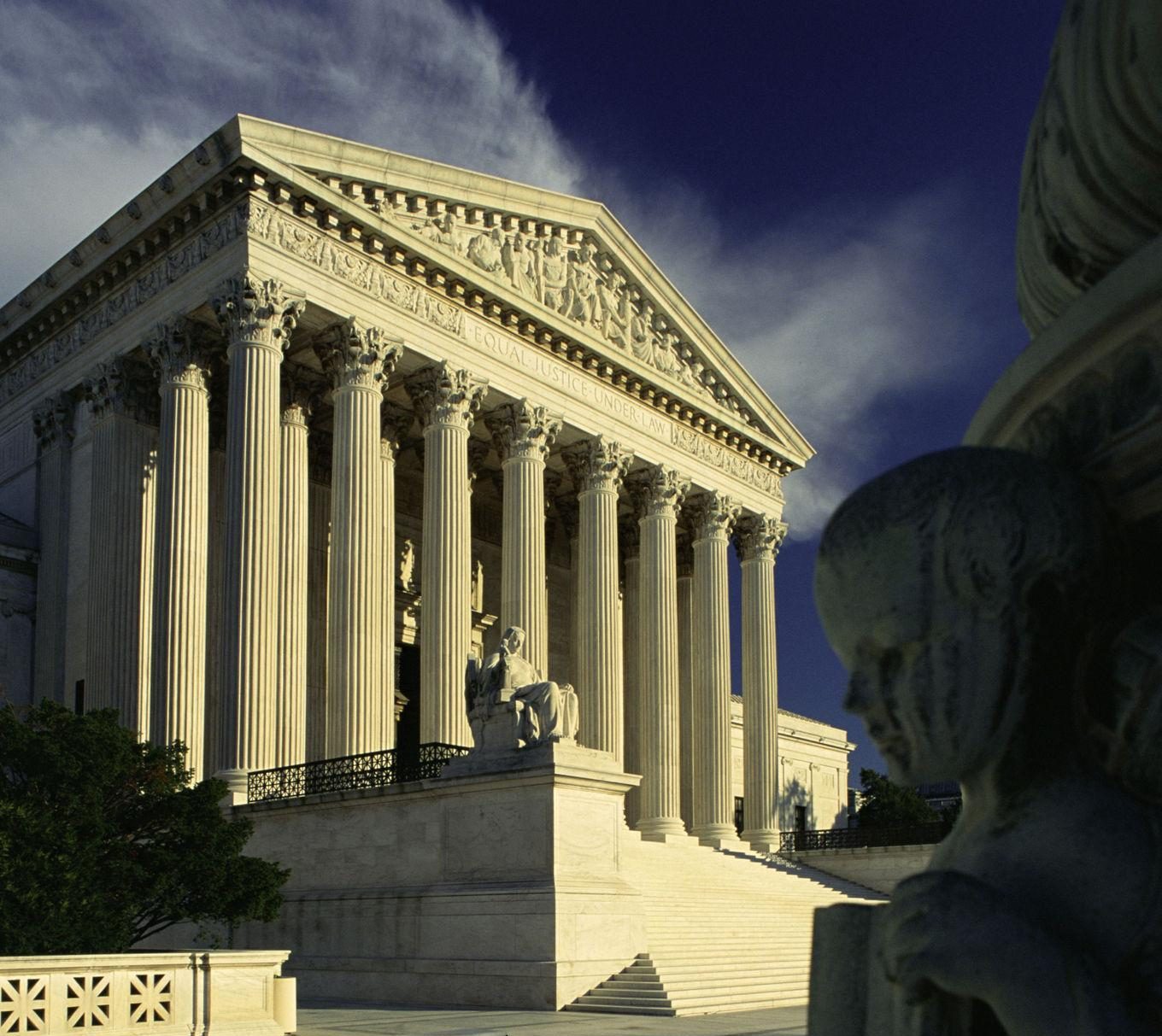
The Supreme Court of the United States has ruled that prior criminal convictions do not prevent individuals from bringing forward-looking constitutional challenges under §1983.
In Olivier v. City of Brandon, Mississippi, decided on March 20, 2026, the Court confirmed that such claims are not barred by Heck v. Humphrey where the relief sought is limited to future enforcement.
The decision removes a key procedural barrier in civil rights litigation and signals continued exposure for public authorities and enforcement bodies, even where earlier prosecutions have been successfully secured.
The Dispute in Brief
The case arose from a Mississippi city ordinance requiring individuals engaging in protests or demonstrations near an amphitheatre to remain within a designated protest area.
Gabriel Olivier, a street preacher, was arrested in 2021 for speaking outside the permitted zone. He later pleaded no contest in municipal court and received a fine, probation, and a conditional custodial sentence.
Instead of challenging his conviction, Olivier brought a federal claim under 42 U.S.C. §1983, which allows individuals to sue state actors for alleged constitutional violations.
He argued that the ordinance infringed the First Amendment and constituted unconstitutional restrictions on expression, and sought only prospective relief: a declaration that the law was unconstitutional and an injunction preventing its future enforcement.
The District Court dismissed the claim as barred by Heck v. Humphrey, and the United States Court of Appeals for the Fifth Circuit affirmed on similar reasoning.
The appellate ruling was not unanimous, with multiple judges dissenting and arguing that forward-looking §1983 claims should fall outside Heck’s scope.
What The Court Decided
The Supreme Court of the United States unanimously reversed the lower courts’ decisions, holding that §1983 claims seeking purely prospective relief, such as injunctions against future enforcement, are not barred by Heck v. Humphrey, even where the plaintiff was previously convicted under the same law.
Because Olivier’s claim did not seek to invalidate his conviction or obtain damages, but instead focused solely on preventing future enforcement of the ordinance, it was allowed to proceed. The case was remanded for further proceedings.
How The Court Got There
The Supreme Court of the United States drew a clear distinction between claims that challenge past convictions and those that seek to regulate future conduct.
In Heck v. Humphrey, the Court had held that plaintiffs cannot pursue §1983 damages claims that would effectively undermine an existing conviction, as this would amount to a collateral attack more properly brought through habeas proceedings.
However, the Court concluded that Olivier’s claim fell outside that framework. It sought no damages and did not attempt to overturn or invalidate the prior conviction. Instead, it was directed solely at preventing future enforcement of the ordinance.
The Court relied on earlier precedent, including Wooley v. Maynard, which confirmed that individuals may challenge the future application of laws even after prior convictions.
It also pointed to Wilkinson v. Dotson and Edwards v. Balisok, which recognise that injunctive relief falls outside the core concerns of habeas and is therefore not barred.
Importantly, the Court rejected an expansive reading of Heck’s “necessarily imply” language. While success in Olivier’s claim would suggest that his prior conviction was unconstitutional, the Court held that this indirect effect does not transform a forward-looking claim into a prohibited collateral attack.
The judgment clarifies that Heck applies only where a claim directly challenges the validity of a conviction. Claims focused exclusively on future enforcement fall outside that restriction.
The decision was unanimous, with no concurring or dissenting opinions.
Key takeaways for business
- Reduced procedural protection for enforcement bodies
Prior convictions no longer provide a reliable shield against future constitutional challenges to enforcement regimes. - Forward-looking claims create ongoing exposure
Organisations may face repeated legal challenges targeting the future application of policies, even where past enforcement has been upheld. - Clear distinction between damages and injunctive risk
While damages claims remain restricted under Heck v. Humphrey, injunction-based claims remain fully viable. - Increased scrutiny of regulatory and public-facing policies
Rules affecting speech or constitutional rights may be subject to continued challenge regardless of prior prosecutions. - Strategic implications for litigation and compliance teams
Legal teams should assess whether enforcement frameworks could be vulnerable to prospective constitutional claims.
What Happens Next
The case has been remanded to the lower courts for further proceedings in line with the Supreme Court’s ruling.
The opinion does not specify any further procedural timetable or outcome.
Case Details
- Court: Supreme Court of the United States
- Date: March 20, 2026
- Case name: Olivier v. City of Brandon, Mississippi
- Docket number: No. 24–993
- Area of law: Constitutional law / litigation procedure
- Result: Lower court decisions reversed; case remanded
People Also Ask
Can you bring a §1983 claim after a conviction?
Yes, but only in limited circumstances. This decision confirms that claims seeking prospective relief, such as injunctions, may proceed even after a conviction.
What does Heck v. Humphrey prohibit?
It prevents plaintiffs from using §1983 to seek damages that would undermine an existing conviction, unless that conviction has already been invalidated.
What is prospective relief in law?
Prospective relief refers to court orders aimed at preventing future conduct, such as injunctions, rather than addressing past harm.
Did the Supreme Court overturn the conviction in this case?
No. The Court made clear that the claim did not seek to invalidate or overturn the prior conviction.
Why does this case matter for government bodies?
It confirms that enforcement policies may still be challenged constitutionally, even where they have previously been enforced through valid convictions.