
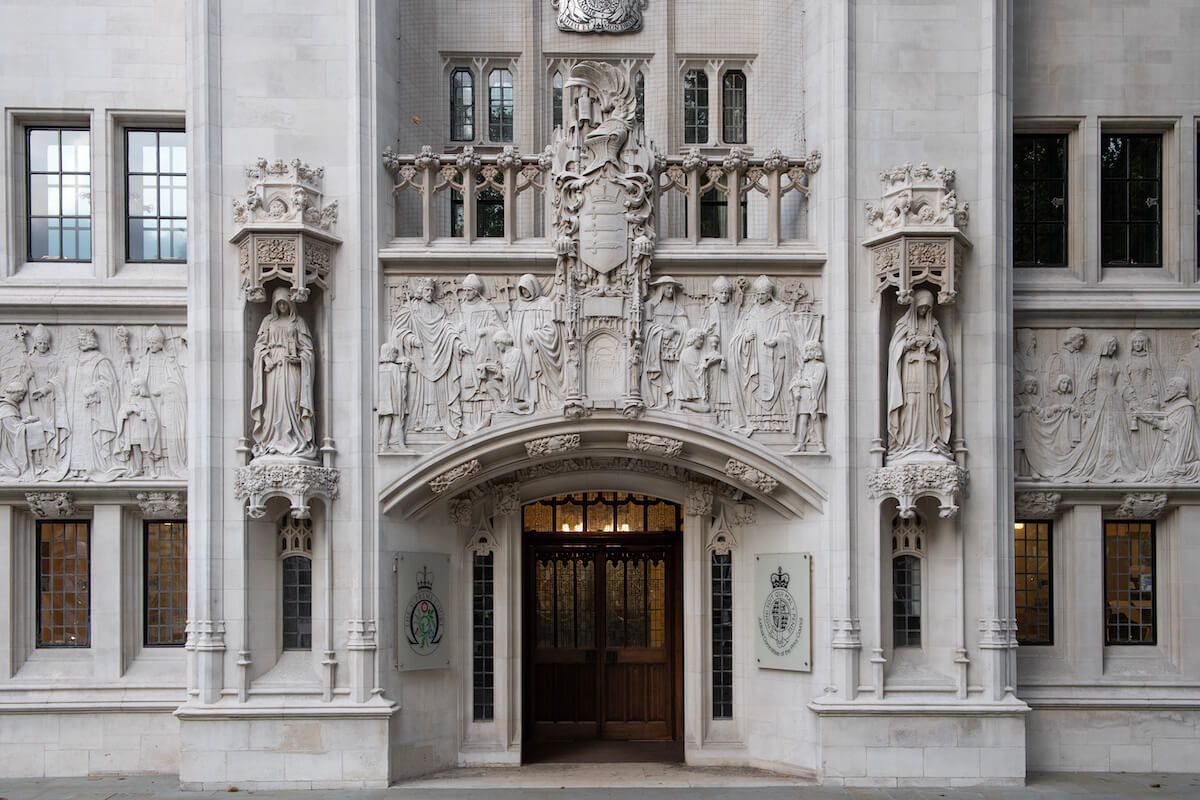
Allison Bailey, a barrister at Garden Court Chambers (GCC), has applied to the UK Supreme Court for permission to appeal a dismissal of her discrimination claim against Stonewall Equality Limited.
The case concerns whether Stonewall can be said to have caused GCC to discriminate against her based on her gender critical beliefs under section 111(2) of the Equality Act 2010.
Although the Supreme Court has not yet ruled on permission, the appeal raises significant questions for employers and legal teams about the role of external diversity programmes and the potential for third-party influence in workplace discrimination claims.
Case Background: Gender Critical Beliefs and Workplace Discrimination
Ms Bailey holds gender critical beliefs, meaning she considers a woman to be defined by biological sex rather than gender identity.
She objected when Garden Court Chambers (GCC) joined Stonewall’s Diversity Champions programme, which promotes inclusion of LGBT individuals, particularly trans people.
In 2019, Ms Bailey expressed these views on social media. Stonewall’s head of trans inclusion lodged a complaint with GCC, prompting an internal investigation.
The investigator found that two of her tweets may have breached professional obligations. GCC asked Ms Bailey to remove them; she refused, and no further action was taken.
Ms Bailey subsequently brought an Employment Tribunal (ET) claim against both GCC and Stonewall. The ET ruled in her favour against GCC, awarding damages, but dismissed the claim against Stonewall (ET decision summary).
Appeals to the Employment Appeal Tribunal (EAT decision) and Court of Appeal (Court of Appeal decision) upheld the dismissal against Stonewall.
She now seeks Supreme Court permission to appeal, focusing on whether Stonewall caused GCC’s alleged discriminatory conduct and the proper approach to causation under section 111(2) of the Equality Act 2010 (Equality Act 2010, s111).
How the Case Reached the Supreme Court
As of the date of the opinion, the Supreme Court has only received a permission to appeal application; no final judgment has been made.
The Court has not yet granted or refused permission, and no substantive ruling on the merits or Stonewall’s liability has been issued. The case remains at the procedural stage of seeking leave to appeal.
The case reached the Supreme Court following a procedural history that included:
- Employment Tribunal ruling in favour of Ms Bailey against GCC, dismissing the claim against Stonewall (ET summary).
- Employment Appeal Tribunal dismissal of the appeal regarding Stonewall (EAT decision).
- Court of Appeal upholding the EAT decision (Court of Appeal decision).
The central legal question for the Supreme Court is the correct approach to causation under section 111(2) of the Equality Act 2010, which governs when one party can be said to have “caused or induced” another to discriminate.
The ET previously recognised Ms Bailey’s gender critical beliefs as protected but found that Stonewall did not directly cause GCC to discriminate.
As the permission application stage is procedural, the Court has not yet examined the substantive merits or the causation test in detail.
Key Takeaways for Business
- Employers should recognise that participation in external diversity programmes could be considered part of claims alleging third-party influence on workplace discrimination.
- External organisations are not automatically liable; causation under section 111(2) of the Equality Act 2010 remains a critical legal threshold.
- Workplace social media policies may intersect with protected beliefs, requiring careful guidance and monitoring.
- Legal teams should monitor developments, as the Supreme Court may clarify employer vs third-party liability in inclusion programmes.
- HR and compliance teams should evaluate the potential for external advice or programmes to create unintended legal or reputational risk.
Next Steps in the Supreme Court Process
The Supreme Court will determine whether to grant permission to appeal. If permission is granted, the appeal will move to a full hearing, where the Court may examine causation under section 111(2) of the Equality Act 2010.
At this stage, no ruling on liability has been made. The Court’s focus remains on procedural and legal questions concerning the potential influence of third parties in workplace discrimination claims.
Case details
- Court: Supreme Court of the United Kingdom
- Date: 13 February 2026
- Case name: Bailey (Appellant) v Stonewall Equality Limited and others (Respondents)
- Docket number: UKSC/2026/0017
- Area of law: Employment / Equality Act 2010
- Result: Permission to appeal application lodged; substantive ruling not yet issued
People Also Ask
1. What is the Bailey v Stonewall case about?
It concerns Allison Bailey’s claim that Stonewall Equality Limited caused Garden Court Chambers to discriminate against her because of her gender critical beliefs.
2. Has the Supreme Court issued a ruling?
No. The case is currently at the permission-to-appeal stage, and no substantive judgment has been made.
3. What legal question does the Supreme Court consider?
The Court will consider the correct approach to causation under section 111(2) of the Equality Act 2010, specifically whether a third party can be said to have caused workplace discrimination.
4. What is a “gender critical” belief?
It is the belief that a woman is defined by biological sex rather than gender identity, recognised as a protected philosophical belief under the Equality Act 2010.
5. Does this case affect employers?
Potentially. It may clarify when external organisations or diversity programmes could influence workplace discrimination claims and the resulting legal exposure for employers.