
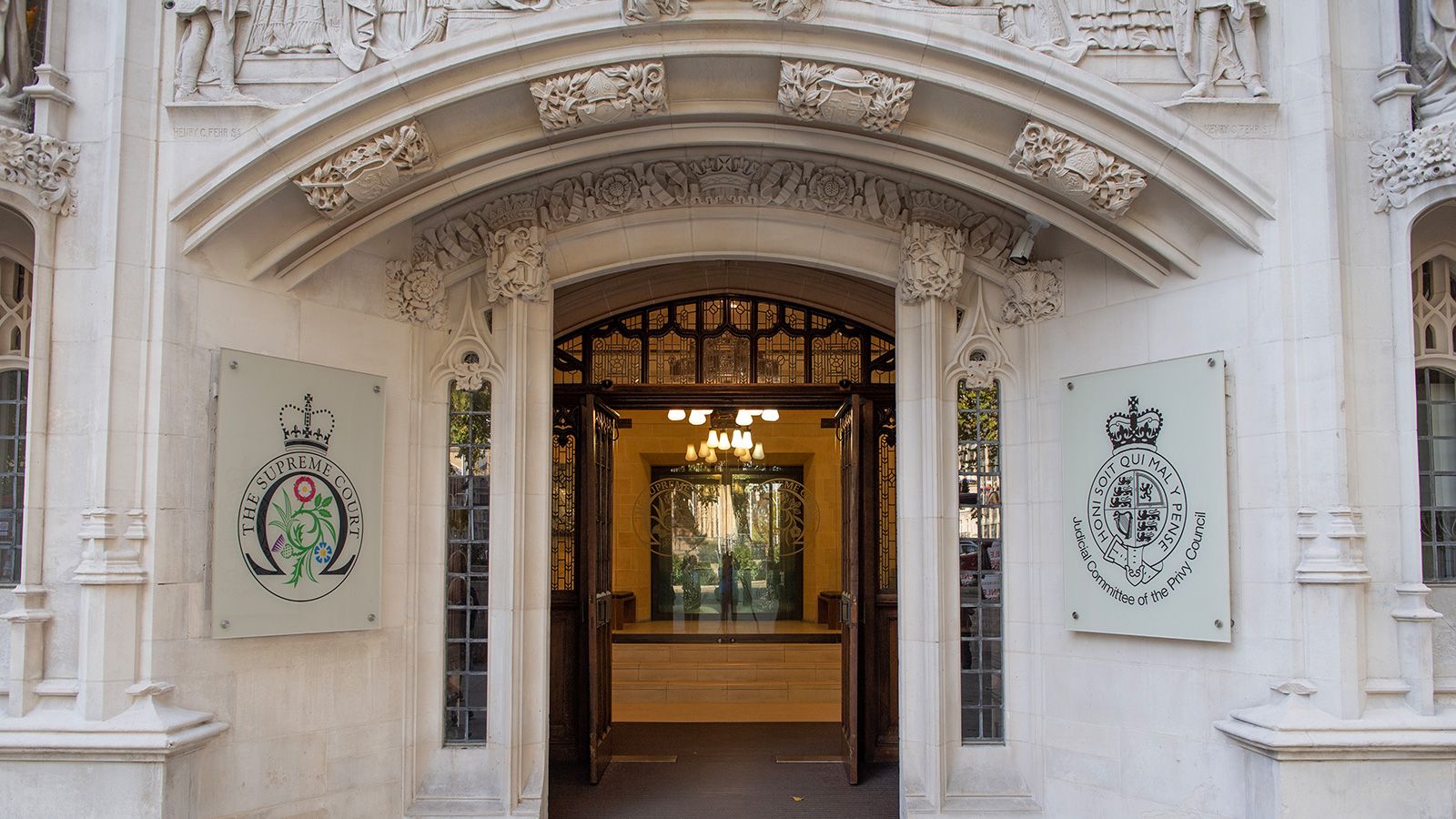
The Supreme Court of the United Kingdom has declared a key provision of UK labour law incompatible with human rights protections, ruling that the legislation fails to protect workers from disciplinary sanctions imposed for participating in lawful strike action.
In Secretary of State for Business and Trade v Mercer, the Court held that section 146 of the Trade Union and Labour Relations (Consolidation) Act 1992 does not protect workers from detriment short of dismissal linked to participation in trade union-organised industrial action.
In a unanimous judgment delivered on 17 April 2024, the Court issued a declaration of incompatibility under the Human Rights Act 1998, finding that the absence of protection conflicts with Article 11 of the European Convention on Human Rights, which safeguards freedom of association and trade union activity.
The Dispute In Brief
The case arose from events involving Fiona Mercer, a support worker employed by Alternative Futures Group Ltd in the care sector. Mercer also served as a workplace representative for the trade union UNISON.
In 2019 a dispute arose between the employer and the union over payments for sleep-in shifts at the company’s care homes. Following a ballot, UNISON organised a series of lawful strikes between March and May 2019.
Mercer was involved in planning the industrial action and participated in the strikes. On 26 March 2019 she was suspended by her employer.
Although she continued receiving her normal pay during the suspension, she was unable to earn the overtime she would otherwise have worked.
Mercer brought a claim under section 146 of the Trade Union and Labour Relations (Consolidation) Act 1992, arguing that the suspension amounted to unlawful detriment imposed to deter or penalise her participation in trade union activities.
The dispute ultimately turned on a preliminary legal question: whether section 146 protects workers from detriment short of dismissal when they participate in lawful industrial action.
The Employment Tribunal held that it did not. The Employment Appeal Tribunal allowed Mercer’s appeal, concluding that the legislation could be interpreted consistently with human rights law.
The Court of Appeal of England and Wales later reversed that decision, finding that such an interpretation was not legally permissible.
Mercer then appealed to the Supreme Court.
What The Court Decided
The Supreme Court unanimously allowed Mercer’s appeal in part and made a declaration of incompatibility.
The Court confirmed that, as currently drafted, section 146 TULRCA does not protect workers from sanctions short of dismissal imposed for participation in lawful industrial action.
The statutory protection applies only where trade union activities occur “at an appropriate time”, defined largely as outside working hours or during working hours with employer consent.
Because strike action typically occurs during working hours, the provision effectively excludes such participation from its protection.
However, the Court concluded that the absence of statutory protection against disciplinary sanctions for lawful strike participation is incompatible with Article 11 of the European Convention on Human Rights.
The Court therefore declared that section 146 is incompatible with Article 11 insofar as it fails to provide protection against sanctions short of dismissal intended to deter or penalise trade union members from taking part in lawful strike action.
The declaration does not invalidate the legislation, but formally notifies Parliament that the provision conflicts with Convention rights.
The Court’s Reasoning
The judgment, delivered by Lady Simler, examined the structure of UK labour legislation and the scope of the rights protected by Article 11.
The Court first confirmed that, on ordinary statutory interpretation, section 146 does not extend to participation in industrial action. The legislation distinguishes between trade union activities carried out at an “appropriate time” and industrial action undertaken during working hours.
The justices then considered whether the legislative framework as a whole satisfies the United Kingdom’s obligations under Article 11.
While Strasbourg case law recognises the right to strike as protected under Article 11, it is not regarded as an absolute right. States therefore retain discretion in determining how industrial relations are regulated.
Nevertheless, the Court concluded that the legislative scheme provides no protection against sanctions short of dismissal imposed for lawful strike participation.
The Court explained that allowing employers to impose disciplinary sanctions short of dismissal on workers taking part in lawful strike action may undermine the practical effectiveness of the right to strike.
The Court also rejected the argument that section 146 could be interpreted to include strike participation under the interpretative duty in section 3 of the Human Rights Act.
Doing so would require courts to redesign the statutory scheme governing industrial action — a task the Court said belongs to Parliament rather than the judiciary.
Separate Opinions
The judgment was delivered by Lady Simler, with whom Lord Lloyd-Jones, Lord Hamblen, Lord Burrows and Lord Richards agreed. No separate concurring or dissenting opinions were issued.
Practical Implications And Next Steps
-
Gap in statutory protection: The ruling confirms that UK legislation does not currently provide protection against disciplinary sanctions short of dismissal for workers participating in lawful strike action.
-
Legislative consideration: The declaration of incompatibility identifies a conflict between section 146 TULRCA and Article 11 ECHR and leaves it to Parliament to decide whether legislative change is required.
-
Employment policy review: Employers should review disciplinary procedures applied during labour disputes, particularly where sanctions may be imposed on employees participating in lawful industrial action.
-
Human rights considerations: Employment disputes involving trade unions may involve arguments based on rights protected under the European Convention on Human Rights.
-
Industrial relations strategy: Corporate legal teams should monitor potential legislative developments following the Mercer ruling.
A declaration of incompatibility does not change the law immediately. Section 146 TULRCA remains in force unless Parliament decides to amend the legislation.
The Supreme Court’s declaration therefore identifies an incompatibility within the current legislative framework and leaves it to Parliament to determine whether, and if so how, to amend the law.
Case Details
Court: Supreme Court of the United Kingdom
Date: 17 April 2024
Case name: Secretary of State for Business and Trade v Mercer
Citation: [2024] UKSC 12
Docket: UKSC/2022/0080
Area of law: Employment law / Trade union law / Human rights
Result: Appeal allowed in part; declaration of incompatibility issued.
People Also Ask
What was the Mercer Supreme Court case about?
The case examined whether UK legislation protects workers from disciplinary sanctions imposed for participating in lawful strike action. The Supreme Court concluded that section 146 TULRCA does not provide such protection and is incompatible with Article 11 of the European Convention on Human Rights.
What does section 146 of TULRCA protect?
Section 146 protects workers from employer detriment related to trade union membership or activities carried out at an “appropriate time.” The Supreme Court confirmed that the provision does not extend to participation in lawful strike action during working hours.
What is a declaration of incompatibility?
A declaration of incompatibility is issued when UK courts determine that legislation conflicts with rights protected under the Human Rights Act. The declaration does not invalidate the law but signals to Parliament that legislative change may be required.
Does the Mercer ruling change UK strike law immediately?
No. Section 146 TULRCA remains in force despite the declaration. Any change to the legislation would require action by Parliament.
Why is the Mercer decision important for employment law?
The decision confirms that UK legislation currently provides no protection against disciplinary sanctions short of dismissal for workers participating in lawful strike action.