
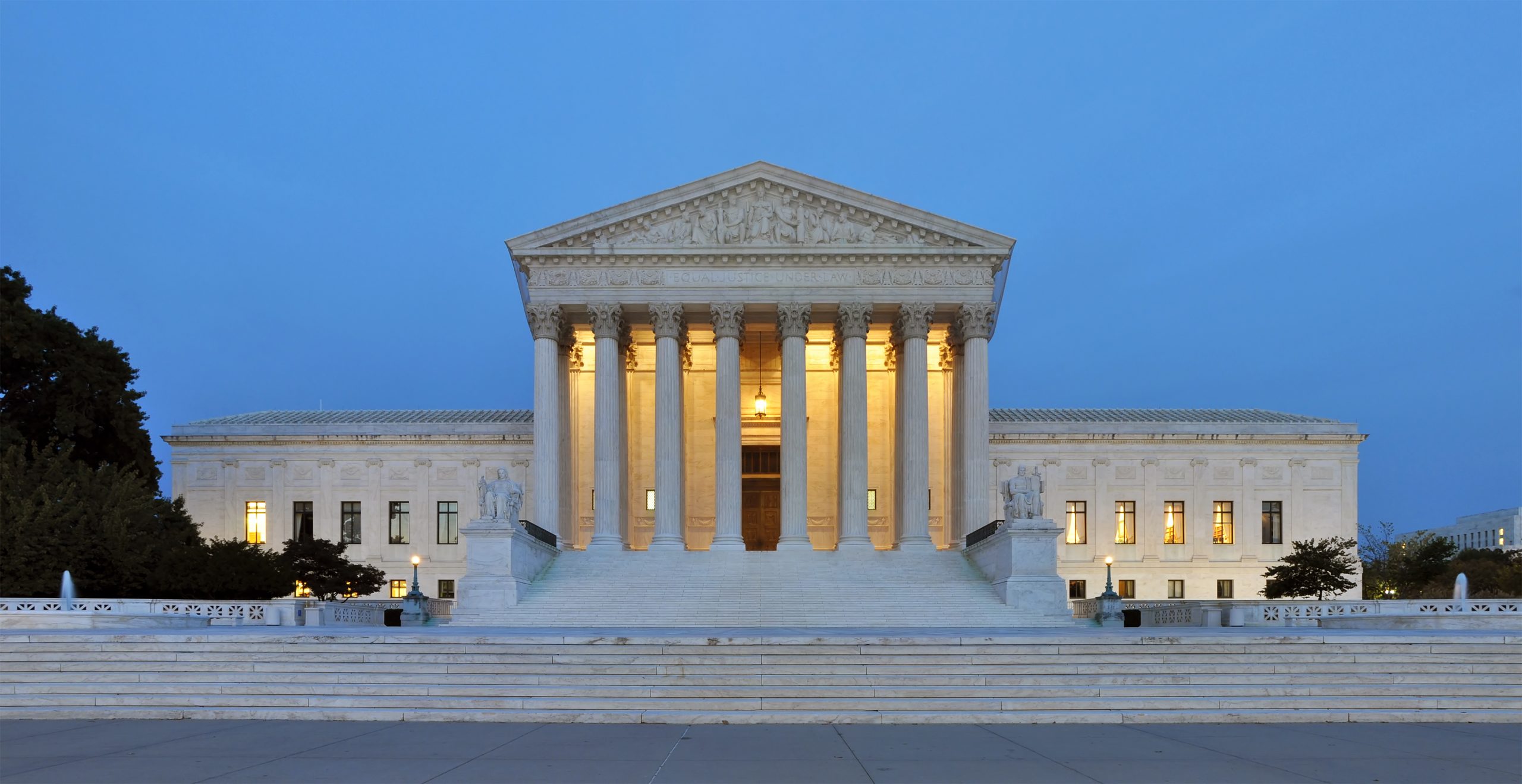
The U.S. Supreme Court has raised the bar for excessive force claims against police, ruling that an officer was protected by qualified immunity because existing law did not clearly prohibit his conduct.
In Jacob P. Zorn v. Shela M. Linton (March 23, 2026), the Court reversed the Second Circuit and held that the officer could not be sued under §1983, finding that no prior case had clearly established that his specific actions violated the Fourth Amendment.
The decision strengthens the qualified immunity defence and increases the likelihood of early dismissal in civil rights claims—shifting litigation risk and defence strategy for public authorities, insurers, and legal teams.
The Dispute in Brief
The case arose from a protest during the 2015 inauguration of Vermont’s governor, where demonstrators staged a sit-in inside the state capitol. When the building closed, police instructed the remaining protesters to leave or face arrest for trespass.
Shela Linton refused to stand and passively resisted removal. Sergeant Jacob Zorn warned that force would be used if she did not comply. When she continued to resist, Zorn applied a rear wristlock, placed pressure on her wrist, and lifted her to her feet.
Linton brought a claim under 42 U.S.C. §1983, alleging that the officer used excessive force in violation of the Fourth Amendment and caused physical and psychological injury.
A federal district court granted summary judgment in Zorn’s favour on qualified immunity grounds. The U.S. Court of Appeals for the Second Circuit reversed, holding that prior case law had clearly established that such force could be unlawful.
The Supreme Court granted certiorari to review that ruling.
What the Court Cecided
The Supreme Court reversed the Second Circuit and held that Sergeant Zorn is entitled to qualified immunity.
The Court found that existing precedent did not clearly establish that the officer’s specific conduct—using a wristlock to lift a noncompliant protester after repeated warnings, violated the Fourth Amendment.
As a result, the claim is dismissed at the summary judgment stage and does not proceed to trial.
The Court’s Reasoning
The Court focused on the central requirement of qualified immunity: whether the alleged constitutional violation was “clearly established” at the time of the incident.
It emphasised that this standard requires a high degree of factual specificity. General principles—such as the prohibition on excessive force—are not sufficient.
Instead, prior case law must place the unlawfulness of the officer’s conduct “beyond debate” in closely comparable circumstances.
The Second Circuit had relied on Amnesty America v. West Hartford, but the Supreme Court found that decision did not clearly establish that Zorn’s conduct was unconstitutional.
The earlier case involved a broader range of force and did not definitively hold that the use of a wristlock in similar circumstances violated the Fourth Amendment.
It also did not address the specific combination of facts present here, including repeated warnings before force was used.
In practical terms, the Court confirmed that plaintiffs must identify closely aligned precedent—not broad constitutional rules—to proceed with a claim. Because no such precedent existed, the officer was entitled to qualified immunity.
Justice Sotomayor, joined by Justices Kagan and Jackson, dissented, arguing that existing case law had already made clear that the use of pain compliance techniques against nonviolent, passively resisting protesters could constitute excessive force.
The dissent criticised the majority for applying an overly narrow standard and warned that the ruling risks shielding officers from accountability in low-threat situations.
Key Takeaways for Business
- Higher threshold for civil rights claims
Plaintiffs must identify closely aligned precedent to overcome qualified immunity, significantly increasing the likelihood of dismissal at the summary judgment stage. - Stronger defence position for public bodies
Government entities, insurers, and defence counsel have a clearer basis to dispose of claims where no fact-specific precedent exists. - Critical role of precedent alignment
Legal teams must assess whether existing case law closely matches the facts when evaluating liability exposure under §1983. - Shift in litigation strategy
Defence strategies may increasingly focus on the absence of clearly established law rather than disputing the underlying use of force.
What happens next
The Supreme Court’s decision reverses the appellate ruling and resolves the case in the officer’s favour at the summary judgment stage, bringing the litigation to a close.
No further proceedings are indicated in the opinion.
People Also Ask
What is qualified immunity in U.S. law?
Qualified immunity protects government officials from liability unless they violate clearly established constitutional rights. Courts require specific precedent with similar facts to overcome it.
What did the Supreme Court decide in Zorn v. Linton?
The Court ruled that the officer was entitled to qualified immunity because prior case law did not clearly establish that his conduct violated the Constitution.
Why is “clearly established law” important?
It determines whether a civil rights claim can proceed. Without sufficiently specific precedent, courts may dismiss claims before trial.
Does this decision change excessive force law?
The ruling does not redefine excessive force but reinforces the need for fact-specific precedent in qualified immunity cases.
What happens to the case after this ruling?
The case is resolved at the summary judgment stage in favour of the officer, with no further proceedings indicated.