
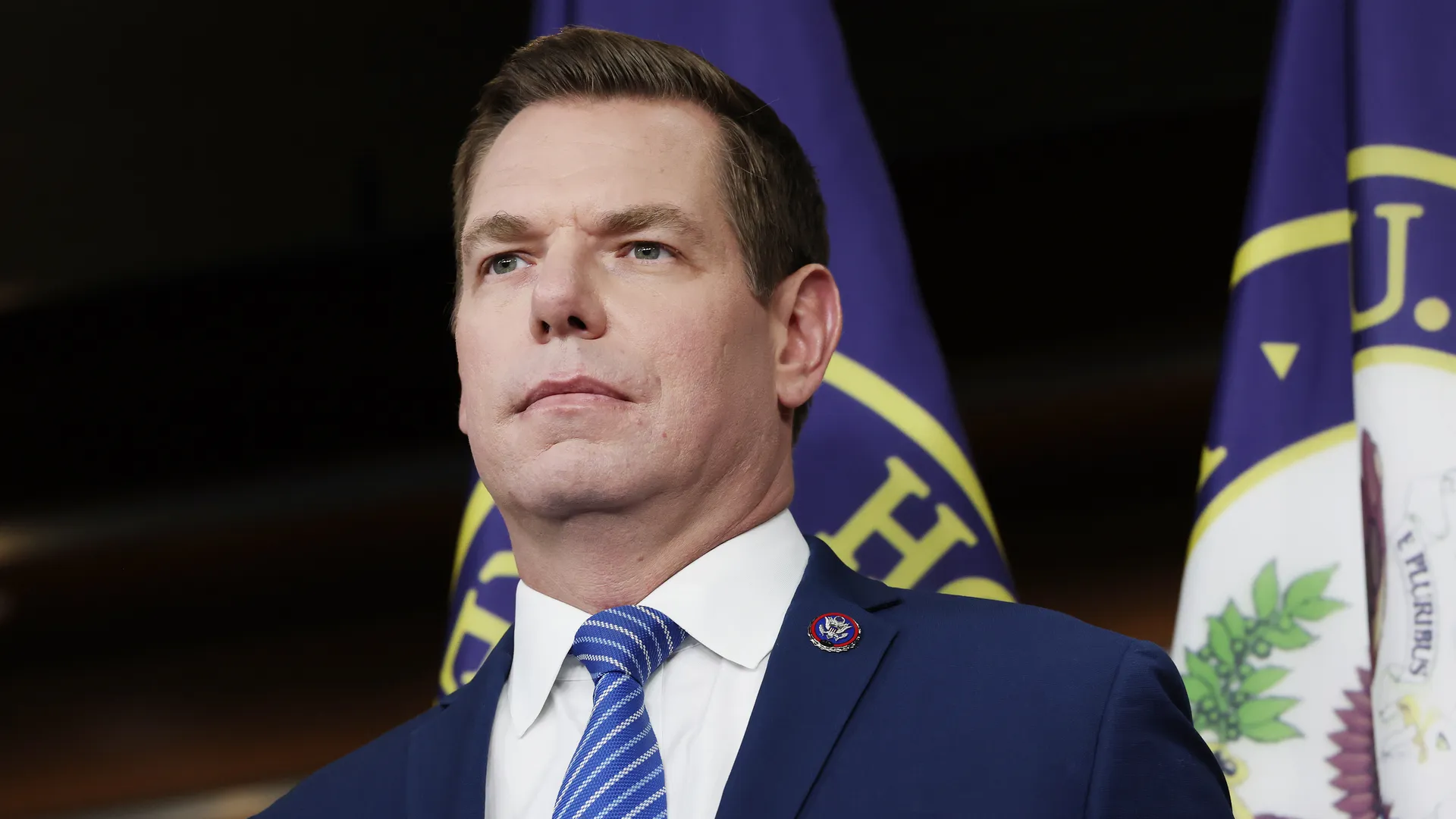
The Eric Swalwell sexual assault investigation has drawn significant legal and political scrutiny, raising complex questions about criminal liability, jurisdiction, and congressional ethics.
Reports indicate that the Manhattan District Attorney’s Office has launched an inquiry into allegations made by a former staffer relating to an alleged incident in April 2024.
According to media reports, including the New York Post and CNN, the investigation centres on claims of sexual assault and misconduct. Representative Eric Swalwell has denied the allegations. As of publication, no criminal charges have been publicly confirmed, and the matter remains under investigation.

Rep. Eric Swalwell apologized to his wife Brittany in a video statement Friday while denying allegations.
Like all individuals subject to criminal inquiries, Swalwell is entitled to the presumption of innocence unless proven guilty in a court of law. The case highlights the legal processes that apply when serious allegations are brought against a sitting U.S. congressman.
The alleged incident is reported to have taken place in New York, placing it within the jurisdiction of the Manhattan District Attorney’s Office and its Special Victims Division. If prosecutors determine that sufficient evidence exists, the case could proceed through grand jury review and potentially lead to formal criminal charges.
Allegations involving intoxication are typically assessed under provisions of the New York Penal Law that address consent and incapacity. These include offences such as rape in the first degree and sexual abuse, depending on the facts established by investigators.
Investigations of this nature often rely on witness testimony, medical and forensic evidence, digital communications, and contemporaneous accounts. Surveillance footage and other corroborating material may also be examined as part of the evidentiary process.
Public office does not provide immunity from prosecution. Members of Congress remain subject to federal and state criminal law, and the U.S. Constitution’s Speech or Debate Clause protects only legislative activities, not personal conduct.
As a result, a sitting lawmaker can be investigated and prosecuted in the same manner as any private citizen. This principle reflects the constitutional doctrine that all individuals are equal before the law.
Alongside any criminal proceedings, allegations involving staff members may trigger an inquiry by the U.S. House Committee on Ethics. The committee has the authority to recommend disciplinary measures, including reprimand, censure, or expulsion by a two-thirds vote of the House of Representatives.
The investigation also raises broader issues concerning public trust and institutional accountability. High-profile cases involving elected officials often test confidence in democratic institutions and underscore the importance of due process.
They further highlight the ethical responsibilities of individuals in positions of power and the need for clear professional boundaries within political and governmental workplaces.
The commercial and financial implications of a criminal investigation involving a senior public figure can be significant. Legal defence costs, reputational damage, and political fallout may affect fundraising, donor confidence, and future career prospects.
From a governance perspective, the case underscores the importance of strong compliance frameworks, ethical leadership, and transparent oversight mechanisms.
For employers and organisations, the situation offers practical lessons in risk management. Robust codes of conduct, comprehensive ethics training, and confidential reporting mechanisms are essential components of modern compliance systems.
Ensuring independent investigations and safeguarding against retaliation remain critical to maintaining lawful and respectful workplaces.
As the investigation continues, prosecutors will determine whether sufficient evidence exists to pursue charges. Should the case advance, it could involve grand jury proceedings and potential civil litigation alongside any criminal action.
Parallel inquiries by congressional ethics authorities may also unfold, potentially shaping the political future of the congressman and influencing broader debates about oversight and accountability in public office.
The Eric Swalwell sexual assault investigation presents a complex intersection of criminal law, constitutional principles, and political governance. While the allegations remain unproven and the legal process is ongoing, the case underscores the foundational principle that all individuals, regardless of status or office, are subject to the rule of law.
Its broader implications extend beyond politics, offering important lessons for legal practitioners, organisations, and policymakers navigating issues of compliance, ethics, and institutional integrity.