
TL;DR
- The U.S. Department of Education has ended agreements protecting transgender students
- The law (Title IX) hasn’t changed — but enforcement has
- Legal risk hasn’t disappeared — it has shifted directly onto schools
The rule changed. The risk didn’t.
A school changes its policy overnight.
What it doesn’t realise is that the legal risk didn’t disappear — it just became harder to see.
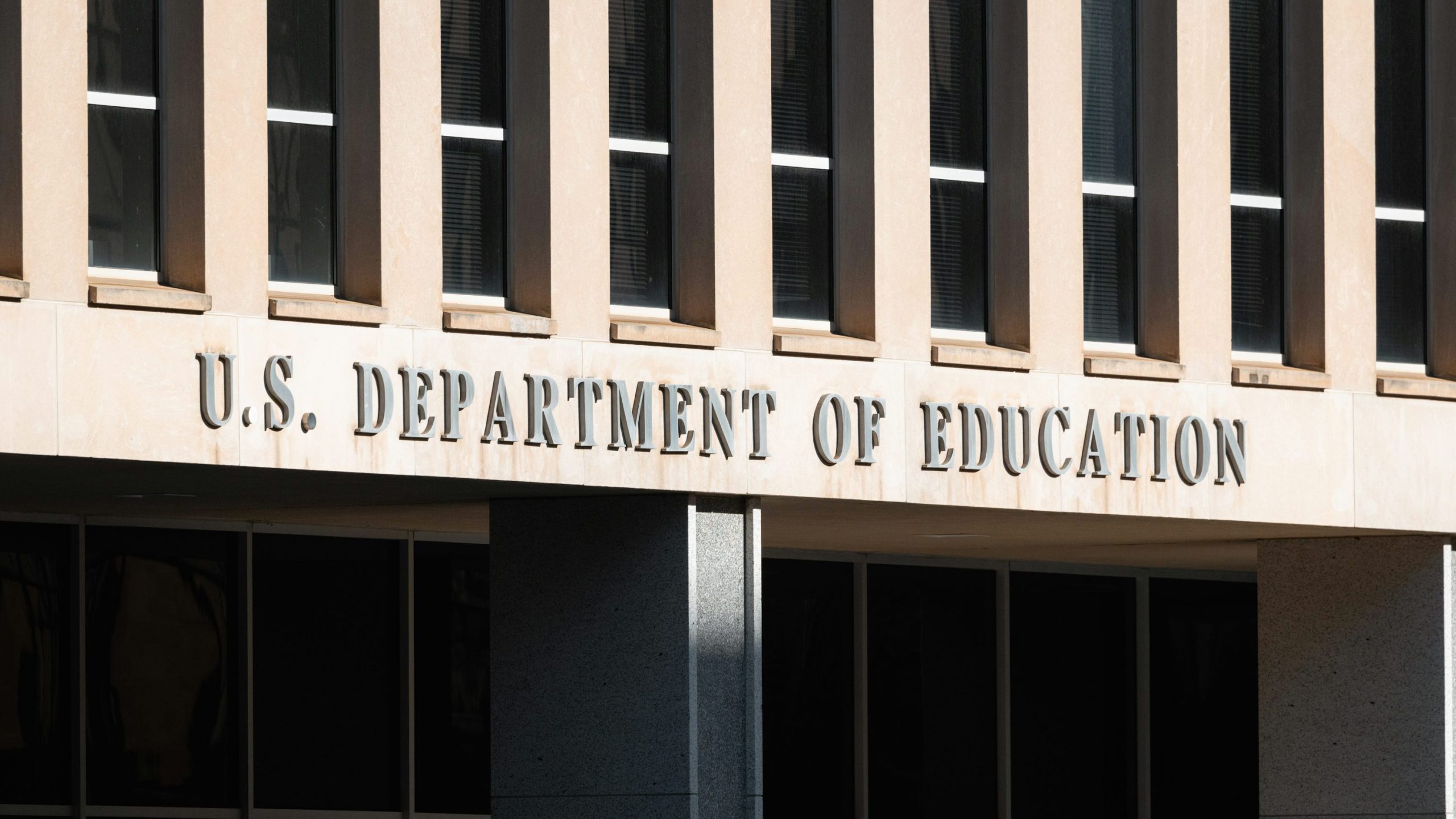
The U.S. Department of Education has terminated agreements that required schools to follow specific protections for transgender students. On paper, that removes federal obligations. In practice, it creates something far more unstable: unclear standards, inconsistent decisions, and increased exposure to complaints.
Most people assume fewer rules mean less risk. In reality, this is where liability starts to spread.
Within days of the decision, some districts moved to roll back protections, while others chose to maintain them. Same country. Same law. Different interpretations. That’s not clarity — it’s fragmentation.
Why did this actually happen?
The core legal framework — Title IX — has not been rewritten. It still prohibits sex discrimination in education.
What changed is how it is interpreted and enforced.
Under previous administrations, federal authorities treated Title IX as covering transgender students. That interpretation led to formal agreements with schools, requiring:
- staff training on gender identity and pronouns
- policy updates on discrimination and harassment
- access to facilities aligned with gender identity
These agreements created a clear compliance environment. Schools knew what was expected, and failure to meet those expectations carried federal consequences.
The current decision removes those agreements.
What this means in practice is simple:
👉 The legal foundation remains, but the enforcement layer has been stripped back.
What mechanism explains the risk shift?
Before this change, risk flowed upward.
Schools operated under federal oversight. If something went wrong, enforcement could escalate through investigations or compliance action.
Now, that pressure has weakened.
And when central enforcement weakens, responsibility doesn’t disappear — it moves.
Instead of a uniform federal standard, schools are now left to interpret their obligations independently. Some will maintain previous protections. Others will narrow them. Some will attempt a middle ground.
This is where liability actually begins to concentrate. Because inconsistency creates exposure.
If two schools apply the same law differently, one of them is more likely to face a complaint. Not necessarily because the law changed — but because its application did.
What do people misunderstand?
The common assumption is straightforward:
👉 Less regulation = less risk
That assumption is wrong.
When federal rules are clear, compliance is predictable. When those rules are removed or softened, institutions gain flexibility — but lose certainty.
That uncertainty creates three immediate problems:
- policies become fragmented
- decision-making becomes inconsistent
- accountability becomes harder to define
And this is where loss actually occurs.
Not in the existence of the rule — but in the variation of how it is applied.
A school that believes it is acting within its rights may still face challenges if its interpretation differs from another authority, another district, or a future enforcement position.
Where does liability now sit?
This is no longer a federal compliance issue.
It is a local decision-making problem.
Each school must now determine:
- what constitutes discrimination under Title IX
- how to handle identity-based complaints
- what policies are defensible if challenged
Those decisions are no longer guided by a single enforcement framework.
And that is where risk intensifies.
Because once standards become unclear, the margin for error increases. And when the margin for error increases, disputes become more likely.
This is where liability is tested — not in the existence of a rule, but in how confidently and consistently it is applied.
Why this matters beyond schools
It is easy to view this as an education issue. It isn’t.
This is a broader systems pattern: when central authority steps back, responsibility shifts downward. And when responsibility shifts downward, variation increases.
You see the same dynamic in:
- workplace compliance environments
- corporate governance structures
- regulatory grey zones across industries
When clarity disappears, risk doesn’t shrink.
It disperses.
And dispersed risk is harder to manage because it is less visible, less predictable, and more dependent on individual decisions.
Strategic takeaway
What this means in practice is not that protections have vanished. It means they are no longer uniformly enforced.
That distinction matters.
Because legal exposure is rarely defined by what is written alone. It is defined by how rules are interpreted, applied, and challenged.
Remove the enforcement layer, and the system does not stabilise. It fragments.
Final insight
This reveals that removing a rule does not remove risk.
It simply moves it — from the system to the decision-maker.