
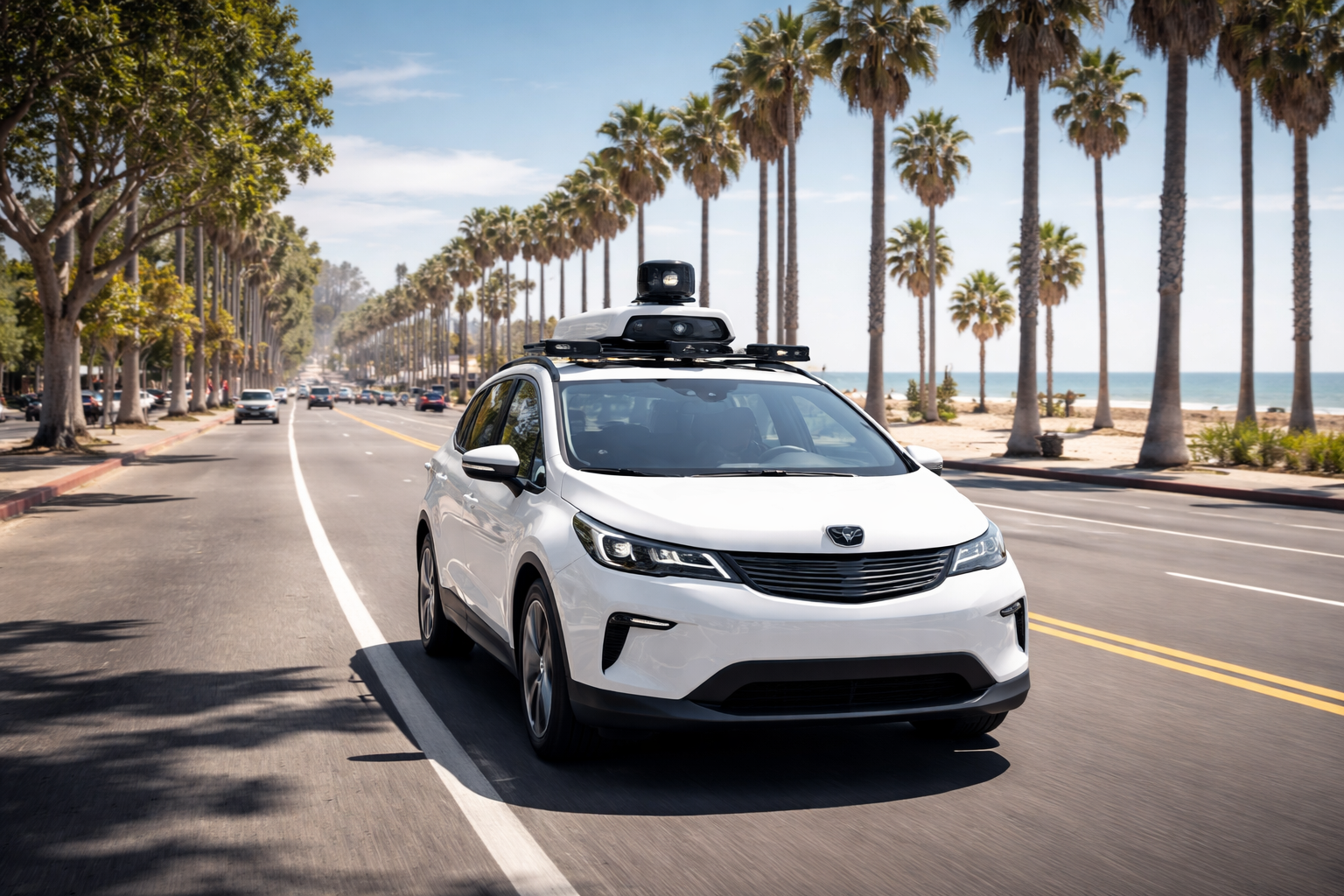
As autonomous vehicle technology transitions from experimentation to commercial deployment, a critical legal question has emerged: who is liable when a self-driving car causes an accident?
The answer carries profound implications for manufacturers, technology companies, insurers, regulators, and businesses investing in next-generation mobility.
Unlike traditional road traffic collisions, where liability typically rests with a human driver—autonomous vehicle incidents introduce complex questions involving artificial intelligence, software systems, and product design.
For in-house counsel, compliance professionals, and corporate decision-makers, determining who is legally responsible is essential to managing risk in a rapidly evolving regulatory landscape.
The Rise of Autonomous Vehicles in Practice
Self-driving cars rely on sophisticated technologies, including artificial intelligence, sensors, radar, cameras, and machine learning algorithms.
These systems enable vehicles to interpret their surroundings and make driving decisions with varying degrees of autonomy.
The globally recognised classification system developed by SAE International defines six levels of driving automation, ranging from Level 0 (no automation) to Level 5 (full autonomy).
While higher levels are under development, most consumer-facing systems currently available in the United States operate at Level 2, requiring continuous human supervision.
Limited deployments of more advanced automated driving systems are being tested and operated under regulatory oversight in select jurisdictions.
This distinction is critical, as liability often depends on whether a human driver or an automated system was responsible for vehicle control at the time of an incident.
Allocation of Liability in Autonomous Vehicle Accidents
Determining who is legally responsible when a self-driving car causes an accident depends on the specific facts and applicable legal principles.
U.S. courts generally rely on established doctrines such as negligence and product liability to assess responsibility and determine who pays damages.
If a driver fails to supervise a semi-autonomous system or ignores safety warnings, liability is likely to rest with the individual operating the vehicle.
This is particularly relevant for advanced driver-assistance systems, which require continuous human oversight.
However, where a malfunction in the vehicle’s software, sensors, or design contributes to an accident, manufacturers and technology developers may face liability under strict product liability laws.
Claims may arise from defective design, manufacturing defects, or a failure to warn of known risks associated with autonomous technology.
Liability may also extend to software developers and component suppliers, fleet operators deploying autonomous ride-hailing services, and maintenance providers responsible for ensuring system integrity.
In many cases, courts apportion responsibility among multiple parties, reflecting the complex and interconnected nature of autonomous vehicle ecosystems.
Autonomous vehicle accidents rarely produce straightforward determinations of fault. Instead, liability often shifts depending on technical, operational, and evidentiary considerations.
Courts typically examine whether the vehicle was operating in autonomous mode, whether the driver responded appropriately to system alerts, whether the technology functioned as intended, and whether adequate warnings were provided to users.
Data recorded by onboard systems, commonly referred to as event data recorders or “black box” technology, plays a crucial role in reconstructing incidents and determining causation.
These digital records frequently serve as pivotal evidence in litigation and regulatory investigations.
Marketing practices also influence liability. If manufacturers exaggerate a vehicle’s capabilities or fail to clearly communicate limitations, they may face claims under consumer protection laws.
Such issues have become increasingly relevant as courts scrutinise representations surrounding automated driving systems.
Taken together, these factors make autonomous vehicle litigation one of the most nuanced and rapidly evolving areas of modern tort law, with significant implications for manufacturers, technology companies, insurers, and investors.
The U.S. Legal and Regulatory Framework
Although the United States has not enacted a single comprehensive federal statute governing autonomous vehicles, a network of regulatory authorities provides oversight and guidance.
The National Highway Traffic Safety Administration (NHTSA) establishes vehicle safety standards and oversees compliance with federal motor vehicle regulations.
It has also issued crash-reporting requirements for vehicles equipped with automated driving systems and advanced driver-assistance technologies.
At the federal policy level, the U.S. Department of Transportation has published Automated Vehicles 4.0 (AV 4.0), a foundational framework outlining the U.S. government’s approach to autonomous mobility.
While not legally binding, it provides strategic context for federal oversight and industry development.
State regulators also play a pivotal role. The California Department of Motor Vehicles leads the nation in autonomous vehicle governance.
Its Autonomous Vehicle Disengagement Reports provide empirical data on system performance, documenting instances in which human drivers must intervene during testing.
Together, these federal and state authorities illustrate an evolving and fragmented regulatory environment in which liability continues to be shaped by traditional tort principles.
Real-World Example: The Uber Autonomous Vehicle Incident
One of the most significant cases involving autonomous vehicle liability occurred in 2018, when a self-driving Uber test vehicle struck and killed a pedestrian in Tempe, Arizona.
An investigation by the National Transportation Safety Board (NTSB) concluded that failures in both the automated driving system and human oversight contributed to the incident.
The tragedy prompted increased scrutiny of safety protocols and highlighted the shared responsibilities inherent in autonomous vehicle deployment.
Uber later reached a civil settlement with the victim’s family, demonstrating how liability may extend beyond drivers to include developers, operators, and corporate entities.
Strategic and Commercial Implications of Autonomous Vehicle Liability
Autonomous vehicles are reshaping traditional assumptions about road safety and legal accountability. Historically, liability for traffic accidents rested primarily with the human driver.
However, with the integration of artificial intelligence and automated driving systems, responsibility increasingly extends to manufacturers, software developers, and mobility providers.
This transformation introduces complex legal questions surrounding system reliability, data governance, cybersecurity, and consumer protection.
As technological innovation continues to outpace legislative reform, courts and regulators are progressively refining how liability is allocated in cases involving automated technologies.
For businesses operating across the automotive, technology, and insurance sectors, understanding these evolving standards is essential to managing legal and operational risk.
The financial and strategic implications are significant. Companies may face exposure to substantial damages, regulatory enforcement actions, and class-action litigation.
Product liability claims, increased insurance premiums, and heightened compliance obligations represent growing areas of concern, while contractual disputes across supply chains further complicate risk allocation.
Reputational damage also poses a critical threat, with high-profile incidents capable of undermining consumer trust and investor confidence.
To mitigate these risks, organisations are adopting robust contractual frameworks, indemnification provisions, and governance mechanisms designed to allocate responsibility across stakeholders.
As autonomous mobility continues to advance, determining who pays damages in a self-driving car accident is no longer merely a legal question, it is a strategic business imperative with far-reaching commercial consequences.
The Road Ahead for Autonomous Vehicle Liability
Determining who is liable when a self-driving car causes an accident depends on a complex interplay of technology, human conduct, and established legal principles.
Responsibility may rest with the driver, manufacturer, software developer, fleet operator, or a combination of parties, depending on the circumstances.
As U.S. regulators and courts continue to refine the legal framework, one reality is clear: liability in the age of automation is no longer confined to the driver’s seat.
For businesses, compliance professionals, and legal practitioners, understanding how responsibility is determined will be essential to navigating the future of mobility.
People Also Ask (PAA)
Who is liable when a self-driving car causes an accident?
Liability depends on the circumstances and may rest with the driver, manufacturer, software developer, or operator under U.S. negligence and product liability laws.
Are self-driving cars legal in the United States?
Yes. Autonomous vehicles are permitted in several states under federal oversight and state-level regulatory frameworks.
Can car manufacturers be sued for autonomous vehicle accidents?
Yes. Manufacturers may face strict product liability claims if defects in design, manufacturing, or software contribute to an accident.
What is Level 5 autonomy?
Level 5 autonomy refers to fully automated vehicles that require no human intervention, as defined by SAE International.
How do regulators investigate self-driving car crashes?
Agencies such as NHTSA and the NTSB investigate incidents, establish safety standards, and issue recommendations.