
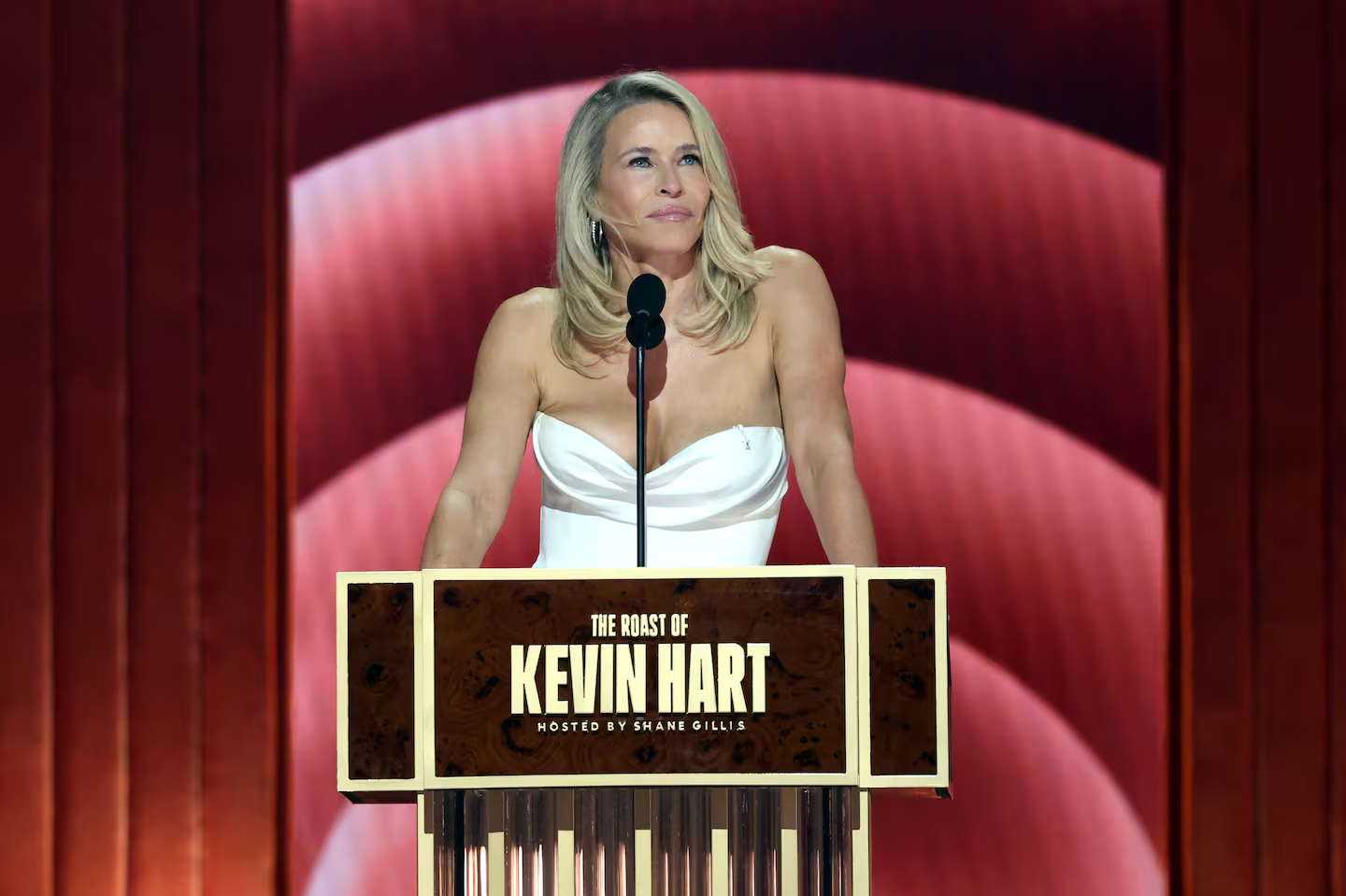
Some insults are no longer really about the people in the room hearing them.
They are about the clips afterwards.
That was the uncomfortable part of the Netflix roast involving Chelsea Handler and Tony Hinchcliffe. The jokes were harsh, but audiences expect that during celebrity roasts now. What stood out more was how quickly the videos spread online and how fast the argument around them became bigger than the actual event itself.
Most viewers probably already knew the viral moments would matter more than the full show.
Handler’s insults spread across social media within minutes. She mocked Hinchcliffe’s appearance, his politics and his friendship with Joe Rogan. Clips were reposted almost immediately, followed by arguments about whether the jokes were funny, whether they went too far and whether comedy and politics have now become impossible to separate online.
The atmosphere already feels familiar to a lot of regular internet users.
Many think more carefully before posting jokes publicly now. Some worry old posts could suddenly resurface years later. Others panic when screenshots start spreading without the full conversation attached. Seeing strangers get mocked online every day has quietly changed how many behave on the internet themselves.
That feeling sits underneath a lot of celebrity controversies now.
Years ago, a celebrity roast mostly stayed inside the room or inside one television broadcast. Now short videos travel for days across TikTok, X, Instagram and YouTube. Different accounts upload the same moment with completely different captions, arguments and agendas attached to it.
After enough reposts, audiences stop reacting to the joke itself and start reacting to what they think the comedian represents politically or socially.
That already happened around Hinchcliffe before this Netflix event. After his comments during Donald Trump’s Madison Square Garden rally in 2024, many stopped seeing him as just a comic. Supporters viewed him as somebody pushing back against political correctness. Critics saw him as part of a much darker online culture.
By the time he appears onstage now, strong opinions already exist before he even starts speaking.
Netflix and other streaming platforms understand how valuable these moments are online. Videos travel fast. Arguments keep spreading. Viewers choose sides and continue recycling the same moments for days afterwards.
Years ago audiences watched a roast and moved on. Now the same moments keep appearing across feeds long after the event has finished.
That changes how public embarrassment feels now.
A lot of users already feel nervous about saying the wrong thing publicly. Many rewrite messages before sending them. Some delete posts if reactions suddenly turn hostile. Watching strangers become targets online has made public opinion feel unpredictable and aggressive in a way that did not feel as obvious years ago.
By the time most viewers see a viral moment, the original atmosphere is usually gone anyway.
That is where the legal side becomes more complicated. Comedy has broad free speech protection in the United States, especially during events where audiences expect insults, exaggeration and offensive jokes. But online arguments rarely spread with the full setting attached anymore. Short videos move across platforms by themselves and often reach millions who never watched the original show.
That creates reputational problems long before lawyers ever become involved.
For public figures, defamation cases are already difficult to win under U.S. law because courts give strong protection to speech, satire and opinion. But reputational damage online moves much faster than any legal process. A clip can spread globally within hours, while context, clarification or corrections usually arrive far later, if they arrive at all.
Streaming platforms also benefit financially from moments that create outrage, replay value and endless online debate. The clips keep circulating, audiences keep arguing and the platforms keep attracting attention without carrying much responsibility for how viewers react afterwards.
Many react emotionally first and check the full context later, if they check it at all.
That is one reason stories like this travel so widely now. Not necessarily because millions deeply care about comedians insulting each other, but because smaller versions of the same behaviour already happen across workplaces, group chats, schools and social media every day.
The fear is familiar.
A joke, a screenshot or a short video can suddenly follow somebody for years, even if most viewers never saw the full exchange in the first place.