
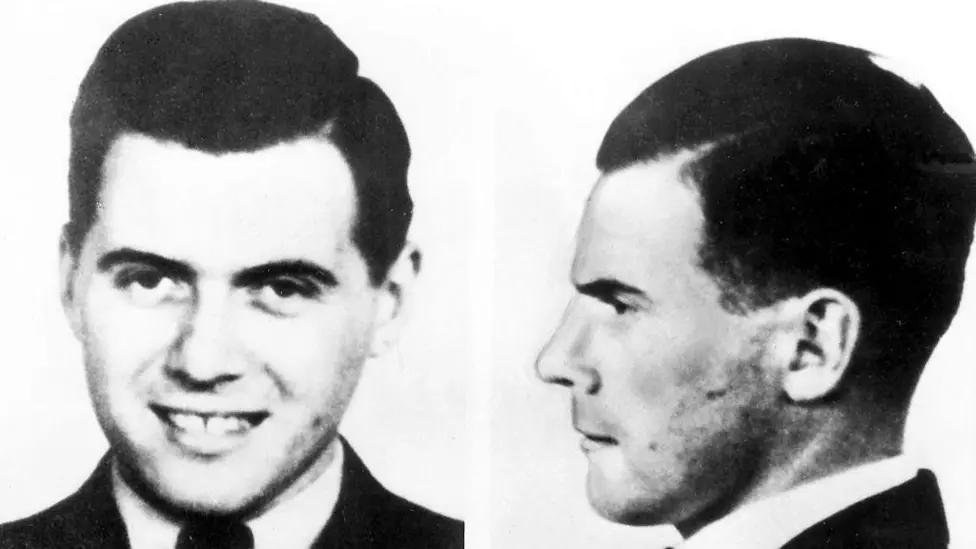
Switzerland will open classified intelligence records linked to Nazi war criminal Josef Mengele, reviving scrutiny over whether the Auschwitz doctor secretly returned to Europe while under an international arrest warrant.
Researchers have spent years pushing Swiss officials to release the records amid suspicions Mengele may have entered the country during the early 1960s despite being internationally wanted. The secrecy surrounding the files has fueled debate over Switzerland’s handling of its World War II legacy and possible postwar links to fugitive Nazis.

The International Committee of the Red Cross office in Genoa issued travel documents under false identities to Nazi fugitives including Josef Mengele, Klaus Barbie, and Adolf Eichmann.
Mengele, an SS doctor at the Auschwitz extermination camp, helped select prisoners for the gas chambers and carried out brutal medical experiments on children and twins. Researchers estimate around 1.1 million people were murdered at Auschwitz, including roughly one million Jews.
After World War II, Mengele escaped Europe using Red Cross travel documents issued under a false identity through the Swiss consulate in Genoa, Italy. He later fled to South America, where he avoided capture for decades.
Researchers have long questioned whether he ever returned to Switzerland after leaving Europe.
Swiss historian Regula Bochsler uncovered intelligence warnings from 1961 showing Austrian authorities alerted Switzerland that Mengele could be travelling under a fake name and may have entered the country.
During the same period, Mengele’s wife rented an apartment near Zurich airport and applied for residency, raising suspicions the Nazi fugitive may have been planning a return to Europe despite an active international warrant.
Zurich police later placed the property under surveillance and reportedly documented Mrs. Mengele travelling with an unidentified man. Researchers have never been able to confirm whether the passenger was Josef Mengele himself.

Josef Mengele (centre) is pictured at Auschwitz in 1944 alongside camp commandant Richard Baer (left) and former commandant Rudolf Höss.
Why the Mengele Files Were Legally Sealed for Decades
Swiss officials kept the Mengele records closed for decades, insisting they could not be released before 2071 because of national security and family privacy protections. The restrictions angered many researchers because Mengele was one of the world’s most notorious Nazi fugitives and was never brought to trial for crimes linked to Auschwitz.
Pressure to release the documents intensified after historians argued that public interest and historical accountability outweighed the government’s reasons for keeping the records hidden. Historian Gérard Wettstein eventually challenged the secrecy through the courts after earlier requests for access were repeatedly denied.
The fight over the files has since become a wider argument about how governments deal with embarrassing wartime records, intelligence material, and possible institutional failures. Swiss authorities have now agreed to open the archive, although researchers fear major sections could still be blacked out under intelligence-sharing or state secrecy protections.

Josef Mengele is pictured with an unidentified woman in Brazil during the 1970s, where the Nazi fugitive spent decades living under a false identity.
Why Historians Believe Switzerland May Have Protected Mengele
The records are drawing intense attention because some researchers believe Swiss authorities may have known Mengele was connected to the country years after he fled Europe under a false identity. Although he officially settled in South America after World War II, intelligence warnings reportedly showed Austrian authorities alerting Switzerland in 1961 that the former Auschwitz doctor could be travelling under an assumed name.
Around the same period, Mengele’s wife rented an apartment near Zurich airport and applied for residency, fueling speculation the Nazi fugitive may have been preparing to return to Europe despite an active international arrest warrant. Zurich police later monitored the property and reportedly documented Mrs. Mengele travelling with an unidentified man, though nobody has ever confirmed his identity.
For many researchers, keeping the records hidden for decades only deepened suspicions that Swiss authorities feared embarrassment over the country’s wartime and postwar handling of Nazi-linked figures. Others believe the archive could contain references to foreign intelligence services, including possible communication with Israel’s Mossad during its hunt for fugitive Nazis.
The records remained closed for decades under Swiss national security and privacy rules, with multiple researchers denied access over the years.
That changed after Wettstein challenged the secrecy in court and raised public funding for the legal fight. Switzerland’s Federal Intelligence Service has now confirmed the files will be opened, although officials warned access will still be subject to unspecified “conditions and requirements.”
Some researchers believe the archive could contain references to foreign intelligence services, including possible communication with Israel’s Mossad, which actively hunted Nazi fugitives during the late 1950s and early 1960s.
Others argue the secrecy surrounding the records says more about Switzerland than it does about Mengele himself.
Historian Jakob Tanner, who served on Switzerland’s Bergier Commission examining the country’s wartime conduct, said the prolonged closure reflects Switzerland’s long-running struggle over how much of its wartime history should remain hidden.
Switzerland has faced scrutiny for decades over its wartime neutrality, treatment of Jewish refugees, and banking links to Nazi assets. Critics say the handling of the Mengele records became another example of the country’s reluctance to fully confront parts of its wartime past.
Mengele was never captured or tried for his crimes. He died in Brazil in 1979 while living under a false identity. DNA testing in 1992 confirmed his remains.
Even now, many researchers expect large portions of the files to be blacked out before release.
Wettstein says the records may still fail to answer the biggest mystery surrounding Mengele’s alleged Swiss connection.
“We may never know if he was truly in Switzerland,” he said, “but maybe we can at least get closer to the truth.”