
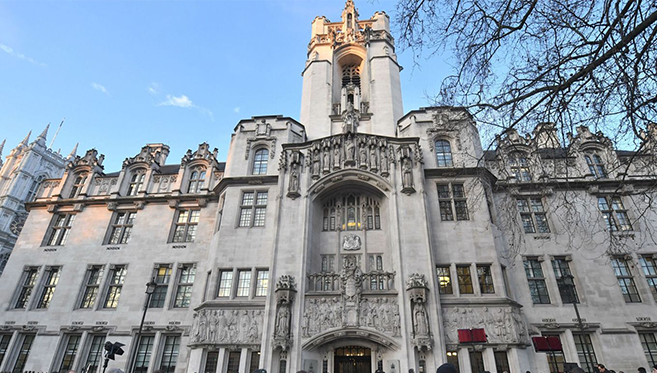
The UK Supreme Court’s decision in Thaler v Comptroller-General of Patents, Designs and Trademarks confirmed that artificial intelligence systems cannot be named as inventors under the Patents Act 1977, reinforcing that UK patent law remains built around human inventorship even as AI systems become more deeply embedded in research and product development.
The ruling answered a narrow statutory question, but its commercial implications extend far beyond patent filing procedure. Businesses investing heavily in generative AI, automated discovery systems and machine-led research workflows now face a clearer legal boundary around ownership, inventorship and patent entitlement.
At the centre of the dispute were two patent applications filed by Dr Stephen Thaler, who stated that the inventions had been created autonomously by his AI system, DABUS. The Supreme Court unanimously dismissed the appeal and upheld earlier decisions refusing the applications because DABUS was not considered a “person” capable of being named as an inventor under the statutory framework.
Companies building AI-driven innovation systems are now dealing with a judgment that clarifies how UK patent law approaches inventorship and entitlement where AI systems are involved.
How the Case Reached the Supreme Court
Dr Stephen Thaler filed two UK patent applications naming his artificial intelligence system, DABUS, as the inventor. The courts were not asked to decide whether DABUS had generated the inventions autonomously, because that point was not disputed during the litigation.
Instead, the dispute centred on whether UK patent law allows an AI system to be recognised legally as an inventor and whether ownership of that system gives its creator automatic rights over any resulting inventions.
Dr Thaler argued that his ownership and control of DABUS entitled him to obtain the patents connected to the inventions allegedly generated by the system.
The Comptroller-General of Patents, Designs and Trade Marks rejected the applications under section 13(2) of the Patents Act 1977 after concluding that the legislation requires an inventor to be a person under sections 7 and 13 of the Act. Because DABUS was not recognised in law as a person, the applications could not proceed.
Dr Thaler’s challenges in the High Court and Court of Appeal were unsuccessful before the dispute ultimately reached the UK Supreme Court, which delivered judgment in December 2023.
DABUS Patent Dispute
The Supreme Court was asked to determine whether UK patent law allows an artificial intelligence system to be named as an inventor and whether patent rights can exist without identifying a human inventor under the Patents Act 1977.
The dispute also raised a second question with broader commercial implications: whether ownership of an AI system gives the system’s creator or operator automatic rights over inventions allegedly generated by that technology.
The justices concluded that the Patents Act 1977 requires an inventor to be a natural person. Because DABUS was not recognised in law as a person, the patent applications could not proceed under the existing statutory framework.
The Court also rejected Dr Thaler’s argument that ownership of the AI system itself automatically gave him entitlement to patents connected to inventions allegedly produced by DABUS.
Inventorship Risk
The first operational legal risk appears when an organisation cannot identify a natural person responsible for the inventive contribution required under patent law. Once that gap exists, a patent application may become procedurally vulnerable regardless of the technical value of the invention itself. The Supreme Court confirmed that ownership or operation of an AI system does not resolve that issue under the Patents Act 1977.
Legal Framework and Judicial Reasoning
A significant feature of the judgment was the Court’s narrow interpretative approach. The Supreme Court focused on the wording and structure of the Patents Act 1977 rather than broader debates surrounding artificial intelligence policy or the future role of autonomous systems in innovation.
The Court did not decide whether AI systems are capable of generating inventions in a scientific or technical sense. Instead, the ruling concentrated on whether existing legislation permits a machine to qualify legally as an inventor.
The judgment instead places responsibility on Parliament if UK patent law is ever expanded to recognise autonomous AI inventorship.
The judgment is likely to increase scrutiny around how businesses document human involvement in AI-assisted invention processes.
Corporate legal teams may also face closer scrutiny around inventor designation procedures, ownership structures and evidential standards tied to patent applications involving AI-assisted development.
Exposure Escalation
Legal exposure escalates once AI-assisted outputs move from internal experimentation into commercially valuable patent filings, licensing arrangements or investment disclosures. At that stage, inventorship disputes can affect ownership rights, enforceability and the commercial strength of intellectual property portfolios. Businesses unable to evidence meaningful human contribution may face heightened litigation and due diligence scrutiny.
Decision Trigger Point
Patent risk becomes commercially significant once AI-assisted research moves toward patent filing, licensing negotiations or investment-stage due diligence.
Commercialisation changes the legal exposure. Once AI-assisted outputs move into patent applications or licensing discussions, businesses must establish whether a legally recognised human inventor exists under the Patents Act 1977 framework confirmed by the Supreme Court.
For companies operating in sectors where patents underpin enterprise value, uncertainty around inventorship can weaken the legal protection attached to innovation pipelines and potentially affect acquisition strategy, financing discussions and long-term commercial positioning.
This carries particular weight for pharmaceutical, engineering, life sciences and technology businesses where intellectual property assets form part of valuation models and competitive market protection.
Action Threshold
The decision trigger arrives when AI-assisted research enters the patent filing or commercialisation stage. At that point, organisations must determine whether a legally identifiable human inventor exists under the statutory framework confirmed by the Supreme Court. If that analysis cannot be satisfied internally, the issue can develop into a significant legal and commercial risk for businesses relying on patent protection.
Exposure and Consequences Beyond Patent Applications
The ruling may also influence contractual, financing and transactional relationships built around intellectual property ownership.
Patent portfolios frequently support licensing agreements, venture capital funding, acquisition negotiations and research partnerships. Uncertainty surrounding inventorship therefore has the potential to affect the perceived reliability and enforceability of those assets.
Businesses relying heavily on autonomous or semi-autonomous systems may also face greater pressure to maintain detailed records showing how human researchers contributed to, refined or supervised invention processes linked to patent applications.
Many organisations are likely to tighten R&D oversight, inventor attribution procedures and contribution tracking around AI-assisted development projects in response to the judgment.
The decision additionally carries international relevance because several jurisdictions are confronting similar questions concerning AI-generated inventions, although legal approaches remain inconsistent globally.
Governance and Compliance Impact
The DABUS ruling reinforces that existing UK intellectual property law will not automatically adapt to autonomous AI innovation without legislative change.
For in-house counsel and compliance teams, the judgment increases the importance of governance controls tied to inventor identification, patent entitlement and evidential recordkeeping. Companies deploying AI systems within research environments may now require tighter internal procedures around contribution mapping, development oversight and inventorship verification before patent applications are filed.
Boards evaluating AI-related investment, acquisition or licensing activity may also face greater pressure to assess how AI-generated outputs interact with existing intellectual property protections and disclosure obligations.
Broader Precedent
The broader legal pattern emerging from the DABUS litigation is that the judgment reflects a judicial preference for leaving major changes to AI inventorship rules to Parliament rather than expanding existing statutory language through the courts.
Where the DABUS Ruling Leaves UK Patent Law
The DABUS litigation brought a patent law problem into the wider AI debate. While much of the attention around artificial intelligence has centred on copyright, deepfakes and data usage, the Supreme Court case focused on a narrower question: whether UK patent law can recognise a machine as an inventor.
The judgment settled the position under the current Patents Act 1977 framework. Businesses using AI-assisted research systems must still identify a human inventor before patent protection can be secured in the UK.
Any broader change would probably require Parliament to amend the legislation rather than relying on the courts to expand existing statutory definitions. That leaves companies developing AI-assisted products, drug discovery systems and machine-generated technical solutions operating within a patent regime still tied to human inventorship.
The decision may also affect internal patent procedures. Businesses filing patent applications linked to AI-assisted research are likely to face closer scrutiny around inventor attribution and the records used to show how human researchers contributed to or supervised invention processes.
Under the current Patents Act 1977 framework, UK patent protection still depends on human inventorship regardless of how autonomous an AI system may become.