
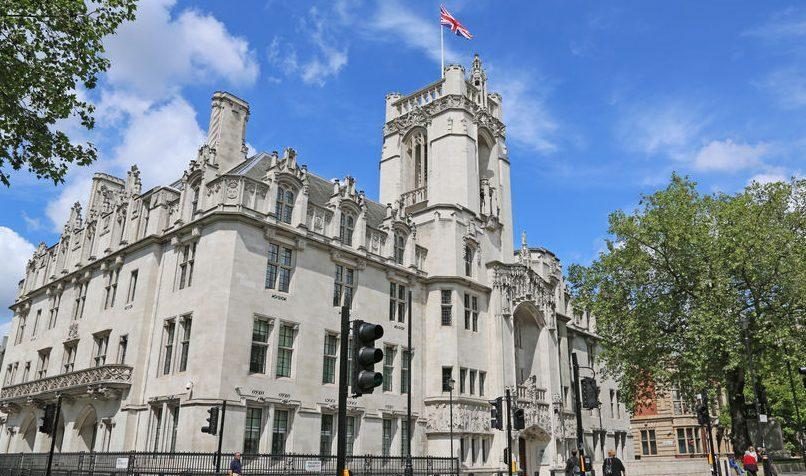
The Supreme Court of the United Kingdom has unanimously ruled that immigration decisions involving children will not automatically become unlawful simply because officials failed to expressly reference section 55 safeguarding guidance, narrowing the scope for technical legal challenges and shifting the focus onto whether a child’s welfare was substantively assessed.
In CAO v Secretary of State for the Home Department, the court allowed the Home Secretary’s appeal and overturned a Northern Ireland ruling that had treated the absence of explicit references to statutory guidance as a legally significant defect.
Although the appeal arose from an asylum claim involving allegations of domestic abuse and fears of female genital mutilation, the wider dispute centred on a much broader legal issue: how immigration authorities and tribunals must demonstrate compliance with child safeguarding obligations under section 55 of the Borders, Citizenship and Immigration Act 2009 and Article 8 of the European Convention on Human Rights.
Supreme Court Child Welfare Appeal
CAO arrived in the United Kingdom from Nigeria in 2018 with her two children before later applying for asylum, claiming she had suffered domestic abuse and that her daughter faced the risk of female genital mutilation if they returned to Nigeria.
The Home Office rejected the claim, arguing there was not enough evidence of an ongoing threat and concluding that relocation within Nigeria, together with police protection, remained available to the family. Officials also decided it remained in the children’s best interests to return to Nigeria with their mother as a family unit.
When the case reached the First-tier Tribunal, the judge accepted that domestic abuse had taken place before the couple separated but did not accept that there was an ongoing risk if CAO returned to Nigeria. The tribunal also found insufficient evidence that the daughter faced a genuine threat of FGM and dismissed the appeal, concluding that the children’s best interests were still served by remaining with their mother.
The case later took a different turn in the Northern Ireland Court of Appeal. Judges there concluded that the Home Office decision had failed to properly comply with section 55(3) because the refusal letter did not expressly refer to the statutory safeguarding guidance issued under the 2009 Act. The court also decided that the later tribunal hearings had not corrected that failure.
The Supreme Court disagreed, holding that the law requires substantive compliance with child welfare obligations rather than formal references to guidance documents in decision letters.
Procedural Risk Boundary
Immigration decisions involving children are no longer exposed simply because statutory guidance was not expressly cited in the written reasoning. Following CAO, the legal vulnerability turns on whether safeguarding obligations were substantively addressed through the evidence and decision-making process itself.
Section 55 Interpretation Clarified
One of the main disputes in the appeal was whether immigration officials had to expressly refer to section 55 guidance in their decision letters to show they had properly dealt with a child’s welfare.
Courts in Northern Ireland had taken a stricter approach, treating the absence of direct references to the guidance as a serious legal flaw. Courts in England & Wales and Scotland looked at the issue differently, focusing instead on whether officials had genuinely considered the child’s best interests in practice.
Lord Sales and Dame Siobhan Keegan agreed with the England & Wales and Scotland approach. The Supreme Court accepted that referring directly to the guidance was good administrative practice, but said the legal test was whether welfare issues had actually been addressed, not whether particular wording appeared in the refusal letter.
That conclusion is likely to change how future appeals are argued. Cases built mainly around missing references or drafting points now face a tougher route where tribunals can see that officials genuinely engaged with the child’s circumstances.
Judges also rejected the idea that missing references to guidance alone should be enough to overturn decisions where the wider welfare assessment had already been properly handled.
Litigation Exposure Shift
Future appeals are now more likely to turn on the quality of the welfare assessment itself rather than omissions or drafting points in Home Office paperwork.
Home Office Drafting and Appeal Strategy
The judgment will still affect how Home Office decisions are written and how future appeals are argued.
The Supreme Court said officials do not have to mechanically cite section 55 guidance in every refusal letter. Even so, judges still described direct references to the guidance as good practice, particularly in cases involving children. In practice, officials will still want to show clearly how a child’s welfare was assessed and why a particular conclusion was reached.
Another issue concerned whether the daughter should have been interviewed directly before the case was decided. Lawyers for CAO argued that immigration officials should have spoken to her separately. The Supreme Court disagreed, saying the key question was whether officials had enough information to understand her circumstances and best interests.
Appeals based mainly on procedural drafting points are now less likely to succeed where tribunals have already examined the welfare evidence and dealt with the Article 8 arguments for themselves.
Broader Judicial Direction
CAO also shows courts becoming less willing to overturn decisions over technical procedural mistakes where the core welfare issues were actually dealt with.
Wider Impact of the Judgment
The Supreme Court was dealing with an asylum appeal, but the ruling will not stay confined to immigration law. Judges drew a firm line between sloppy procedure and genuinely unlawful decision-making, signalling that courts will look more closely at whether public authorities actually considered their legal duties rather than whether every document used the right wording.
That could affect disputes outside immigration law, particularly in areas like education, social care and family law where public bodies are often challenged over how child welfare duties were handled.
Future immigration appeals involving children are now more likely to focus on the quality of the welfare assessment itself rather than missing references in Home Office paperwork.