
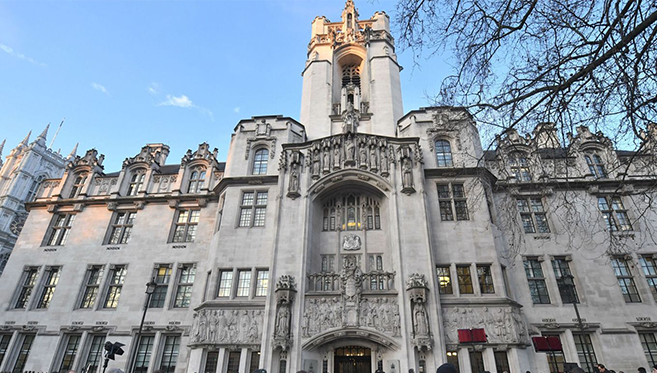
UK councils can lawfully restrict voting on deferred planning applications to councillors who attended earlier meetings, the UK Supreme Court has ruled in a judgment on the extent of local authority powers over planning committee procedures.
The judgment arose from a challenge to planning permission granted for the redevelopment of the former Truman Brewery site in Spitalfields, where objectors argued that councillors who had not attended an earlier meeting were unlawfully prevented from voting when the application returned to committee. The Supreme Court rejected that argument, concluding that local authorities have broad powers under the Local Government Act 1972 to regulate committee proceedings through standing orders.
The Challenge to Tower Hamlets’ Voting Rules
The case stemmed from a planning application by Old Truman Brewery Ltd to redevelop part of the former brewery site in Spitalfields. Although the proposed scheme focused on a single East London site, the legal dispute that followed raised a broader question about who should be allowed to vote when planning applications return to committee after being deferred.
Tower Hamlets Council’s Development Committee first considered the application in April 2021 but postponed a decision while officers negotiated additional section 106 obligations. When the proposal returned several months later, the committee looked different. When the proposal returned several months later, the committee looked different. Changes to the committee’s membership meant that not all of the councillors who had taken part in the earlier discussion were still serving on it, while new members had joined in the meantime.
Under the council’s standing orders, only councillors who had attended the previous meeting were entitled to vote when consideration resumed. That left three voting members, who approved the application by two votes to one.
The Spitalfields Historic Building Trust argued that approach was unlawful and sought to overturn the planning permission through judicial review. After losing in both the High Court and the Court of Appeal, the Trust took the issue to the UK Supreme Court.
The justices unanimously rejected the appeal. Their judgment found that the Local Government Act 1972 gives councils wide powers to regulate committee proceedings through standing orders, including rules governing when members may participate in a vote.
The Court was also unpersuaded by arguments that councillors enjoy a fundamental statutory right to vote which can only be limited through explicit legislation. Instead, the judgment approached the issue from the perspective of effective local authority decision-making, concluding that voting restrictions of this kind can form part of a lawful procedural framework.
Risk Emergence
Legal risk first arises when a council’s procedural rules affect who can participate in a planning decision. Once participation rights become restricted, any resulting planning permission may become vulnerable to judicial review if the authority cannot demonstrate a clear legal basis for those restrictions.
Why the Court Backed the Council’s Approach
The dispute was never really about whether the Truman Brewery redevelopment should proceed. By the time the case reached the UK Supreme Court, the focus had shifted to a narrower but important point of public law: whether local authorities have the power to limit voting on deferred planning applications to councillors who were present when those applications were previously considered.
The Spitalfields Historic Building Trust argued that excluding elected councillors from a vote effectively deprived both those councillors and their constituents of representation. The Trust maintained that such a restriction required clear statutory authority and could not be created simply through a council’s own procedural rules.
The Supreme Court took a different view. Examining the Local Government Act 1972, the justices concluded that Parliament had given councils broad powers to regulate the conduct of committee proceedings through standing orders. In their view, those powers are capable of extending to voting arrangements where the aim is to ensure decisions are made by councillors who have participated in the decision-making process from the outset.
A central part of the Court’s reasoning was that local government legislation should be read in a practical rather than overly restrictive way. The judges found that the statutory framework is designed to help councils reach lawful and effective decisions, and that procedural rules intended to support that objective should not automatically be treated as unlawful simply because they limit participation in particular circumstances.
The judgment also rejected the idea that a councillor’s ability to vote operates as an absolute personal right. Instead, the Court approached the issue through the broader purpose of local authority governance, placing greater emphasis on the quality and legality of decision-making than on the individual voting entitlement of any particular committee member.
Escalation Point
Exposure increases significantly once procedural rules become the basis for a major planning determination. At that stage, any uncertainty regarding the legality of committee procedures can place the entire planning permission at risk, creating delay, litigation costs and project uncertainty for both councils and developers.
More Than a Planning Dispute
The litigation was not ultimately about whether the Truman Brewery redevelopment should proceed. Instead, it focused on committee procedure, attendance records and the extent of a council’s powers under the Local Government Act 1972.
The judgment provides greater certainty for local authorities that use standing orders to regulate voting on deferred planning applications. Challenges based solely on the existence of those rules are now likely to face greater difficulty, with future disputes more likely to focus on whether councils have applied their procedures correctly in a particular case.
The Court’s reasoning placed greater emphasis on lawful and effective decision-making than on any individual councillor’s entitlement to vote. The case may have started with a planning application in Spitalfields, but its wider significance lies in how local authorities organise and defend decision-making processes.
Wider Precedent Signal
Although the judgment arose from a planning dispute, its significance extends beyond planning law. The Supreme Court endorsed a practical interpretation of statutory powers governing local authority procedure, signalling that courts may be willing to give public bodies a degree of flexibility when designing governance frameworks intended to support lawful and effective decision-making. That principle could influence future disputes involving committee structures, voting arrangements and procedural rules across a range of public-sector functions, particularly where challenges focus on participation rather than the substance of a decision.