
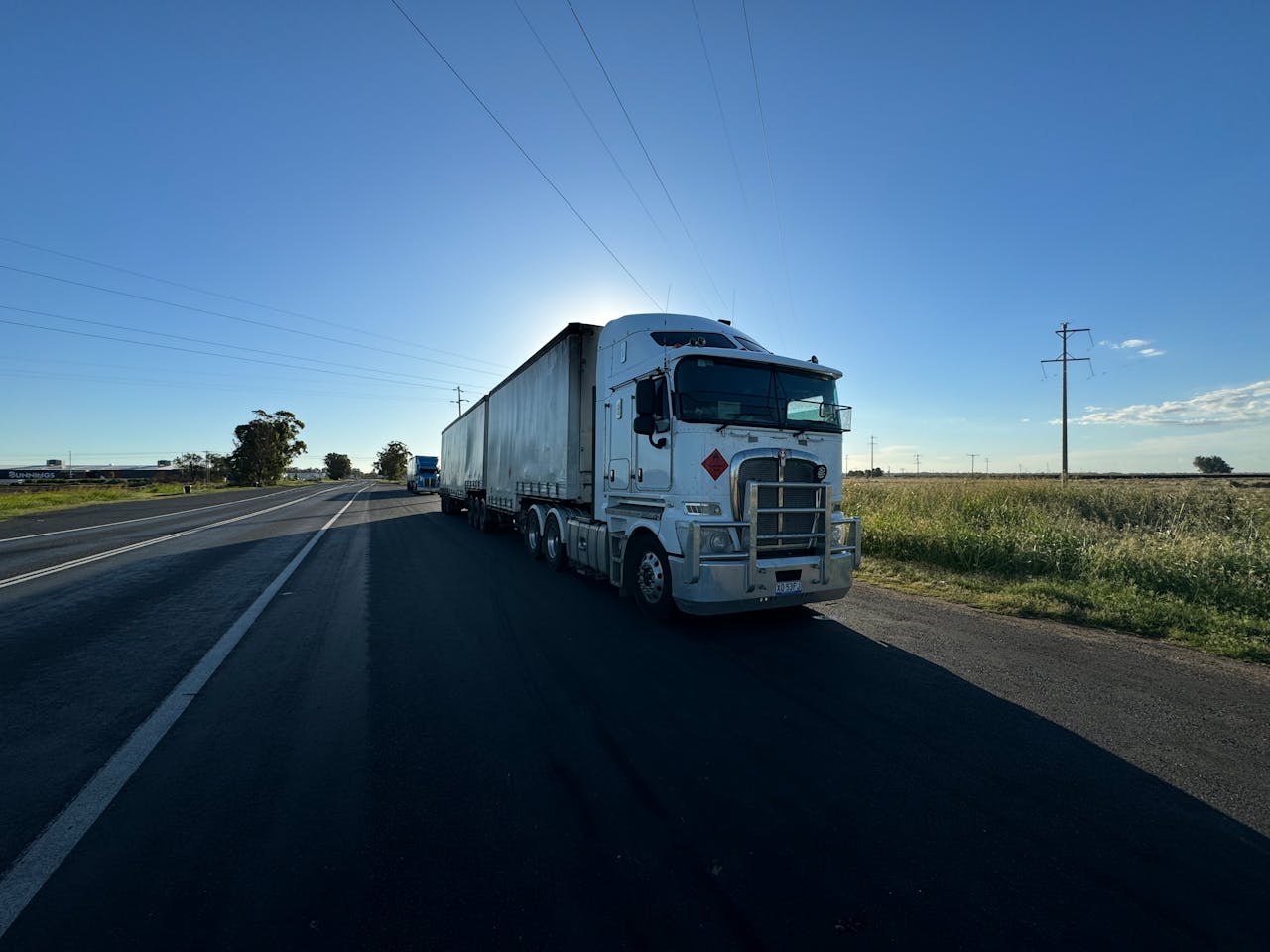
You are driving down the highway, listening to your favorite music, and you decide to pass a massive eighteen-wheeler. It seems like a routine move, but in reality, you might be driving through a complete invisibility zone. Many drivers do not realize how easy it is to vanish from a trucker’s view entirely. If things go wrong in these zones, you might find yourself needing legal help after a truck accident to sort out the chaotic aftermath. Understanding these blind spots is the absolute best way to keep yourself safe on the road.
The Massive Scale of Semi-Truck Blind Spots
When you are behind the wheel of a standard passenger car, your blind spots are relatively small. You can usually clear them with a quick glance over your shoulder. Large commercial rigs are a completely different story. Their blind spots, often called No Zones, extend far beyond what most people expect.
A trucker cannot see what is happening directly behind their trailer for up to two hundred feet. If you tailgated a semi, you are completely invisible to the driver. Additionally, the blind spot in front of the truck cab can extend up to twenty feet. If you cut off a truck and then hit the brakes, the driver will not see you in time to stop their eighty-thousand-pound vehicle.
The Dangerous Right Side Illusion
The right side of a commercial truck is by far the most dangerous area for smaller vehicles. On the left side, the driver sits right next to the window, giving them a decent line of sight. On the right side, the cab and the entire length of the trailer block their view.
This right-side blind spot spans three full lanes of traffic and extends the entire length of the truck. Many drivers make the mistake of lingering on the right while trying to pass. If the trucker needs to make a sudden lane change to avoid an obstacle, they will merge right into you because their mirrors show absolutely nothing.
Misjudging the Truck’s Turning Radius
Another common way people accidentally slip into dangerous blind spots is while driving in cities, especially at intersections. Big trucks need an incredible amount of space to make turns, especially right turns. To successfully clear a curb, a truck driver will often swing wide to the left before turning right.
This creates an open space on the right side of the truck that looks like an open lane. Eager drivers often try to squeeze into this gap to get around the truck. The problem is that the truck driver can no longer see you in their right mirror once the trailer begins to angle. As the truck swings back to the right, the smaller car gets pinned between the heavy trailer and the curb.
How Traffic Flow Forces You Into the No Zone
Sometimes, you do not even mean to enter a blind spot, but the flow of traffic forces you into one. Imagine riding in the middle lane of a busy highway. A truck is to your left, and another car slows down ahead of you. You ease off the gas, and suddenly, you are cruising right alongside the truck’s rear wheels.
If you stay in that position for more than a few seconds, you are putting yourself at serious risk. Heavy traffic makes it easy to get stuck in these danger zones, but you have to actively manage your position. You either need to safely accelerate past the rig or back off so the trucker can see you in their side mirrors.
Final Word
Sharing the road with commercial rigs requires constant focus and a good understanding of how these big vehicles operate. If you cannot see the truck driver’s face in their side mirrors, they definitely cannot see you. Accidents involving these giant vehicles can change your life in a split second, and getting legal help after a truck accident is often the only way to recover your losses and move forward. Stay vigilant, give these drivers plenty of space, and never linger in the zones where you become invisible.