
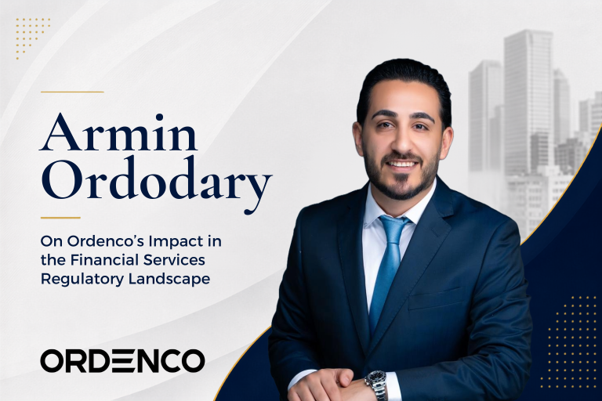
The most important legal questions in business are increasingly being asked before a contract is drafted or a regulator becomes involved. They arise when a founder is choosing a market, an investor is testing a business model, or a board is deciding how quickly a company can scale without losing control.
That is where legal consulting is changing.
For years, many businesses brought legal advisers in near the end of a decision. Management chose the commercial direction, and counsel assessed the risk, prepared the documents, or corrected the structure. That model is no longer enough for companies operating across borders, raising institutional capital, or working in regulated sectors.
The legal adviser now has to understand how a decision affects licensing, timing, revenue, governance, reputation, and future transactions. The goal is not to replace commercial leadership. It is to improve the business decision while there is still time to shape it.
Regulation is becoming part of business design
In regulated industries, the law is not simply a restriction placed around a finished idea. It often determines what the product can be, who can use it, how money moves, which entity carries responsibility, and how the company earns revenue.
This is especially visible in financial services, fintech, and digital assets. A business may describe itself as a technology platform, but regulators may focus on the economic function it performs. A product decision may create licensing obligations. A partnership may shift regulatory responsibility. A choice of jurisdiction may affect banking access, investor confidence, and expansion.
A narrow legal answer explains whether an activity is permitted. A strategic answer asks which structure makes it workable, what operating capabilities will be required, and whether the resulting model still makes commercial sense.
Technically correct advice can still produce a poor business outcome. A company may be able to obtain a licence, but the compliance burden, capital requirements, or local substance expectations may make that route unsuitable. The consultant’s role is to make those consequences visible early.
When counsel is involved before the commercial plan becomes fixed, regulation becomes a design input rather than a late obstacle.
Cross-border expansion requires commercial judgment
International growth is often presented as a legal checklist: incorporate an entity, prepare agreements, appoint directors, register for tax, and begin operating. In reality, market entry involves connected judgments.
A jurisdiction may offer a straightforward corporate setup but limited banking options. Another may provide stronger regulatory credibility but demand greater local substance. A third may appear cost-effective while creating concerns for investors, counterparties, or future acquirers.
The question is not only, “Where can the company operate?” It is, “Which market best supports the company’s priorities?”
Those priorities vary. One business may value speed. Another may need investor familiarity, access to talent, regulatory certainty, or a credible base for regional expansion. Legal advisers need to understand those objectives before recommending a structure.
This is why legal, regulatory, corporate, and market-entry advice should not be handled as isolated workstreams. I founded Ordenco around the belief that these issues need to be considered together. A decision that works from a company-law perspective may create problems for licensing, banking, fundraising, or operations. The value lies in identifying those conflicts before they become expensive.
Strategic legal advice is not vague business commentary. It is the translation of legal differences into commercial choices that management can evaluate.
Governance is becoming an operating system
Governance is often discussed defensively. It is associated with board minutes, reserved matters, conflicts policies, reporting obligations, and controls.
In a growing business, good governance improves performance. It defines who can make decisions, what information reaches the board, when risks must be escalated, and where accountability sits. It reduces dependence on informal conversations and individual personalities. It also gives investors, regulators, and partners confidence that growth is being managed rather than improvised.
For legal advisers, this requires more than drafting policies. A policy that does not reflect how the organisation operates will not protect the business. Counsel must understand decision-making patterns, leadership gaps, reporting lines, and risk tolerance.
The work may involve designing approval thresholds, clarifying delegated authority, mapping regulatory duties to specific owners, or building a reporting structure that gives the board useful information without unnecessary bureaucracy.
This is where legal advice becomes operational. The lawyer is not only stating what the organisation must do. The lawyer is helping build a system through which people can do it consistently.
A practical test for strategic legal advice
Lawyers and consultants do not need to become generalists to play a more strategic role. They do need to connect legal analysis to business consequences.
Before delivering advice, I ask four questions. What decision is the client actually trying to make? Which commercial assumption does the legal analysis change? What will implementation require? What happens if the company grows faster than expected?
These questions prevent legal advice from becoming detached from the situation it is meant to solve. They also expose when an apparently safe recommendation is too slow, too expensive, or too rigid.
The strongest advisers remain precise about the law while being realistic about execution. They know when specialist tax, financial, technical, or operational input is needed. They do not claim ownership of every decision. Their value comes from seeing the dependencies and ensuring that the legal structure supports the wider plan.
My work with fintech ventures, digital-asset businesses, and financial institutions has reinforced this point repeatedly. Licensing, governance, structuring, and cross-border expansion rarely appear as separate problems. They arrive together, and each one changes the others.
The future of legal consulting will not be defined by who can produce the longest memo or identify the greatest number of risks. It will be defined by who can help clients make better decisions under real commercial pressure. More on the experience that has shaped my approach is available at arminord.com.