
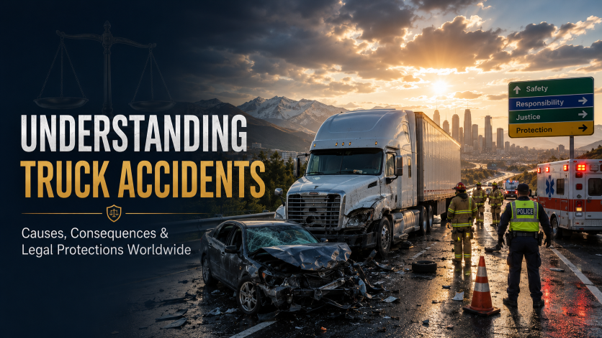
Truck accidents remain one of the most devastating categories of road traffic incidents across the globe. Unlike collisions between standard passenger vehicles, crashes involving commercial trucks often result in catastrophic injuries or fatalities due to the sheer size, weight, and momentum of these vehicles.
Whether you’re in North America, Europe, Asia, or elsewhere, understanding the causes, consequences, and legal frameworks surrounding truck accidents is essential for both prevention and recovery.
The Scale of the Problem
Commercial trucks are indispensable to global trade and logistics. They transport goods across continents, keep supply chains moving, and support economies large and small. But this constant presence on highways and city streets also means an increased risk of serious accidents. Large trucks can weigh up to 20 to 30 times more than the average passenger car, and stopping distances for fully loaded trucks are significantly longer. When a truck collides with a smaller vehicle, the outcome is rarely equal—occupants of the smaller vehicle bear the overwhelming brunt of the impact.
Road safety organizations around the world consistently report that trucking accidents contribute disproportionately to serious injuries and deaths on highways, even though trucks make up a smaller percentage of total vehicles on the road compared to passenger cars.
Common Causes of Truck Accidents
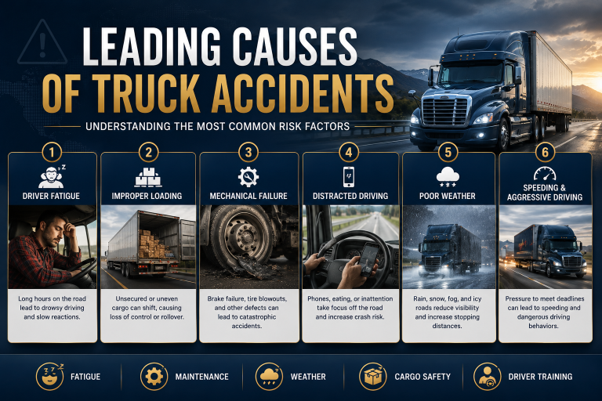
While every accident has its own unique set of circumstances, certain causes appear repeatedly across incident reports worldwide:
Driver Fatigue: Long-haul trucking often demands extended hours behind the wheel. Despite regulations limiting driving hours in many countries, fatigue remains a leading contributor to truck accidents. Drowsy driving impairs reaction time, decision-making, and awareness in ways comparable to driving under the influence of alcohol.
Improper Loading: Cargo that is improperly secured or unevenly distributed can shift during transit, causing the truck to become unstable, tip over, or lose control—particularly on curves or during sudden maneuvers.
Mechanical Failures: Brake failures, tire blowouts, and steering malfunctions are common culprits. Because commercial trucks undergo more wear and tear due to constant use, regular maintenance is critical, and lapses in inspection schedules can have deadly consequences.
Distracted Driving: Just as with passenger vehicles, distractions such as mobile phone use, eating, or fatigue-induced inattention play a significant role in truck-related collisions.
Poor Weather and Road Conditions: Rain, snow, fog, and icy roads increase stopping distances and reduce visibility, posing heightened risks for large vehicles that are already harder to control than smaller cars.
Driver Inexperience or Inadequate Training: Trucking companies that fail to properly vet or train drivers put everyone on the road at risk. Navigating a large commercial vehicle requires specialized skills that differ substantially from operating a standard car.
Speeding and Aggressive Driving: Trucking schedules can be demanding, and some drivers may feel pressured to make up time by speeding.
The Human and Financial Toll
The aftermath of a serious truck accident extends far beyond the initial collision. Victims often face long recovery periods, permanent disabilities, and emotional trauma. Medical expenses can escalate quickly, particularly when injuries require surgery, rehabilitation, or long-term care. Beyond physical injuries, families frequently confront lost income, mounting bills, and the emotional burden of navigating a life-altering event.
For families who lose a loved one in a truck accident, the financial and emotional consequences can be devastating and long-lasting. Funeral costs, loss of household income, and the psychological toll of grief compound an already painful situation.
Legal Complexity in Truck Accident Cases
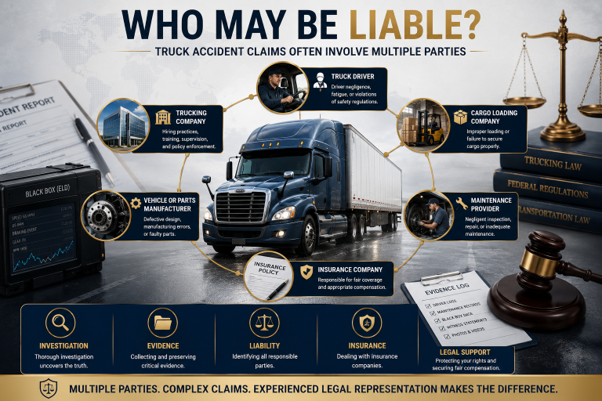
One aspect that sets truck accidents apart from typical car accidents is the legal complexity involved. Multiple parties may share liability, including:
- The truck driver
- The trucking company that employs the driver
- The company responsible for loading the cargo
- The manufacturer of the truck or its parts, if a mechanical defect contributed to the crash
- Maintenance contractors responsible for servicing the vehicle
Because of this layered liability, truck accident cases often require thorough investigation to determine which party—or parties—bear responsibility. Evidence such as driver logs, maintenance records, black box data, and eyewitness testimony can all play a crucial role in building a case.
Additionally, trucking companies typically carry substantial insurance policies, and their legal teams are often well-resourced to minimize payouts. This imbalance can make it difficult for injury victims to secure fair compensation without proper legal guidance.
Steps to Take After a Truck Accident
Regardless of where in the world an accident occurs, certain steps can help protect your health, safety, and legal rights:
- Prioritize Safety: Move to a safe location if possible and check for injuries.
- Call Emergency Services: Prompt medical attention and an official accident report are critical.
- Document the Scene: Photos of vehicle damage, road conditions, and any visible injuries can serve as valuable evidence later.
- Gather Witness Information: Contact details from anyone who witnessed the accident can support your case.
- Seek Medical Evaluation: Some injuries, such as internal trauma or whiplash, may not be immediately apparent.
- Avoid Admitting Fault: Statements made at the scene can sometimes be used against you later, so it’s wise to stick to factual descriptions.
- Consult a Legal Professional: Given the complexity of truck accident claims, professional legal guidance can make a substantial difference in the outcome of a case. In the Pacific Northwest, for instance, reaching out to an experienced Everett Truck Accidents lawyer early on can help preserve critical evidence before it’s lost.
Why Localized Legal Expertise Matters
While the causes and consequences of truck accidents are largely universal, the legal process for pursuing compensation varies significantly by jurisdiction. Regulations governing trucking companies, insurance requirements, and statutes of limitations differ from country to country and even between regions within the same country.
This is why, regardless of where an accident occurs, working with an attorney familiar with local trucking regulations and court procedures is so valuable. For example, individuals in the Pacific Northwest of the United States often turn to firms like the Brumley Law Firm, whose attorneys focus specifically on trucking accident claims. If you or a loved one has been affected by a collision in that region, working with an experienced Everett Truck Accidents lawyer can help ensure that evidence is properly gathered, liable parties are correctly identified, and your claim reflects the full extent of your damages.
Attorneys who regularly handle trucking cases understand federal and state regulations, how to interpret electronic logging device data, and how to negotiate with insurers that specialize in minimizing commercial vehicle claims.
Moving Toward Safer Roads
Efforts to reduce truck accidents continue globally through improved vehicle safety technology, stricter hours-of-service regulations, and advancements in driver training. Collision avoidance systems and electronic stability control are increasingly standard features in modern trucks, helping to mitigate human error. Still, technology alone cannot eliminate risk entirely—continued advocacy for stronger enforcement and public awareness remains essential.
Frequently Asked Questions
What should I do immediately after a truck accident? Prioritize safety, call emergency services, document the scene with photos, gather witness information, and seek medical evaluation even if injuries aren’t immediately obvious. Avoid making statements that could be interpreted as admitting fault.
Who can be held liable in a truck accident? Liability can extend beyond the driver to the trucking company, cargo loading company, vehicle or parts manufacturer, and maintenance contractors, depending on what caused the crash.
How long do I have to file a claim after a truck accident? Time limits vary by jurisdiction and are often shorter than people expect. Consulting a local attorney promptly helps ensure important deadlines aren’t missed.
Why are truck accident claims more complex than typical car accident claims? Multiple parties may share responsibility, and trucking companies often carry substantial insurance backed by experienced legal teams, making thorough investigation and skilled negotiation essential.
Do I need a lawyer who specializes in truck accidents specifically? While any personal injury attorney can assist, one with specific experience in trucking cases will better understand federal and state regulations, electronic logging data, and industry-specific negotiation tactics—improving your chances of a fair outcome.
Conclusion
Truck accidents present unique challenges, from their physical severity to the legal complexity involved in pursuing compensation. Understanding the common causes, recognizing the steps to take after an accident, and knowing when to seek professional legal support are essential for anyone navigating the aftermath of such an event.
For residents of Everett and the surrounding areas, firms such as the Everett Truck Accidents lawyer team at Brumley Law Firm offer focused experience in handling these complex cases. No matter where you are in the world, prioritizing safety, documentation, and informed legal counsel remains the best path toward protecting your rights and securing a fair outcome after a truck accident.