
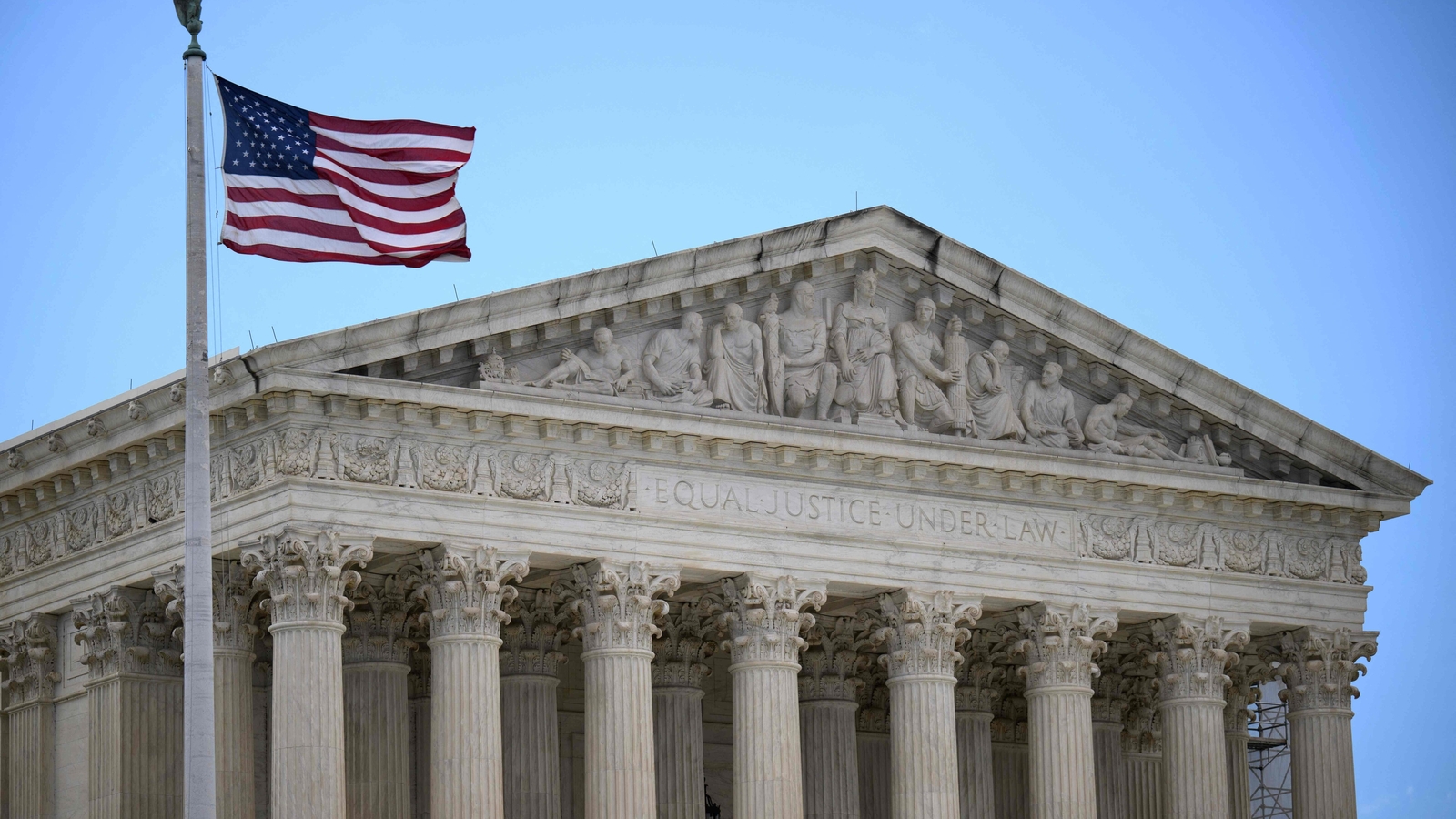
The U.S. Supreme Court is facing renewed scrutiny over judicial transparency after 2025 financial disclosure reports showed several justices receiving substantial income from book contracts, teaching posts and gifts.
The reports, released through the Administrative Office of the U.S. Courts, recorded more than $2 million in combined book payments to four justices, while Justice Samuel Alito received a 90-day extension to file.
Justice Ketanji Brown Jackson reported a $1.18 million book advance from Penguin Random House for her memoir Lovely One, adding to earlier book income disclosed in 2024.
Justice Amy Coney Barrett reported $849,071 in royalties linked to her book Listening to the Law, while Justice Neil Gorsuch disclosed $300,361 in book royalties, largely from HarperCollins, alongside teaching income from George Mason University.
Justice Sonia Sotomayor reported book royalties and $4,333 in concert tickets from Rimas Entertainment connected to a private trip to Puerto Rico.
Regulatory context matters because financial disclosure for federal judges sits under the Ethics in Government Act and is administered through the Administrative Office of the U.S. Courts, rather than by an external legal regulator.
The U.S. Supreme Court adopted a formal code of conduct in 2023 after sustained criticism over gifts, travel and hospitality, but the latest reports show why disclosure remains a live governance issue rather than a closed reputational matter.
Chief Justice John Roberts reported $25,000 for teaching at New England Law, while Justice Clarence Thomas reported $18,000 from Catholic University of America.
Justice Brett Kavanaugh and Justice Amy Coney Barrett each reported $33,285 for teaching at Notre Dame Law School. None of those figures alone suggests misconduct, but the scale and variety of outside income give public-law advisers, ethics counsel and institutional lawyers a clearer view of the scrutiny now attached to judicial engagements.
The practical issue for solicitors, barristers and in-house teams advising universities, publishers, foundations or event organisers is the paper trail. Agreements involving sitting judges, senior public officials or courts-facing institutions need clear commercial terms, internal approval records and conflict checks before hospitality, teaching arrangements or publishing contracts are confirmed.
That is especially important where an organisation may later appear before the U.S. Supreme Court or have business before agencies affected by its decisions.
The next reporting cycle should test whether the U.S. Supreme Court and the Administrative Office of the U.S. Courts require clearer disclosure of book income, teaching arrangements and gifts before public confidence concerns become litigation or recusal issues.