
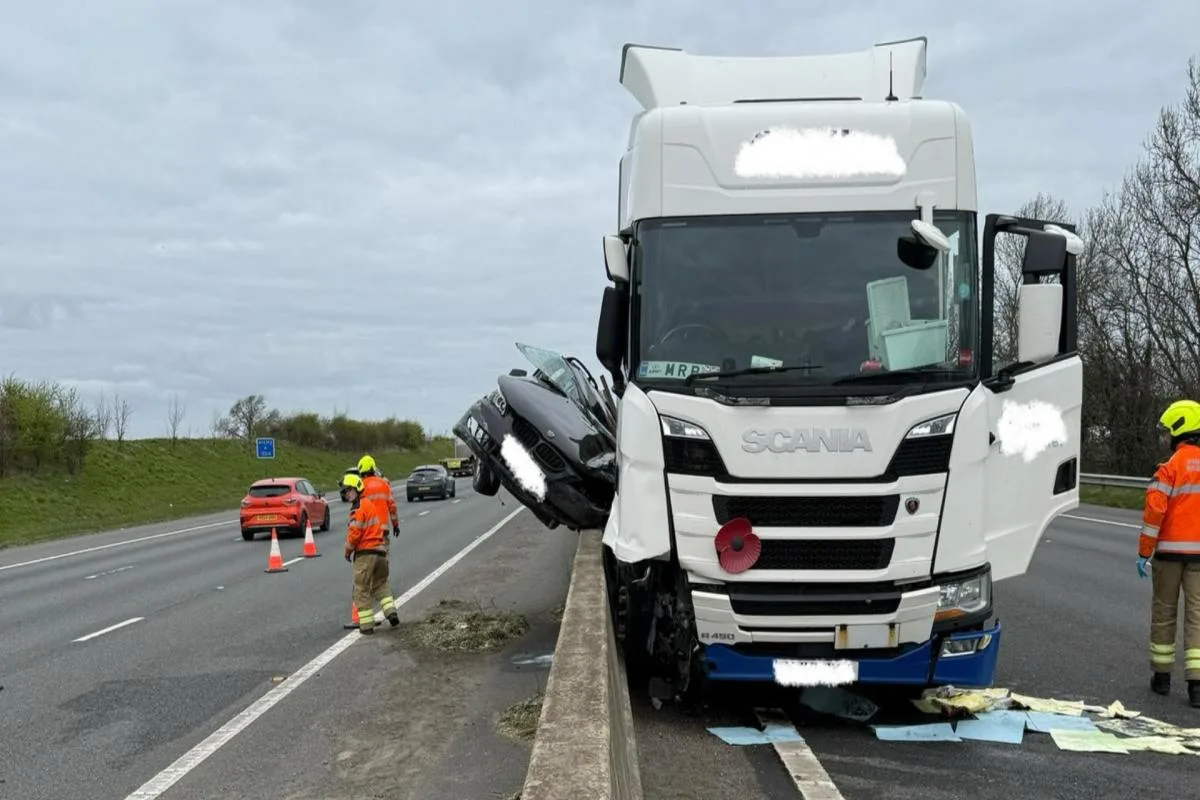
Truck accidents can leave you in a mess. Amid the pain, emotional turmoil, and piling medical bills, it’s easy to speak carelessly when the insurance adjuster calls.
But here’s the thing.
Every insurance company is a for-profit business. This means they care more about their profitability than giving you a huge paycheck. They maximize profit margins by minimizing the payouts they grant, and they’ll find opportunities to twist your own words and blame you for the accident, thereby reducing your claim.
In commercial truck accidents, this carries even more weight because injuries and compensation are usually more extensive. So expect the defendant to fight tooth and nail to contest your claim.
This is why you must guide your words when speaking to the trucking company’s insurer.
7 Things to Avoid Saying to the Insurance Company
To protect your rights and ensure you get a fair amount that covers your losses, here’s what not to say to the insurance company after a truck accident.
1. “I’m fine”
When the insurance adjuster calls, it’s polite for them to ask, “How are you?” It is equally polite and standard practice to reply with “I’m fine.” But don’t!
You must realize that it’s insurance you’re talking to, and they can use whatever you say to minimize your claim. So words like “I’m fine” can hurt your case. They’ll use those words to argue that your injuries are minor and therefore undeserving of whatever amount you demand.
2. “I’m Sorry”
These are two words you must never say after a crash. Never apologize to the other driver or the insurance company.
They can twist such a simple phrase into an admission of fault. If you know you’re responsible for your own injuries, then it makes no sense to demand hundreds of thousands in compensation from the trucking company. Right? That is precisely the argument they’ll make in the event these words slip.
Even though you feel your actions possibly contributed, make no mention of it. Establishing liability is your lawyer’s job.
3. “I must have been overspeeding” or anything that makes you liable
This is another admission of fault. If you admit that you didn’t see the other driver on time or you were overspeeding, texting while driving, or distracted by something else, it becomes easy for the defendant to pin blame on you, even though partial. The larger your role in the accident, the lower the value of your claim. This rule, known as comparative negligence, applies in several states.
4. “I think…, I guess…” or “maybe”
Using these words expresses uncertainty. When you don’t trust your own recollection of events about one thing, it casts doubt on everything else you say. The insurer’s lawyer can argue that your account of the truck accident is unreliable since you’re not sure of what happened.
Stick to the facts, and never speculate about the cause of the accident when speaking to the adjuster.
5. “I can’t remember”
In your attempt to avoid speculation, you might feel compelled to say you don’t remember. But there again lies another trap. The insurance company might argue your account of the crash is untrustworthy since you don’t remember certain aspects of it.
Memory gaps are normal after serious accidents. The insurance adjuster knows it. They are counting on it. Don’t make their job easy.
6. Sharing personal information beyond the basics
Adjusters are known to ask questions seemingly unrelated to the accident. Your job, your schedule, medical history, past accidents, habits, where you spend the weekends. They may feel harmless. But it’s another trap.
Prior injuries and pre-existing conditions can harm your case as the defendant can blame your current sufferings on them. Your lifestyle habits can also provide a straw for them to latch onto and question your roadworthiness.
You don’t want to afford the insurance company too much material to use against you. So do not disclose as much, nor should you sign any medical release form.
7. A recorded statement
You are not required by law to grant a recorded statement to the trucking company’s insurer. They may call and word the request in a way that makes a recorded statement look like standard routine, even legally necessary. It’s not.
The goal of the adjuster is to ask questions designed to get you to say something that can be used against you later. Don’t grant a recorded statement until you’ve spoken with a lawyer.
What to Say Instead
When the insurance company calls after an accident, only state the facts. Tell them you had an accident, where you had it, and what time. Decline any other questions. You may feel that refusing to speak makes you look guilty, but it doesn’t.
Remember, whatever you say can be used against you. Not what you don’t say, but what you do say.
Tell the insurance adjuster that you’re willing to cooperate, but you’re currently receiving treatment and will reach out with more details after speaking to your lawyer. Do not accept any settlement offer, not even verbally.
Let Your Lawyer Handle All Communication With the Insurance Company
If you have not already done so, contact a reputable truck accident lawyer in your state quickly. Truck accident cases are highly contestable; companies can afford strong legal defenses, so you don’t want to go in at a disadvantage.
Your Chicago truck accident attorney can:
- Protect you from saying anything that may hurt your claim
- Gather evidence and reconstruct the accident
- Liaise with medical and financial experts to evaluate the full extent of your injuries and financial losses
- Calculate the value of your claim
- Counter the tactics of insurers and their defense attorneys
- Fight aggressively to ensure you get what you deserve.
In all, never give a recorded statement to the insurance company after a truck accident without legal guidance. To ensure your rights are protected, contact a truck accident lawyer right away.