
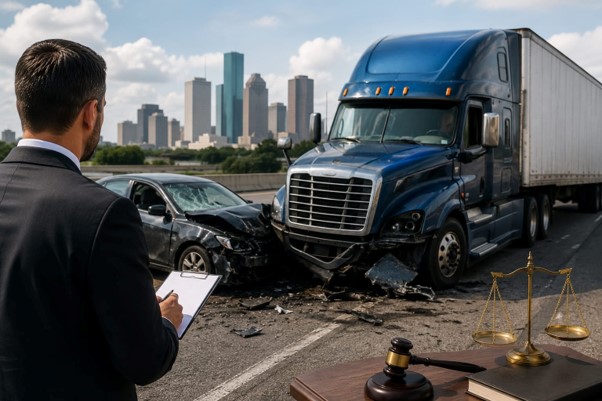
A collision involving a commercial truck is rarely a minor event. Unlike ordinary passenger vehicle crashes, accidents involving tractor-trailers often result in catastrophic injuries, long-term medical care, lost income, and emotional trauma. Victims frequently face insurance companies, trucking corporations, and multiple parties attempting to minimize responsibility while they are still recovering. Understanding how truck accident claims work can make a significant difference in protecting your financial future. Federal trucking regulations, electronic logging devices, maintenance records, driver qualifications, and cargo documentation all play an important role in determining liability. Without strong evidence gathered early, valuable information may disappear before a claim is fully investigated.
Why Commercial Truck Accidents Are More Complex Than Standard Vehicle Collisions
Commercial trucking cases involve much more than determining who caused a collision. Unlike typical auto accidents, these cases often require reviewing thousands of pages of business records, federal safety regulations, inspection reports, maintenance histories, and driver qualification files. Several factors make these claims considerably more challenging:
- Multiple insurance companies may become involved.
- Trucking companies often begin investigating immediately after the crash.
- Electronic evidence must be preserved quickly.
- Federal Motor Carrier Safety Regulations (FMCSR) create additional legal responsibilities.
- Liability may extend beyond the truck driver.
A thorough investigation often requires cooperation between accident reconstruction experts, medical specialists, transportation professionals, and experienced legal teams.
The Most Common Causes Behind Serious Truck Collisions
Every truck accident has unique circumstances, but investigators repeatedly identify similar contributing factors across severe crashes. Driver fatigue remains one of the leading concerns despite federal Hours of Service regulations designed to reduce exhausted driving. Long schedules, unrealistic delivery deadlines, and insufficient rest continue to contribute to preventable accidents. Distracted driving has also become increasingly common. Mobile devices, GPS systems, dispatch communications, and onboard technology can divert a driver’s attention from the road.
Mechanical failures present another serious risk. Poor brake maintenance, worn tires, steering problems, and defective components may prevent a truck from stopping safely during emergencies. Improper cargo loading creates additional hazards. Unbalanced freight, overloaded trailers, and unsecured cargo can cause rollovers or jackknife accidents, particularly during sudden braking or sharp turns. Adverse weather, speeding, impaired driving, inadequate driver training, and aggressive lane changes further increase the likelihood of devastating crashes involving commercial vehicles.
Understanding Who May Be Financially Responsible
Determining liability in a commercial trucking case often requires examining several businesses and individuals rather than focusing solely on the driver. Depending on the circumstances, responsibility may include:
- The commercial truck driver
- The trucking company
- Cargo loading contractors
- Vehicle maintenance providers
- Truck manufacturers
- Parts manufacturers
- Freight brokers
- Third-party logistics companies
In many situations, multiple defendants share responsibility. Identifying every liable party may significantly increase the compensation available to an injured victim.
What Evidence Builds a Strong Truck Accident Claim
One major difference between truck accident cases and ordinary vehicle crashes is the volume of available evidence. Investigators often review:
- Electronic logging device (ELD) records
- Black box data
- GPS tracking information
- Dash camera footage
- Driver qualification files
- Drug and alcohol testing results
- Maintenance records
- Inspection reports
- Shipping manifests
- Bills of lading
- Cell phone records
- Surveillance video
- Witness statements
- Police crash reports
Because some evidence may only be retained for a limited period, preservation letters should be sent as early as possible after the collision.
How a Houston 18-Wheeler Truck Accident Lawyer Investigates High-Value Injury Cases
Commercial trucking companies typically have experienced insurance adjusters and defense attorneys working to protect their financial interests immediately after a crash occurs. Victims benefit from having someone who understands how trucking litigation differs from ordinary personal injury claims. A Houston 18-Wheeler Truck Accident Lawyer may begin by preserving electronic evidence before it disappears, reviewing maintenance records, obtaining driver logbooks, analyzing black box information, interviewing witnesses, consulting accident reconstruction specialists, and evaluating whether federal safety regulations were violated.
Experienced attorneys also coordinate with medical professionals to document long-term injuries and future treatment costs. This becomes especially important when injuries involve spinal cord damage, traumatic brain injuries, permanent disabilities, or extensive rehabilitation. Early legal involvement often helps prevent insurance companies from shifting blame or undervaluing legitimate claims.
Types of Compensation Available After a Serious Truck Collision
The financial impact of a trucking accident often extends far beyond emergency medical treatment.
Victims may recover compensation for:
| Economic Damages | Non-Economic Damages |
| Emergency medical expenses | Pain and suffering |
| Future medical treatment | Emotional distress |
| Physical rehabilitation | Loss of enjoyment of life |
| Lost wages | Physical impairment |
| Reduced earning capacity | Mental anguish |
| Property damage | Permanent disability |
In cases involving reckless conduct, punitive damages may also be available under Texas law, although these claims require additional legal standards to be met.
Why Insurance Companies Often Challenge Truck Accident Claims
Commercial truck accident claims frequently involve large insurance policies. As potential financial exposure increases, insurers often devote greater resources to limiting payouts. Common defense strategies include arguing that:
- The injured driver caused the accident.
- Medical treatment was unnecessary.
- Injuries existed before the collision.
- Damages are exaggerated.
- Weather not negligence caused the crash.
- Another vehicle was primarily responsible.
Understanding these tactics allows injured individuals to avoid common mistakes that may reduce the value of their claim.
Federal Trucking Regulations Can Strengthen Your Case
Unlike passenger vehicles, commercial trucks operate under detailed federal safety standards established by the Federal Motor Carrier Safety Administration (FMCSA). Important regulations govern:
- Driver licensing requirements
- Maximum driving hours
- Vehicle inspections
- Maintenance schedules
- Cargo securement
- Drug and alcohol testing
- Driver qualification standards
- Record retention
Violations of these safety rules may provide strong evidence supporting negligence in a personal injury lawsuit.
Mistakes That Can Reduce the Value of Your Injury Claim
After a serious truck collision, even small decisions can affect the outcome of a legal claim. Avoid these common mistakes:
- Delaying medical treatment
- Giving recorded statements without preparation
- Posting accident details on social media
- Accepting an early settlement offer
- Ignoring follow-up medical appointments
- Failing to preserve photographs or evidence
- Waiting too long before seeking legal guidance
Maintaining organized medical records, documenting expenses, and following physician recommendations strengthens both recovery and legal claims.
Building a Strong Case Requires More Than Proving Fault
Successful trucking litigation focuses not only on proving negligence but also on demonstrating the full impact of the injuries suffered. Strong cases typically include detailed medical documentation, expert opinions, vocational assessments, economic loss calculations, and testimony explaining how injuries affect daily life and future earning ability.
Catastrophic injuries often require projections for lifelong care, home modifications, rehabilitation, assistive equipment, and future medical procedures. These long-term costs should be carefully evaluated before any settlement discussions begin.
Conclusion
Truck accident cases demand careful investigation, technical knowledge, and a thorough understanding of both Texas personal injury law and federal trucking regulations. From preserving electronic evidence to identifying every liable party, each step influences the strength of a claim and the compensation an injured person may ultimately recover. Acting promptly after a serious collision helps protect critical evidence and provides the best opportunity to build a well-supported case. Whether injuries involve months of rehabilitation or permanent disability, understanding your legal options early allows you to make informed decisions while focusing on recovery.