
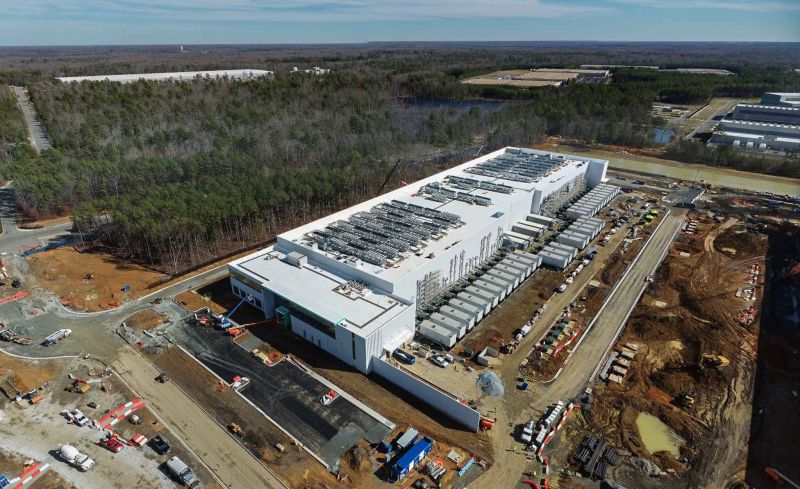
Residents in Fayetteville, Georgia, started complaining about low water pressure last year before county officials discovered that one of the country’s largest data center campuses had been drawing millions of gallons of water through connections the utility system was not properly tracking or billing.
According to a 2025 letter from the Fayette County water system, data center developer Quality Technology Services (QTS) owed nearly $150,000 for more than 29 million gallons of unaccounted-for water usage tied to its Fayetteville campus south of Atlanta.
County officials said one industrial-scale water connection had been installed without the utility’s knowledge, while another was not linked correctly to the company’s account and therefore was not being billed.
The issue only became public after a county resident obtained the letter through a public records request and shared it online, triggering frustration among residents already concerned about water conservation and the scale of the development.
The dispute is now raising broader questions about how local utilities monitor large industrial customers as data center construction accelerates across the United States.
Residents say frustration grew after households were encouraged to conserve water during drought conditions while the data center remained one of the county’s largest water consumers.
James Clifton, an attorney and property rights advocate who shared the county letter publicly, said many residents felt ordinary customers would not have been treated the same way if they had used utility services without proper billing or oversight.
QTS said it paid all retroactive charges once notified and disputed suggestions that it had intentionally avoided payment. The company said the unusually high water usage was tied largely to temporary construction work, including concrete preparation, dust control and site development.
County officials blamed the problem partly on administrative failures during a transition to smart meter technology and cloud-based systems. Fayette County water system director Vanessa Tigert also cited staffing shortages and the challenges of managing a major industrial customer inside a system historically focused on residential demand.
The legal and governance questions surrounding the dispute now extend beyond the unpaid charges themselves. The larger issue is how millions of gallons of industrial water usage continued for months without being properly monitored inside a public utility system.
The county did not impose penalties or fines beyond retroactive billing charges, despite the scale of the untracked water usage. That decision has already drawn criticism from residents who believe ordinary consumers would likely face harsher consequences for unauthorised utility usage.
Gregory Pierce, director of the UCLA Water Resources Group, said it was unusual that the utility did not levy a financial penalty against the data center operator.
The dispute also reflects growing political pressure surrounding large data center developments in parts of the United States, particularly in areas facing drought concerns, infrastructure strain and rising electricity demand.
Fayetteville’s City Council voted last month to ban new data centers in every zoning district within the city, illustrating how quickly local opposition can intensify once residents believe public infrastructure is coming under pressure.
The Fayetteville dispute may end up being less about one unpaid water bill and more about whether local infrastructure systems can keep pace with the rapid growth of large data centers.