
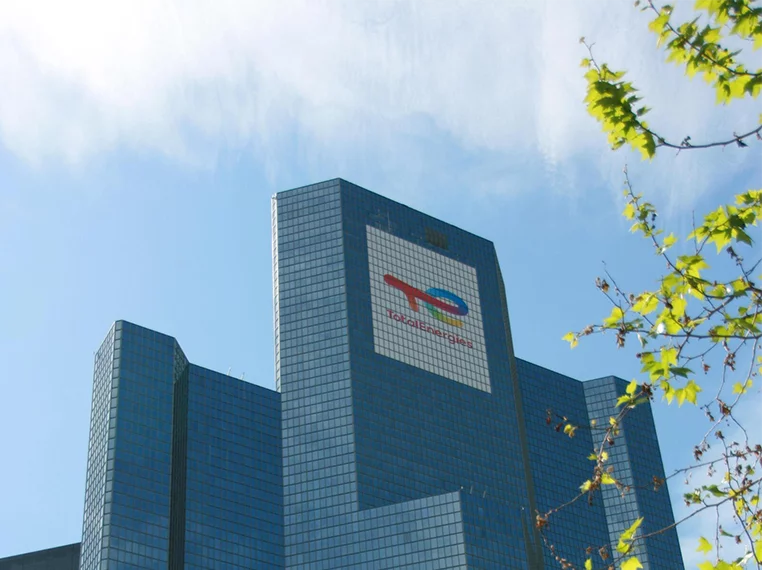
TotalEnergies has entered a new compliance stage under France’s Corporate Duty of Vigilance Law after the Paris Judicial Court required the energy group to address customer emissions in its vigilance plan.
The ruling, handed down on 25 June, follows several years of climate due diligence litigation against large French-headquartered companies and shifts the dispute from whether climate risks can fall within the 2017 law to how a multinational group must map and explain those risks in its own compliance documents.
The Paris Judicial Court held that TotalEnergies must update its vigilance plan to include climate risks linked to Scope 3 greenhouse gas emissions, including emissions arising from customers’ use of its oil and gas products.
The court gave the company six months to revise its risk mapping, but did not order TotalEnergies to cut oil and gas production, stop new hydrocarbon projects or adopt court-imposed emissions reduction targets. TotalEnergies said it would update the plan by drawing on its CSRD sustainability reporting and on measures connected to electricity, biofuels and lower-carbon energy sales.
The City of Paris, Notre Affaire à Tous, Sherpa, Zéa and France Nature Environnement brought the proceedings to test whether the vigilance regime required TotalEnergies to identify climate-related risks beyond its own direct operations.
The Paris Judicial Court accepted that climate risks can fall within the environmental scope of the Corporate Duty of Vigilance Law and treated downstream emissions as relevant to the company’s risk mapping exercise. The reasoning also sits against the background of the UK Supreme Court’s decision in Finch v Surrey County Council, which addressed the connection between fossil fuel extraction and later combustion emissions.
For solicitors, barristers and in-house counsel, the ruling narrows the room between sustainability reporting and legal risk management. Companies with material downstream emissions exposure should review whether their vigilance plans identify Scope 3 risks, whether mitigation measures are described with enough precision, and whether CSRD disclosures are consistent with board papers, public statements and litigation positions.
Advisers acting for energy, transport, manufacturing and consumer-facing groups should also test whether customer-use emissions have been excluded by assumption rather than analysed as a potential legal risk.
TotalEnergies now has six months to amend its vigilance plan for review in France, while the wider issue for lawyers is whether claimants will use the Paris Judicial Court’s approach to press Scope 3 risk mapping claims against other companies whose environmental impact sits beyond their direct operations.