
Louisiana, Alabama and Arkansas are pursuing legal challenges seeking to restrict the interstate distribution of abortion medication, including claims that providers supplying pills into states where abortion is prohibited can be liable under public nuisance law.
The litigation forms part of an escalating conflict between states with restrictive abortion laws and jurisdictions that have enacted shield laws protecting healthcare providers who prescribe abortion medication to patients elsewhere.
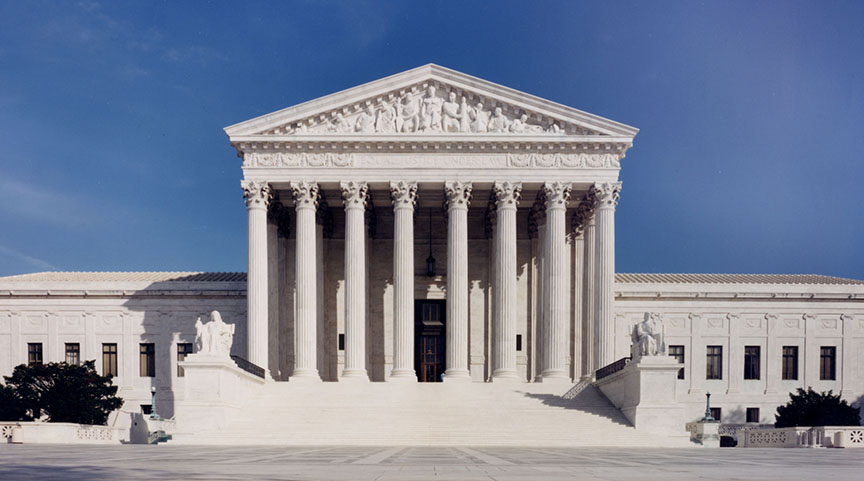
Louisiana, Alabama and Arkansas have asked the US Supreme Court to hear a dispute against New York, California and Massachusetts over their abortion shield laws. The plaintiff states argue that those protections interfere with their ability to enforce abortion restrictions against providers who supply medication to residents within their borders.
Separate litigation in Louisiana federal court targets healthcare providers and organisations allegedly involved in prescribing or facilitating access to abortion medication. The proceedings raise overlapping but distinct questions about the ability of states to regulate conduct occurring across state lines.
Louisiana Attorney General Liz Murrill, Alabama Attorney General Steve Marshall and Arkansas Attorney General Tim Griffin contend that interstate distribution of abortion medication undermines laws enacted within their respective states.
Part of the developing legal strategy relies on public nuisance law, a doctrine traditionally used to address conduct alleged to interfere with rights shared by the public. Public nuisance claims have historically appeared in disputes involving matters such as environmental contamination and obstruction of public rights, although governments have also sought to apply the doctrine in other forms of mass-harm litigation.
Applying those principles to abortion medication would require courts to consider whether conduct that may be lawful where a provider is located can create actionable consequences in another state where the underlying activity is prohibited.
Public nuisance litigation can provide governments with a route to seek injunctive or other remedies against allegedly harmful conduct. The states bringing the claims must nevertheless establish the applicable elements of the cause of action and demonstrate that the requested remedies are legally available.
New York, California and Massachusetts have defended shield laws as measures protecting healthcare providers who operate lawfully under their states’ legislation. The dispute therefore places competing state regulatory regimes directly against each other.
The conflict follows the US Supreme Court’s 2022 decision in Dobbs v Jackson Women’s Health Organization, which overturned Roe v Wade and held that the US Constitution does not confer a right to abortion.
Since Dobbs, some states have imposed or maintained extensive abortion restrictions, while others have adopted laws designed to protect providers offering reproductive healthcare to patients located in states with stricter rules. Telehealth prescribing has intensified the practical significance of those conflicting regimes because providers and patients may be located in different jurisdictions.
Medication abortion commonly involves mifepristone followed by misoprostol. Mifepristone was initially approved by the US Food and Drug Administration in 2000 and remains federally approved, creating another regulatory dimension to litigation concerning state restrictions on its distribution.
The cases present several legal questions, including whether public nuisance principles can apply to interstate medication distribution, the territorial reach of state abortion laws and the extent to which one state must recognise or accommodate protections enacted by another.
The Supreme Court has original jurisdiction over certain disputes between states, although that does not mean it must automatically hear every case presented directly to it. The separate federal litigation will involve its own questions of jurisdiction, applicable law and the availability of remedies against individual providers and organisations.
No court has determined that the conduct challenged in these proceedings constitutes a public nuisance, and the claims remain contested.
The significance of the litigation may extend beyond abortion regulation. How courts address attempts to impose liability for conduct crossing state boundaries could influence future disputes in which states adopt conflicting rules governing the same activity, particularly where conduct protected in one jurisdiction is prohibited in another.