
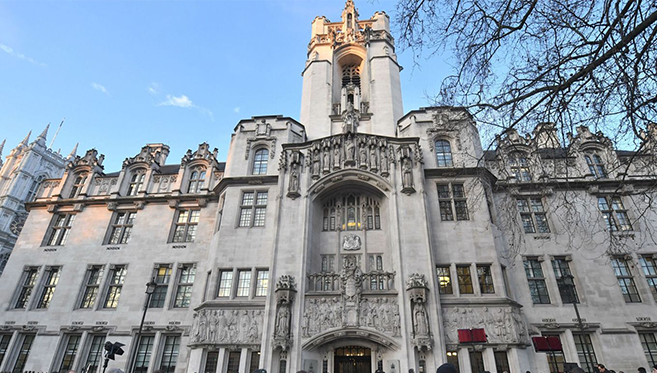
The Supreme Court of the United Kingdom has ruled that Denmark’s tax authority can pursue civil recovery claims in the English courts over alleged fraudulent tax refund payments worth £1.44 billion, clarifying an important limitation on the long-established “revenue rule” in English private international law.
The Court held that Skatteforvaltningen, the Danish Customs and Tax Administration known as SKAT, was not attempting to enforce Danish tax law in England. Instead, it was pursuing claims as an alleged victim of fraud seeking restitution of funds said to have been wrongfully obtained through fraudulent refund applications.
The distinction is legally significant because English courts have traditionally refused to enforce foreign tax liabilities or sovereign revenue claims.
In Skatteforvaltningen v Solo Capital Partners LLP and others, the Supreme Court clarified that where a foreign public authority brings proceedings grounded in private law causes of action such as fraud, deceit, conspiracy, or restitution, rather than seeking recovery of unpaid foreign tax — the revenue rule may not bar litigation before the English courts.
The judgment therefore narrows assumptions that disputes connected to overseas taxation systems automatically fall outside English civil jurisdiction.
For financial intermediaries, custodians, cross-border payment structures, and organisations involved in international withholding tax or refund arrangements, the ruling increases the importance of assessing whether conduct could later be characterised as private law fraud recovery exposure rather than regulatory tax enforcement alone.
Cross-Border Tax Recovery and Jurisdictional Exposure
The Supreme Court of the United Kingdom decision establishes a clearer framework for when foreign public authorities may pursue civil proceedings in the English courts arising from overseas tax systems.
The central legal issue was whether Skatteforvaltningen, the Danish Customs and Tax Administration known as SKAT, was attempting to enforce Danish tax law in England or whether its claims were properly characterised as ordinary private law claims arising from alleged fraud and restitutionary wrongdoing.
The Court concluded that the claims fell outside the traditional “revenue rule” because the defendants were alleged never to have owed Danish tax in the first place. Instead, SKAT alleged that fraudulent applications had been used to obtain Danish dividend withholding tax refunds to which the applicants were never entitled.
Under Denmark’s withholding tax regime, non-residents receiving dividends from Danish companies may qualify for partial or full repayment of tax withheld at source under applicable treaties.
SKAT alleged that entities connected to the proceedings owned no relevant Danish shares, received no qualifying dividends, and had no lawful entitlement to refunds, yet nevertheless obtained payments totalling approximately £1.44 billion through the refund system.
The claims were brought against individuals and corporate entities alleged to have participated in or facilitated the refund applications.
For multinational financial institutions, custodians, intermediaries, tax reclaim advisers, and organisations involved in cross-border payment or refund structures, the judgment increases the importance of assessing whether conduct could later be characterised as private law fraud recovery exposure rather than regulatory tax enforcement alone.
That distinction may materially affect jurisdictional risk analysis, litigation strategy, governance oversight, and intermediary due diligence within international withholding tax and dividend refund arrangements.
Risk Emergence
The legal risk first emerged when the dispute shifted from tax administration into alleged fraud recovery. Once a foreign authority frames claims through deceit, conspiracy, restitution, or unjust enrichment rather than direct tax collection, traditional protections against foreign revenue enforcement may no longer apply in the same way. That distinction materially increases litigation exposure for internationally connected entities operating within cross-border payment and refund structures.
Revenue Rule Analysis and Judicial Reasoning
The dispute initially succeeded at first instance in the Commercial Court, where Andrew Baker J concluded that Skatteforvaltningen’s claims were inadmissible because they amounted indirectly to enforcement of Danish revenue law.
The Court of Appeal of England and Wales reversed that decision in 2022 after focusing on the absence of any unpaid tax liability owed by the defendants themselves. Sir Julian Flaux stated that:
“there is no unsatisfied tax claim under Danish law that SKAT is seeking to enforce directly or indirectly”
That distinction became central to the eventual reasoning of the Supreme Court of the United Kingdom.
The case centred on Rule 20(1) of Dicey, Morris & Collins on the Conflict of Laws, commonly referred to as the “revenue rule.” The principle traditionally prevents English courts from enforcing foreign penal, revenue, or sovereign public laws. Lord Lloyd-Jones described it as a “well-established and almost universal principle” that courts in one country will not enforce the revenue laws of another.
The key legal question was whether SKAT’s claims were, in substance, an attempt to recover unpaid Danish tax or instead private law claims arising from alleged fraudulent conduct.
The Supreme Court unanimously dismissed the appeal in November 2023, accepting SKAT’s argument that the revenue rule only applies where there is an unsatisfied foreign tax demand being enforced directly or indirectly.
That proved decisive because SKAT’s pleaded case was that the defendants never owed Danish tax in the first place. Lord Lloyd-Jones stated that:
“the appellants have never been liable to pay any tax in Denmark”
Instead, the Court held that SKAT was seeking recovery of money allegedly obtained through fraudulent misrepresentations.
The Court also rejected arguments based on the “sovereign authority rule,” concluding that the claims did not involve enforcement of sovereign governmental power.
Escalating Exposure
Exposure escalates once courts characterise proceedings as fraud recovery litigation rather than sovereign tax enforcement. At that stage, defendants may face the full range of civil litigation mechanisms including disclosure obligations, tracing claims, restitutionary remedies, jurisdictional disputes, and asset recovery applications. The procedural protection traditionally associated with the revenue rule becomes materially narrower where no unpaid tax liability exists.
Decision Trigger Point
The operational significance of the judgment emerges when conduct connected to foreign tax systems can be characterised as private law wrongdoing rather than tax administration alone.
Once allegations are framed through fraud, deceit, conspiracy, restitution, or unjust enrichment, the litigation analysis changes materially because the proceedings may no longer be treated as indirect enforcement of foreign revenue law.
That distinction has particular significance for financial intermediaries, custodians, tax reclaim advisers, cross-border settlement structures, and organisations involved in international withholding tax or dividend refund arrangements.
The ruling narrows assumptions that disputes connected to overseas taxation systems will automatically remain outside English civil jurisdiction.
The Supreme Court of the United Kingdom made clear that the substance of the claim matters more than the broader tax context in which it arose. The Court stated:
“SKAT has brought its claims as a victim of fraud.”
That finding effectively separated the proceedings from ordinary sovereign tax collection and reframed the dispute as private law recovery litigation.
The Court also narrowed arguments that claims connected to foreign public systems automatically involve impermissible exercises of sovereign authority, holding that:
“The substance of the claims does not involve any act of a sovereign character”
For organisations operating internationally, the practical decision trigger now arises when potential exposure moves beyond regulatory interaction into allegations capable of supporting private law fraud recovery claims before the English courts.
At that stage, responsibility may shift rapidly from operational and tax functions to legal, compliance, risk, and board-level governance teams, particularly where cross-border refund structures, intermediary payment systems, or beneficial ownership verification processes are involved.
Action Threshold
The decision trigger occurs when cross-border tax activity creates exposure to fraud-based recovery claims rather than regulatory tax disputes alone. At that point, the issue moves beyond compliance monitoring into direct litigation and governance risk because English courts may accept jurisdiction over claims previously assumed to fall within the protection of the revenue rule. Responsibility for response may therefore shift rapidly from tax and operational teams to legal, risk, compliance, and board-level governance functions.
Litigation Exposure and Compliance Implications
The ruling does not abolish the revenue rule. English courts remain reluctant to enforce foreign tax obligations directly.
What the judgment does clarify is that foreign authorities may still pursue English civil proceedings where they allege deceit, conspiracy, unjust enrichment, dishonest assistance, or restitutionary wrongdoing rather than direct tax collection.
That distinction may become increasingly relevant in cross-border litigation strategy where foreign public authorities frame proceedings through private law recovery claims instead of sovereign tax enforcement.
The decision also reinforces England’s continuing role as a forum for complex international fraud litigation involving state-linked financial losses.
For businesses operating internationally, the judgment increases the importance of distinguishing between tax enforcement exposure and private law litigation exposure, because the two may now overlap more directly.
Where organisations participate in withholding tax reclaim systems, cross-border refund arrangements, intermediary settlement structures, or dividend processing chains, the legal analysis can no longer focus solely on technical regulatory compliance.
The broader litigation framing may prove equally significant, particularly where claims could later be characterised as involving fraudulent extraction of funds rather than disputed tax treatment.
The ruling is also likely to increase scrutiny around:
- due diligence procedures,
- documentation controls,
- beneficial ownership verification,
- intermediary oversight,
within cross-border refund and withholding tax structures.
For financial institutions, custodians, advisers, and intermediary service providers, the practical consequence is that litigation exposure may arise not only from regulatory breaches or unpaid tax liabilities, but also from allegations capable of being framed as private law fraud recovery claims before the English courts.
Precedent Signal
The broader precedent signal is that English courts are willing to separate sovereign regulatory functions from private law recovery rights where fraud is alleged. The ruling therefore clarifies that foreign public authorities are not automatically barred from English proceedings merely because the surrounding context involves taxation. Instead, courts will examine whether the substance of the claim concerns unpaid tax enforcement or ordinary civil recovery for alleged wrongdoing.
Broader Legal and Jurisdictional Implications
The Supreme Court of the United Kingdom judgment is likely to influence how foreign public authorities structure future recovery proceedings connected to tax refund systems, cross-border payment arrangements, dividend withholding structures, and international asset tracing disputes.
Rather than relying exclusively on direct enforcement of foreign tax obligations, future proceedings may increasingly be framed through private law causes of action including deceit, conspiracy, unjust enrichment, dishonest assistance, or restitution.
That development may create broader jurisdictional exposure for internationally connected defendants operating through intermediary financial structures, custodial arrangements, or cross-border settlement systems.
The ruling clarifies an important limitation on the revenue rule within English private international law. Foreign states still cannot ordinarily enforce overseas tax liabilities through the English courts.
However, where a foreign authority alleges that it was induced to make payments through fraudulent misrepresentations, and where no underlying unpaid tax debt is being pursued, English courts may treat the dispute as ordinary private law litigation rather than sovereign enforcement.
The decision therefore narrows assumptions that disputes connected to foreign taxation systems automatically fall outside English civil jurisdiction.
Its significance extends beyond tax doctrine alone and into the broader question of how foreign public authorities may access English courts when proceedings are framed as private law recovery claims rather than exercises of sovereign revenue power.
The judgment is also likely to influence future disputes involving cross-border fraud, restitution claims, international asset recovery, intermediary liability, and jurisdictional enforcement challenges.
For financial institutions, custodians, advisers, and organisations involved in international withholding tax or refund structures, the ruling increases the importance of litigation preparedness, due diligence oversight, beneficial ownership verification, and governance controls capable of addressing exposure that may arise through private law fraud recovery claims rather than regulatory tax enforcement alone.
Lasting Impact on Cross-Border Recovery Claims
The Supreme Court of the United Kingdom ruling resolved the jurisdictional and admissibility issues only. The judgment established that the revenue rule did not bar Skatteforvaltningen from pursuing private law recovery claims in the English courts where the proceedings were framed as private law fraud and restitution claims rather than direct enforcement of foreign tax liabilities.
The later Commercial Court proceedings addressed the substantive allegations separately. In October 2025, the High Court dismissed SKAT’s civil claims against Sanjay Shah and other defendants following the main trial.
The High Court’s later dismissal of the substantive claims did not alter the Supreme Court’s analysis of the revenue rule or the jurisdictional principles established in the earlier appeal.